Can a Gutter Forming Machine be used for other sheet metal forming tasks?
As a supplier of gutter forming machines, I often get asked this question by customers. Gutter forming machines are primarily designed to produce gutters, which are essential components in any building's drainage system. But can they be used for other sheet metal forming tasks? Let's explore this topic in detail.
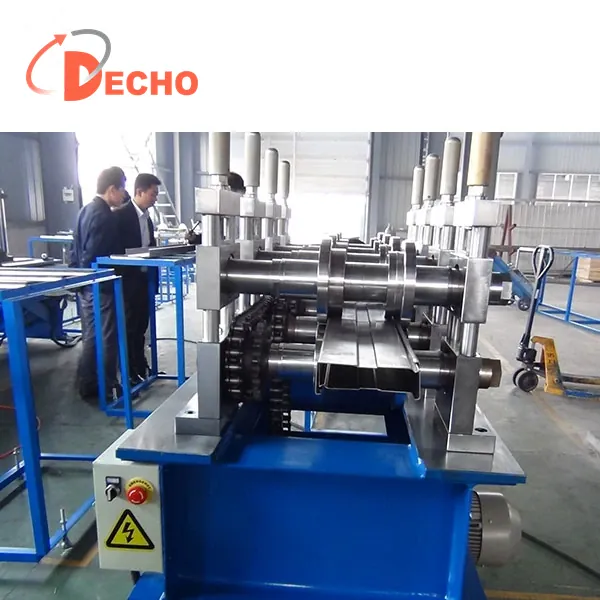
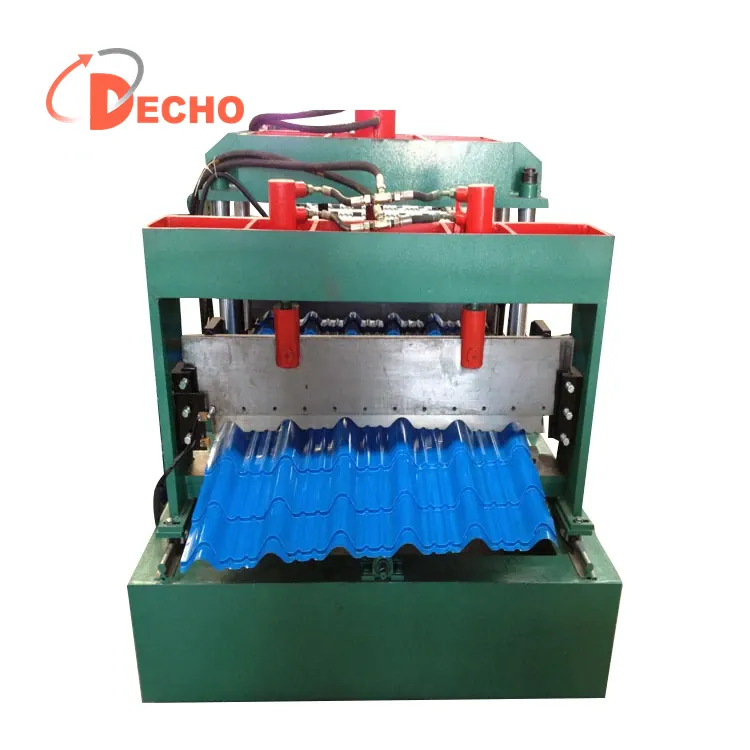
Understanding Gutter Forming Machines
Gutter forming machines are specialized equipment that transform flat sheets of metal into gutters of various shapes and sizes. They typically use a series of rollers to gradually bend and shape the metal according to a pre - determined profile. The process is highly efficient and can produce high - quality gutters in large quantities.
These machines are usually adjustable, allowing for different gutter profiles such as K - style and half - round gutters. They are also capable of working with different types of metals, including aluminum, steel, and copper.
Potential for Other Sheet Metal Forming Tasks
Similar Geometric Shapes
One of the main factors that determine whether a gutter forming machine can be used for other tasks is the similarity of the required shape to that of a gutter. For example, some simple decorative trim pieces that have a similar cross - sectional shape to a gutter can potentially be formed using a gutter forming machine. These trim pieces are often used in architectural applications to add aesthetic value to buildings.
If the shape requires only minor adjustments to the roller settings, the machine can be reconfigured to produce these alternative products. However, it's important to note that the more complex the shape, the more difficult it will be to adapt the machine.
Material Compatibility
Gutter forming machines are designed to work with a variety of metals. This means that if the other sheet metal forming task involves the same or similar metals, there is a good chance that the machine can be used. For instance, if you need to form thin - gauge steel sheets for a small - scale enclosure, and your gutter forming machine is capable of handling steel, it could potentially be used for this task.
However, different metals have different properties such as hardness, ductility, and thickness. If the material for the new task has significantly different properties from what the machine is optimized for, it may lead to issues such as uneven forming, cracking, or excessive wear on the machine components.
Limitations in Complexity
While gutter forming machines can handle some simple alternative tasks, they have limitations when it comes to complex sheet metal forming. For example, tasks that involve deep drawing, which is the process of forming a flat sheet into a three - dimensional shape with a significant depth, are generally beyond the capabilities of a typical gutter forming machine.
Deep - drawn parts such as automotive body panels or large - scale industrial containers require specialized equipment with high - pressure hydraulic systems and complex tooling. Gutter forming machines are mainly designed for linear, two - dimensional forming, and they lack the necessary features to perform deep - drawing operations.
Advantages of Using a Gutter Forming Machine for Other Tasks
Cost - Effectiveness
If a business already owns a gutter forming machine, using it for other sheet metal forming tasks can be a cost - effective solution. Instead of investing in a new, specialized machine for a small - scale or occasional alternative task, the existing gutter forming machine can be utilized. This reduces the upfront capital expenditure and also saves on storage space and maintenance costs associated with additional equipment.
Flexibility for Small - Scale Production
For small - scale manufacturers or contractors, a gutter forming machine can provide flexibility. They can quickly switch between producing gutters and other simple sheet metal products based on customer demand. This allows them to diversify their product offerings without having to make a large investment in multiple machines.
Examples of Alternative Uses
C Purlin Machine - Inspired Shapes
Although a gutter forming machine is not a C Purlin Machine, some simple C - shaped profiles similar to those produced by a C purlin machine can potentially be formed. These C - shaped profiles are used in construction for framing and support. If the required C - shape is relatively simple and the material is compatible with the gutter forming machine, it could be a viable alternative use.
Standing Seam Roll Former - Related Applications
Standing seam roofing systems are popular in modern architecture. While a gutter forming machine is not a Standing Seam Roll Former, some basic standing seam - like profiles with less complex details could potentially be attempted. These profiles are used to create a watertight and aesthetically pleasing roof surface. However, the accuracy and quality may not be as high as those produced by a dedicated standing seam roll former.
Metal Roof Making Machine - Like Tasks
Some simple metal roof panels with basic profiles can be formed using a gutter forming machine. Similar to Metal Roof Making Machine, if the roof panel design is not overly complex and the material is suitable, the gutter forming machine can be used. This can be useful for small - scale roofing projects or for creating custom - sized roof panels.
Considerations Before Using for Other Tasks
Machine Modification
If you plan to use the gutter forming machine for other tasks, you may need to make some modifications. This could include changing the roller dies, adjusting the feed speed, or modifying the control settings. It's important to consult the machine's manual or the manufacturer to ensure that these modifications are done correctly and safely.
Quality Assurance
When using the machine for alternative tasks, it's crucial to have a quality assurance process in place. This includes inspecting the formed products for dimensional accuracy, surface finish, and structural integrity. Any deviations from the required specifications should be addressed immediately to ensure that the final products meet the customer's expectations.
Conclusion
In conclusion, a gutter forming machine can be used for some other sheet metal forming tasks under certain conditions. It offers cost - effectiveness and flexibility, especially for small - scale operations. However, it has limitations in terms of complexity and may require some modifications and careful quality control.
If you are interested in exploring the potential of using a gutter forming machine for your specific sheet metal forming needs, or if you are looking to purchase a high - quality gutter forming machine, we are here to help. Our team of experts can provide you with detailed information and guidance on how to make the most of our machines. Feel free to reach out to us to start a discussion about your requirements and explore the possibilities of procurement and customization.
References
- "Sheet Metal Forming Handbook" by George E. Dieter
- "Manufacturing Engineering and Technology" by S. Kalpakjian and S. R. Schmid