Hey there! As a supplier in the cold roll forming business, I've seen firsthand how this process can have a huge impact on the strength of materials. So, let's dive right in and explore how cold roll forming affects the strength of materials.
First off, what exactly is cold roll forming? Well, it's a manufacturing process where a long strip of metal, like steel or aluminum, is passed through a series of rollers. These rollers gradually shape the metal into the desired cross - sectional profile without heating it up. This is different from hot rolling, where the metal is heated to high temperatures before being shaped.
One of the key ways cold roll forming affects material strength is through work hardening. When the metal is deformed during the cold roll forming process, its crystal structure gets messed up. The dislocations within the metal's lattice start to interact with each other, and it becomes harder for them to move. This means that the metal becomes stronger and more resistant to further deformation.
Think of it like building a wall. When you stack bricks neatly, they can slide over each other easily. But if you start jamming them together in a more haphazard way, it becomes much harder to move them around. That's kind of what happens to the metal's crystal structure during cold roll forming.
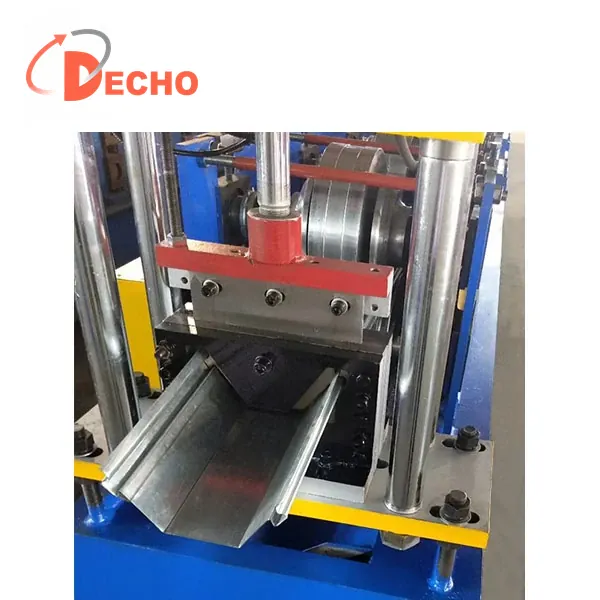
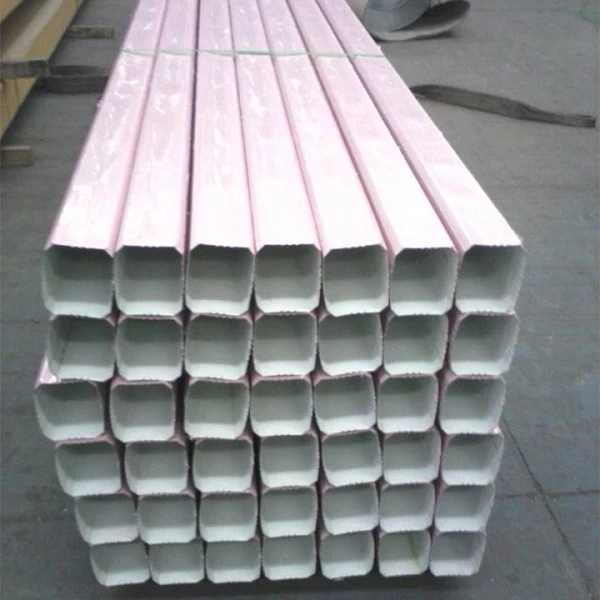
Let's talk about some real - world examples. Take the Downpipe Machine. This machine uses cold roll forming to create downpipes from metal sheets. The cold roll forming process makes these downpipes stronger. They need to be strong enough to withstand the weight of water flowing through them, as well as any external forces like wind or accidental impacts.
Another example is the Rain Gutter Roll Forming Machine. Rain gutters are constantly exposed to the elements. They have to hold up against rain, snow, and even ice. Cold roll forming gives them the strength they need to last for years without getting damaged. The work - hardened metal is more resistant to dents and cracks, which is crucial for a long - lasting gutter system.
The Corrugated Roof Sheet Making Machine also relies on cold roll forming. Corrugated roof sheets need to be strong to support their own weight, as well as any additional loads like snow. The cold roll forming process not only gives them the right shape but also enhances their strength. The corrugations themselves add to the structural integrity, and the work hardening from cold roll forming further boosts their ability to handle stress.
But it's not all about making the material stronger in a straightforward way. Cold roll forming can also affect the ductility of the material. Ductility is the ability of a material to be stretched or bent without breaking. As the material gets work - hardened during cold roll forming, its ductility generally decreases. This means that it can't be deformed as much before it fractures.
However, this isn't always a bad thing. In some applications, like the ones I mentioned earlier, a lower ductility might be acceptable or even desirable. For example, in a downpipe or a rain gutter, you don't want the material to be too bendy. You want it to maintain its shape and strength under normal conditions.
On the other hand, if you're using the cold - rolled material in an application where it needs to be further formed or bent, you might need to take this decrease in ductility into account. You may need to adjust the forming process or use a different grade of metal to ensure that the final product can be shaped as required.
The quality of the starting material also plays a big role in how cold roll forming affects its strength. If you start with a high - quality metal with a uniform composition, the cold roll forming process will be more effective in enhancing its strength. Impurities or inconsistencies in the metal can lead to uneven work hardening, which might result in weak spots in the final product.
Another factor is the design of the roll - forming tooling. The shape and arrangement of the rollers can determine how the metal is deformed. A well - designed set of rollers will ensure that the metal is deformed evenly, leading to a more consistent increase in strength throughout the profile. If the tooling is poorly designed, some parts of the metal might be over - deformed while others are under - deformed, which can affect the overall strength and quality of the product.
Now, let's talk about how all this relates to you as a potential customer. If you're in the market for products made using cold roll forming, you want to make sure that you're getting the best - quality items. You need to consider the strength requirements of your application. Are you using the product in a high - stress environment? If so, you'll want to look for products that have been cold - rolled to maximize their strength.
As a supplier, I understand the importance of providing products that meet your specific needs. Whether you're looking for downpipes, rain gutters, or corrugated roof sheets, I can offer you high - quality products that have been cold - roll formed to enhance their strength.
If you're interested in learning more about our cold - roll - formed products or have specific requirements for your project, don't hesitate to reach out. We can have a chat about your needs, and I can provide you with more detailed information on how our products can meet your strength and quality expectations.
In conclusion, cold roll forming is a powerful process that can significantly affect the strength of materials. It offers a great way to enhance the strength of metal products, making them more durable and reliable. Whether it's through work hardening or the right design of the formed profile, cold roll forming has a lot to offer. So, if you're in the market for strong and high - quality metal products, give cold - roll - formed items a serious consideration.
References
- ASM Handbook, Volume 14A: Metalworking: Bulk Forming. ASM International.
- Kalpakjian, S., & Schmid, S. R. (2010). Manufacturing Engineering and Technology. Pearson.