As a supplier of Deck Roll Forming Machines, I've witnessed firsthand the challenges and intricacies involved in designing molds for producing complex - shaped decks. In this blog, I'll share some insights on how to design the mold for a Deck Roll Forming Machine to achieve high - quality, complex - shaped decks.
Understanding the Basics of Deck Roll Forming
Deck roll forming is a process that involves passing a continuous strip of metal through a series of rollers to gradually shape it into the desired deck profile. The rollers in the machine are part of the mold, which is custom - designed according to the specific requirements of the deck.
Before starting the mold design, it's crucial to have a clear understanding of the deck's specifications. This includes the dimensions, cross - sectional shape, material thickness, and any special features such as ribs, flanges, or holes. The complexity of the shape directly influences the design of the mold. For instance, a deck with multiple bends and curves will require a more sophisticated mold compared to a simple flat - bottomed deck.
Analyzing the Material
The type of material used for the deck plays a significant role in mold design. Different metals have varying mechanical properties such as ductility, strength, and hardness. Steel, for example, is a commonly used material for decks due to its high strength. However, its hardness can pose challenges during the forming process. Aluminum, on the other hand, is more ductile and easier to form but may require different mold surface treatments to prevent galling.
When designing the mold, the material's thickness also needs to be considered. Thicker materials require more force to form, which means the mold must be designed to withstand higher pressures. Additionally, the material's yield strength determines the amount of deformation it can undergo without permanent damage. This information is used to calculate the number of forming stands in the roll - forming machine and the degree of deformation at each stand.
Designing the Mold Structure
The mold structure for a Deck Roll Forming Machine consists of multiple sets of rollers arranged in a sequence. Each set of rollers is responsible for a specific stage of the forming process. The design of the rollers themselves is critical. Their shape, size, and surface finish all affect the quality of the formed deck.
For complex - shaped decks, the rollers may need to have non - standard geometries. Computer - Aided Design (CAD) software is often used to create detailed 3D models of the rollers. These models can be used to simulate the roll - forming process and identify potential issues such as excessive stress, wrinkling, or uneven deformation.
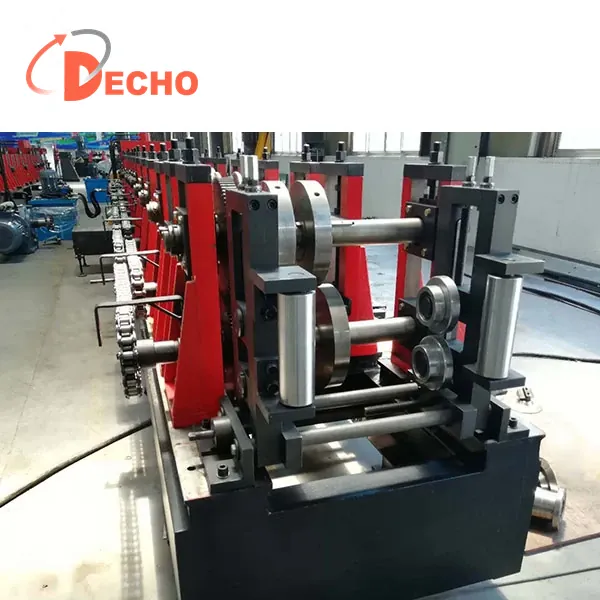
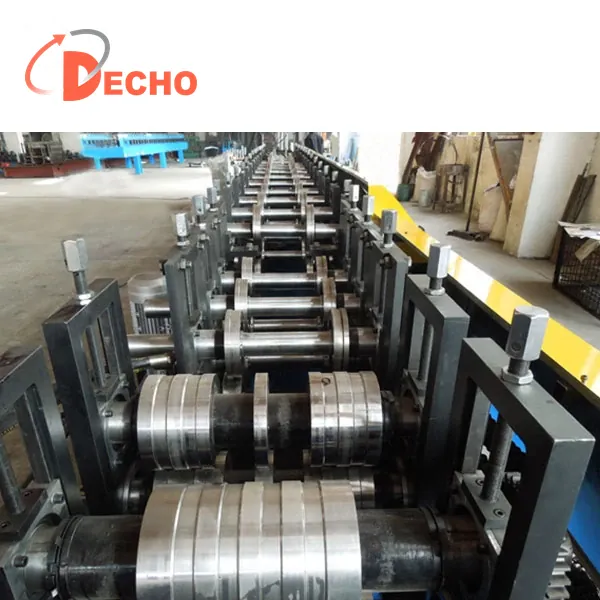
The spacing between the rollers is another important factor. If the rollers are too close together, the material may experience excessive deformation and cracking. If they are too far apart, the forming process may be incomplete, resulting in an uneven deck surface. The optimal roller spacing depends on the material properties, the complexity of the shape, and the speed of the roll - forming machine.
Tooling and Surface Treatments
The tooling used in the mold, including the rollers and cutting blades, needs to be made from high - quality materials. Tool steel is a popular choice due to its high hardness, wear resistance, and toughness. The cutting blades, in particular, need to be sharp and durable to ensure clean cuts during the deck production process.
Surface treatments can also enhance the performance of the mold. For example, a hard chrome plating can be applied to the rollers to reduce friction and wear. This not only extends the lifespan of the mold but also improves the surface finish of the formed deck. Other surface treatments such as nitriding or carburizing can be used to increase the hardness and corrosion resistance of the tooling.
Quality Control and Testing
Once the mold is designed and manufactured, it's essential to conduct thorough quality control and testing. This includes dimensional inspections of the rollers and other mold components to ensure they meet the design specifications. The mold should also be tested on a Deck Roll Forming Machine using sample materials.
During the testing phase, the formed decks are inspected for defects such as cracks, wrinkles, and uneven surfaces. Any issues identified during testing need to be addressed by making adjustments to the mold design or the roll - forming process parameters. This iterative process of testing and adjustment helps to optimize the mold design and ensure the production of high - quality complex - shaped decks.
Integration with the Deck Roll Forming Machine
The mold must be designed to be compatible with the Deck Roll Forming Machine. This includes considerations such as the machine's speed, power, and the number of forming stands. The mold should be easy to install and remove from the machine for maintenance and replacement purposes.
In addition, the control system of the roll - forming machine needs to be configured to work in conjunction with the mold. The machine's speed and the feeding rate of the material should be adjusted according to the requirements of the mold design. This ensures a smooth and efficient roll - forming process.
Customization and Flexibility
As a Deck Roll Forming Machine supplier, we understand that different customers have different requirements for their decks. Therefore, the mold design should be customizable. This allows us to produce decks with a wide range of shapes and sizes to meet the diverse needs of our customers.
Flexibility in the mold design also means that it can be easily modified or adapted in the future. For example, if a customer wants to change the deck's shape or add new features, the mold can be adjusted without significant re - engineering. This not only saves time and cost but also provides our customers with the ability to respond quickly to market changes.
Related Products
In addition to Deck Roll Forming Machines, we also offer other types of roll - forming machines such as Purlin Forming Machine, Cable Tray Roll Forming Machine, and Metal Roof Making Machine. These machines are designed to produce high - quality metal products for various industries.
Conclusion
Designing the mold for a Deck Roll Forming Machine to produce complex - shaped decks is a challenging but rewarding process. It requires a deep understanding of the deck's specifications, the material properties, and the roll - forming process. By using advanced design tools, high - quality materials, and rigorous quality control, we can ensure the production of molds that can produce high - quality decks.
If you're interested in our Deck Roll Forming Machines or have specific requirements for mold design, please feel free to contact us for further discussion and procurement negotiation. We're committed to providing you with the best solutions for your metal - forming needs.
References
- Kalpakjian, S., & Schmid, S. R. (2008). Manufacturing Engineering and Technology. Pearson Prentice Hall.
- Dieter, G. E. (1986). Mechanical Metallurgy. McGraw - Hill.
- Groover, M. P. (2010). Fundamentals of Modern Manufacturing: Materials, Processes, and Systems. Wiley.