As a seasoned supplier in the cold roll forming industry, I understand the critical importance of accurately measuring the formability of materials. Cold roll forming is a process that involves shaping metal sheets or strips into desired profiles by passing them through a series of rollers. The success of this process heavily depends on the formability of the materials used. In this blog post, I will share some insights on how to measure the formability of materials for cold roll forming.
Understanding Formability
Formability refers to the ability of a material to undergo plastic deformation without cracking or fracturing. In the context of cold roll forming, it is essential to select materials with good formability to ensure the production of high - quality profiles. Several factors can affect the formability of a material, including its chemical composition, grain structure, and mechanical properties such as yield strength, ultimate tensile strength, and elongation.
Tensile Testing
One of the most common methods for measuring formability is tensile testing. This test involves applying a uniaxial tensile force to a specimen until it breaks. During the test, key parameters such as yield strength, ultimate tensile strength, and elongation are measured.
- Yield Strength: The yield strength is the stress at which a material begins to deform plastically. A lower yield strength generally indicates better formability, as the material can be more easily shaped without excessive force.
- Ultimate Tensile Strength: The ultimate tensile strength is the maximum stress that a material can withstand before breaking. While a high ultimate tensile strength is desirable for the final product's strength, it should be balanced with formability.
- Elongation: Elongation is the percentage increase in the length of the specimen at the point of fracture. A higher elongation value suggests that the material can undergo more plastic deformation before failure, which is crucial for cold roll forming.
Tensile testing provides valuable information about a material's overall formability, but it has its limitations. It only measures deformation in one direction, while cold roll forming involves complex multi - directional deformation.
Bend Testing
Bend testing is another important method for evaluating formability. In this test, a specimen is bent to a specific angle over a given radius. The test can be performed using different methods, such as the V - bend test or the U - bend test.
- V - Bend Test: In the V - bend test, the specimen is bent into a V - shape. The angle of the bend and the radius of the bend are carefully controlled. If the material cracks or fractures during the bending process, it indicates poor formability.
- U - Bend Test: The U - bend test is similar to the V - bend test, but the specimen is bent into a U - shape. This test can provide more information about the material's ability to withstand complex bending geometries.
Bend testing is particularly useful for assessing a material's resistance to cracking during bending operations, which are common in cold roll forming.
Erichsen Cupping Test
The Erichsen cupping test is a method used to measure the deep - drawing formability of a material. In this test, a circular blank of the material is clamped between a die and a blank holder, and a punch is then forced into the center of the blank to form a cup - shaped part.
- Erichsen Value: The Erichsen value is the maximum depth of the cup that can be formed without cracking. A higher Erichsen value indicates better deep - drawing formability.
This test is especially relevant for cold roll forming processes that involve the creation of parts with deep - drawn features, such as some components produced by Metal Roof Making Machine.
Limiting Dome Height (LDH) Test
The Limiting Dome Height (LDH) test is a more advanced method for evaluating formability. It measures the maximum height to which a dome can be formed from a circular blank of the material without failure.
- Failure Modes: The LDH test can identify different failure modes, such as necking or cracking. By analyzing these failure modes, we can gain a better understanding of the material's formability under complex stress states.
The LDH test is suitable for materials used in applications where complex shapes are formed, such as in the production of parts by Roller Shutter Forming Machine.
Material Selection and Formability
When selecting materials for cold roll forming, it is important to consider the specific requirements of the product and the forming process. For example, if the final product requires high strength, a material with a relatively high yield strength and ultimate tensile strength may be chosen. However, this must be balanced with the need for good formability.
In addition to the above - mentioned testing methods, it is also important to consider the material's surface condition. A smooth surface can reduce friction during the cold roll forming process, which can improve formability. Surface defects such as scratches or oxides can act as stress concentrators and reduce the material's formability.
Importance of Measuring Formability in Cold Roll Forming
Accurately measuring the formability of materials is crucial for several reasons. Firstly, it helps to ensure the quality of the final product. By selecting materials with good formability, we can reduce the risk of defects such as cracks, wrinkles, and uneven thickness in the formed profiles.
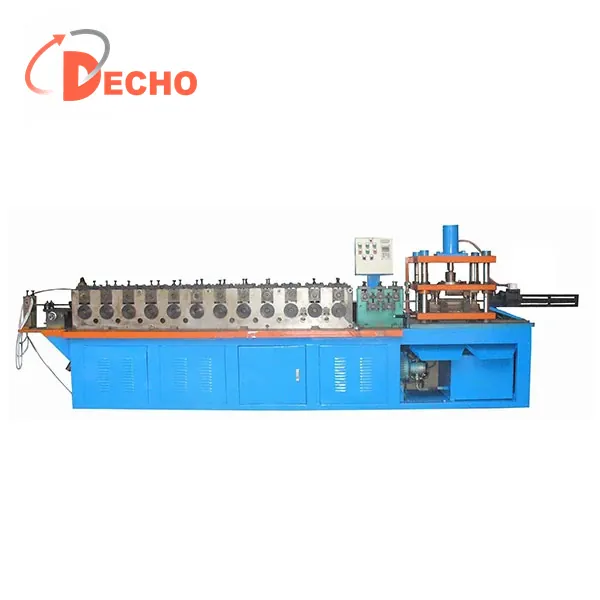
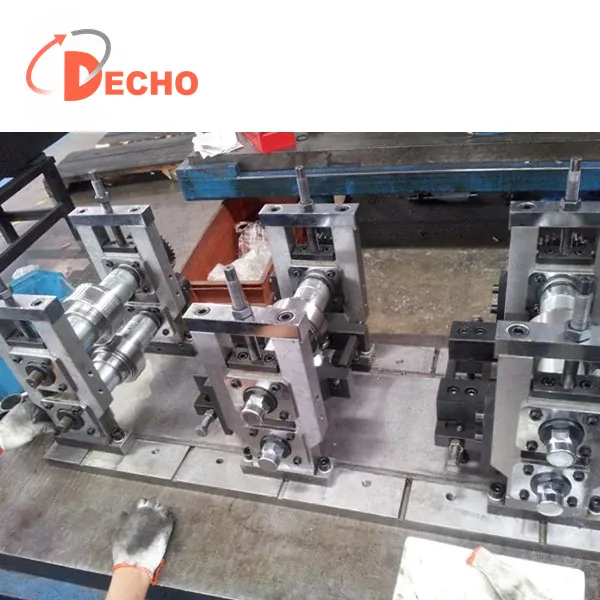
Secondly, it can improve the efficiency of the cold roll forming process. Materials with better formability require less force to shape, which can reduce wear and tear on the forming equipment, such as Roll Former Machine. This can lead to longer equipment life and lower maintenance costs.
Finally, measuring formability can also help in cost - control. By avoiding the use of materials with poor formability, we can reduce the amount of scrap generated during the production process, which can save both material and production costs.
Conclusion
Measuring the formability of materials is a complex but essential task in the cold roll forming industry. By using a combination of methods such as tensile testing, bend testing, Erichsen cupping test, and LDH test, we can gain a comprehensive understanding of a material's formability.
As a cold roll forming supplier, I am committed to providing high - quality products by carefully selecting materials with excellent formability. If you are in the market for cold roll - formed products or need advice on material selection, I encourage you to reach out for a procurement discussion. We can work together to ensure that you get the best solutions for your specific needs.
References
- Dieter, G. E. (1986). Mechanical Metallurgy. McGraw - Hill.
- Kalpakjian, S., & Schmid, S. R. (2014). Manufacturing Engineering and Technology. Pearson.
- Groover, M. P. (2010). Fundamentals of Modern Manufacturing: Materials, Processes, and Systems. Wiley.