When it comes to the manufacturing of roll - formed profiles, setting the appropriate length is a crucial step that can significantly impact the quality and efficiency of the production process. As a supplier of Roll Forming Machines, I have witnessed firsthand the importance of this aspect in various industries. In this blog, I will share some insights on how to set the length of the roll - formed profiles effectively.
Understanding the Basics of Roll - Formed Profiles
Roll - formed profiles are created by passing a continuous strip of metal through a series of rolls. Each set of rolls gradually shapes the metal into the desired cross - sectional profile. These profiles are widely used in construction, automotive, and other industries due to their high strength - to - weight ratio and cost - effectiveness.
The length of the roll - formed profiles needs to be precisely set according to the specific requirements of the end - product. For example, in the construction industry, roof tiles and wall panels need to have accurate lengths to ensure a proper fit during installation.
Factors Affecting the Length Setting
Design Requirements
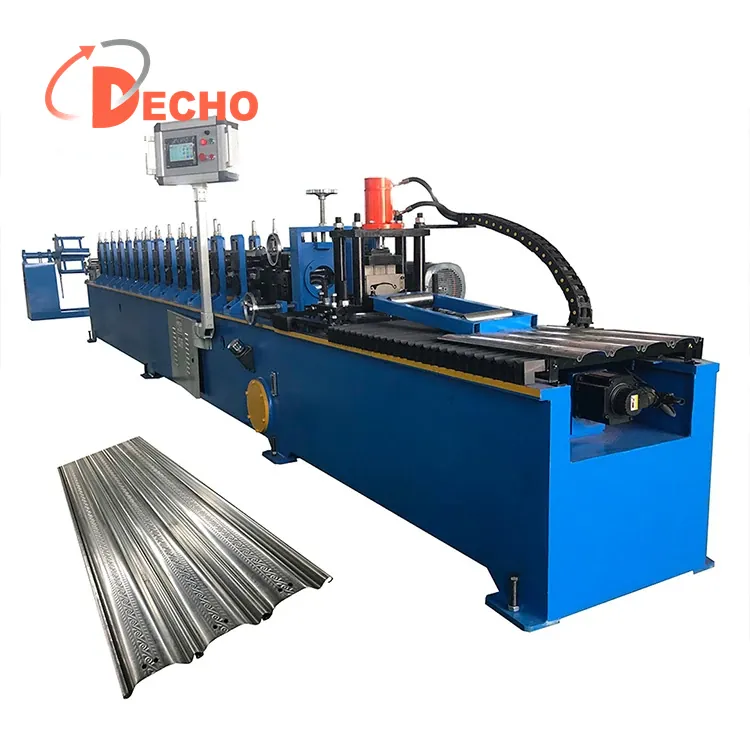
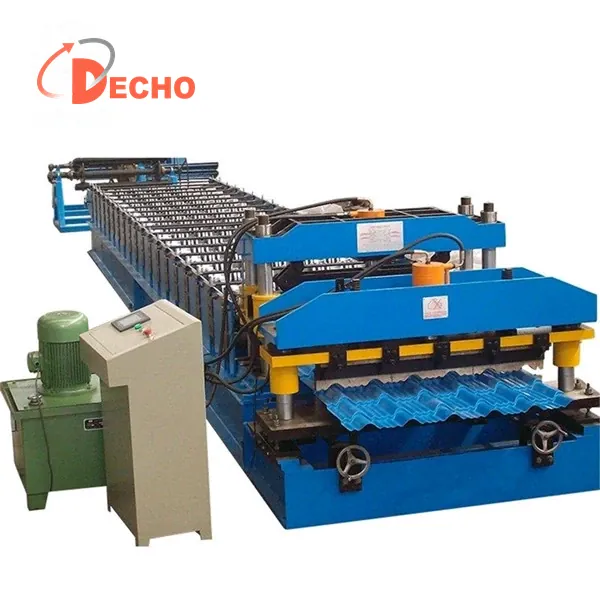
The first and most important factor is the design requirements of the final product. If you are producing Roof Tile Machine for a specific roofing project, the length of the tiles will be determined by the roof's dimensions and the installation pattern. Similarly, for Rolling Door Machine products, the length of the door slats must match the height and width of the door opening.
Material Properties
The properties of the material being used also play a role in length setting. Different metals have different levels of elasticity and ductility. For instance, aluminum is more malleable than steel. When setting the length, you need to consider how the material will behave during the roll - forming process. If the material is too elastic, it may stretch slightly during forming, which can affect the final length.
Production Efficiency
Another factor is production efficiency. Longer profiles may require more time to form and may also be more difficult to handle during the manufacturing process. On the other hand, shorter profiles may result in more waste material and increased production time due to more frequent cutting operations. Therefore, finding the optimal length that balances production speed and material utilization is essential.
Methods for Setting the Length
Mechanical Stop Systems
One of the simplest methods for setting the length of roll - formed profiles is using mechanical stop systems. These systems typically consist of a physical stop that the profile hits once it reaches the desired length. The stop can be adjusted manually to change the length setting. This method is cost - effective and easy to implement, but it may not be as accurate as some other methods, especially for high - precision applications.
Encoder - Based Systems
Encoder - based systems are more advanced and offer higher accuracy. An encoder is a device that measures the rotation of a shaft or the movement of a linear component. In a roll - forming machine, an encoder can be used to measure the length of the profile as it is being formed. The machine's control system can then use this information to stop the forming process at the desired length. This method is suitable for applications where high precision is required, such as in the automotive industry.
Laser Measuring Systems
Laser measuring systems are the most accurate option for setting the length of roll - formed profiles. A laser sensor emits a beam of light that is reflected off the end of the profile. By measuring the time it takes for the light to return, the system can accurately determine the length of the profile. Laser measuring systems are ideal for applications where extremely high precision is needed, but they are also more expensive than mechanical stop or encoder - based systems.
Step - by - Step Guide to Setting the Length
Step 1: Determine the Required Length
Based on the design requirements of the final product, calculate the exact length of the roll - formed profile. Consider factors such as material shrinkage or expansion during the forming process.
Step 2: Choose the Appropriate Length - Setting Method
Depending on the level of precision required and your budget, select the most suitable length - setting method. For low - precision applications, a mechanical stop system may be sufficient. For high - precision applications, an encoder - based or laser measuring system may be necessary.
Step 3: Install and Calibrate the Length - Setting System
If you are using a mechanical stop system, install the stop at the appropriate position and adjust it to the desired length. For encoder - based or laser measuring systems, follow the manufacturer's instructions for installation and calibration. Make sure the system is accurately measuring the length of the profile.
Step 4: Test the Machine
Before starting full - scale production, run a few test pieces to ensure that the length - setting system is working correctly. Measure the length of the test profiles using a reliable measuring tool and compare the results with the desired length. Make any necessary adjustments to the length - setting system.
Step 5: Monitor and Adjust During Production
During the production process, regularly monitor the length of the roll - formed profiles. If you notice any deviations from the desired length, make adjustments to the length - setting system as needed. This will help ensure that all profiles meet the required specifications.
Quality Control and Troubleshooting
Quality Control
Quality control is an essential part of setting the length of roll - formed profiles. Use measuring tools such as calipers, micrometers, or laser measuring devices to check the length of the profiles at regular intervals. Keep records of the measurements to track the consistency of the production process.
Troubleshooting
If you encounter problems with the length - setting system, such as inaccurate lengths or inconsistent results, there are several possible causes. Check for mechanical issues, such as loose belts or misaligned stops. For encoder - based or laser measuring systems, make sure the sensors are clean and properly calibrated. If the problem persists, consult the machine's technical support team or a professional technician.
Conclusion
Setting the length of roll - formed profiles is a critical process that requires careful consideration of various factors. By understanding the design requirements, material properties, and production efficiency, and by choosing the appropriate length - setting method, you can ensure that your roll - formed profiles meet the highest quality standards.
As a Roll Forming Machine supplier, we are committed to providing our customers with the best solutions for their roll - forming needs. Whether you are looking for a Roof Tile Making Machine or a Rolling Door Machine, we have the expertise and equipment to help you achieve the desired results.
If you are interested in our roll - forming machines or need more information on setting the length of roll - formed profiles, please feel free to contact us. We look forward to discussing your requirements and providing you with a customized solution.
References
- "Roll Forming Technology Handbook" by Thomas H. Meletis
- "Metal Forming: Processes and Analysis" by Dieter A. Kuhn, William F. Hosford, and Robert M. Caddell