As a supplier of Purlin Forming Machines, I've had the privilege of witnessing the evolution and application of these remarkable pieces of equipment in the construction and manufacturing industries. In this blog, I'll delve into the design principles that underpin the functionality and efficiency of Purlin Forming Machines.
Material Handling and Feeding
The first step in the design of a Purlin Forming Machine is to ensure efficient material handling and feeding. The machine must be able to accept a continuous supply of raw materials, typically steel coils, and feed them into the forming process smoothly. This requires a robust coil holder and a reliable feeding system.
The coil holder is designed to securely hold the steel coil in place and allow for easy rotation as the material is fed into the machine. It should be adjustable to accommodate different coil sizes and weights. The feeding system, on the other hand, is responsible for pulling the material from the coil and guiding it into the forming rollers at a consistent speed. This is crucial for maintaining the quality and accuracy of the formed purlins.
Forming Process
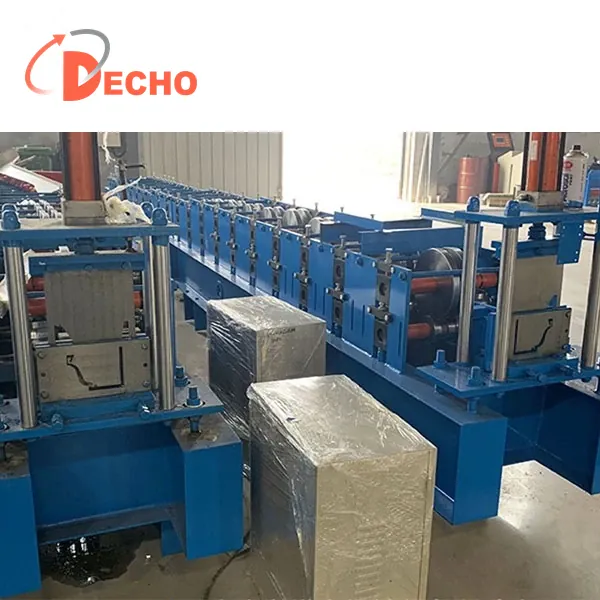
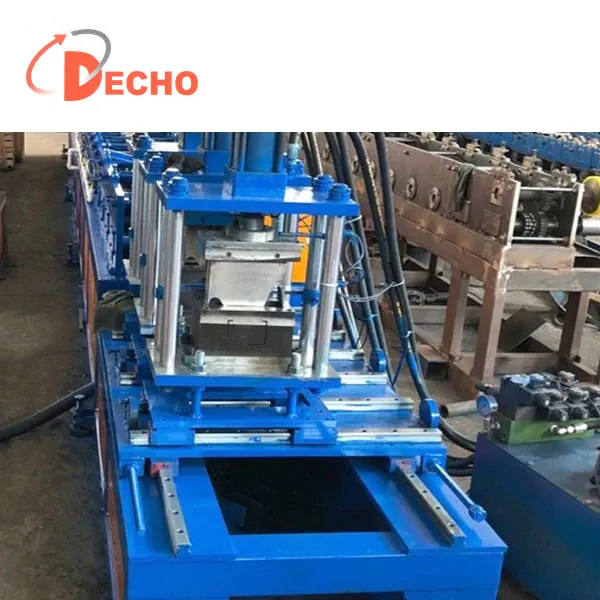
The core of the Purlin Forming Machine lies in its forming process. The machine uses a series of rollers to gradually shape the flat steel strip into the desired purlin profile. The design of these rollers is critical, as they must be precisely engineered to ensure that the purlins are formed to the correct dimensions and with the required strength.
The rollers are typically made of high-quality steel and are heat-treated to increase their hardness and durability. They are arranged in a specific sequence, with each set of rollers performing a specific bending or shaping operation. The number and configuration of the rollers depend on the complexity of the purlin profile. For example, a simple C-shaped purlin may require fewer rollers than a more complex Z-shaped purlin.
Cutting and Shearing
Once the purlin has been formed, it needs to be cut to the appropriate length. The cutting and shearing mechanism of the Purlin Forming Machine is designed to make clean, accurate cuts without damaging the purlin. This is typically achieved using a hydraulic or mechanical shear.
The shear is controlled by a programmable logic controller (PLC), which ensures that the cuts are made at the correct intervals. The PLC can also be programmed to adjust the length of the purlins based on the specific requirements of the project. This flexibility is one of the key advantages of modern Purlin Forming Machines.
Automation and Control
In today's manufacturing environment, automation and control are essential for improving productivity and quality. Purlin Forming Machines are no exception. Most modern machines are equipped with advanced control systems that allow for easy operation and monitoring.
The control system typically includes a touchscreen interface, which provides operators with real-time information about the machine's status, production rate, and any error messages. The operator can use the touchscreen to adjust the machine settings, such as the speed, length, and profile of the purlins. The control system also includes safety features, such as emergency stop buttons and sensors, to ensure the safety of the operators.
Quality Assurance
Quality assurance is a top priority in the design of Purlin Forming Machines. The machine must be able to produce purlins that meet the strict quality standards of the construction industry. This requires a combination of high-quality components, precise engineering, and rigorous testing.
During the manufacturing process, each component of the machine is inspected and tested to ensure that it meets the required specifications. The formed purlins are also subjected to a series of quality control checks, including dimensional measurements, surface finish inspections, and strength tests. Any purlins that do not meet the quality standards are rejected and recycled.
Flexibility and Customization
One of the key advantages of Purlin Forming Machines is their flexibility and customization capabilities. The machine can be easily adjusted to produce different types and sizes of purlins. This allows manufacturers to meet the diverse needs of their customers.
For example, if a customer requires a specific purlin profile or size, the machine can be reconfigured by changing the rollers and adjusting the control settings. This flexibility reduces the need for multiple machines and increases the efficiency of the manufacturing process.
Energy Efficiency
In addition to performance and quality, energy efficiency is also an important consideration in the design of Purlin Forming Machines. The machine should be designed to consume as little energy as possible without compromising its performance.
This can be achieved through the use of energy-efficient motors, advanced control systems, and optimized mechanical designs. For example, some machines are equipped with variable frequency drives (VFDs), which allow the motors to operate at different speeds depending on the load. This reduces energy consumption and lowers operating costs.
Maintenance and Serviceability
Finally, the design of the Purlin Forming Machine should take into account its maintenance and serviceability. The machine should be easy to access and maintain, with clear instructions and diagrams provided for the operators.
Regular maintenance is essential for ensuring the long-term performance and reliability of the machine. This includes lubricating the moving parts, checking the electrical connections, and inspecting the rollers for wear and tear. The machine should also be designed to allow for easy replacement of worn or damaged components.
In conclusion, the design principle of a Purlin Forming Machine is a complex and multi-faceted process that involves careful consideration of many factors, including material handling, forming, cutting, automation, quality assurance, flexibility, energy efficiency, and maintenance. As a supplier of Purlin Forming Machines, we are committed to providing our customers with high-quality, reliable, and efficient machines that meet their specific needs.
If you are interested in learning more about our Purlin Forming Machines or other related products such as Downpipe Machine, Rolling Shutter Door Machine, and Roller Shutter Door Forming Machine, please feel free to contact us for a detailed discussion and potential procurement.
References
- "Manufacturing Engineering and Technology" by S. Kalpakjian and S. R. Schmid
- "Steel Construction Manual" by the American Institute of Steel Construction
- Industry reports and whitepapers on Purlin Forming Machines