Hey there! As a supplier of Cold Roll Forming Machines, I often get asked about the differences between cold roll forming machines and punching machines. In this blog post, I'll break down the key distinctions between these two types of machinery, and why you might choose one over the other.
What is a Cold Roll Forming Machine?
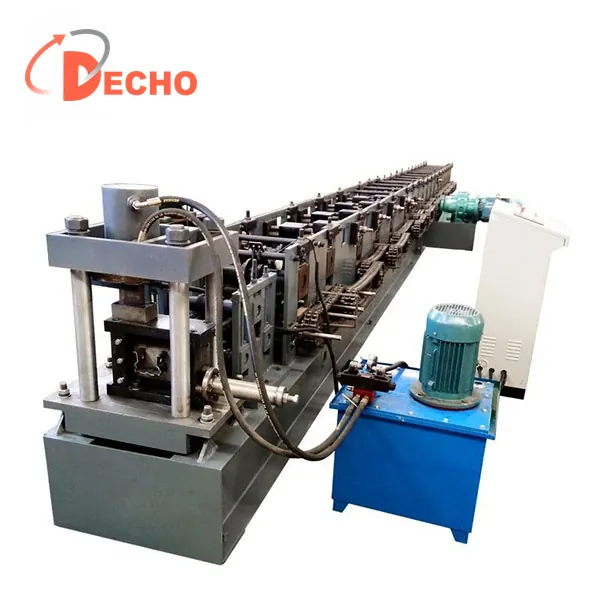
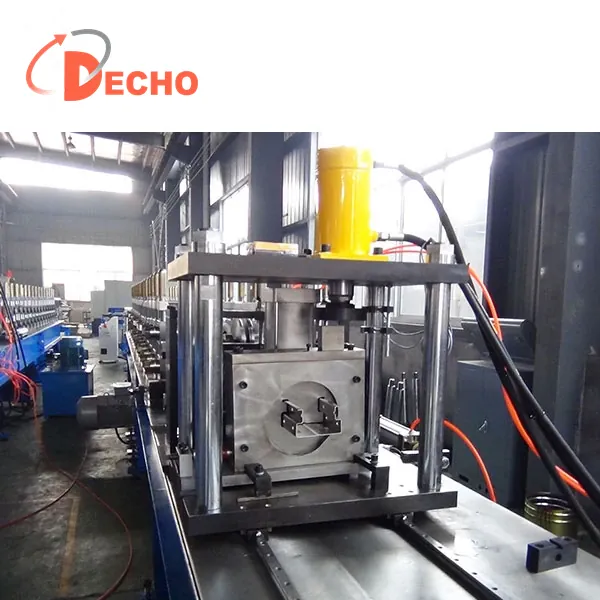
A cold roll forming machine is a piece of equipment that forms metal sheets into various shapes by passing them through a series of rollers. These rollers gradually bend the metal into the desired profile without the need for heat. Cold roll forming is a highly efficient and precise method for producing long, continuous metal profiles, such as roofing sheets, wall panels, and structural components.
One of the main advantages of cold roll forming is its ability to produce complex shapes with consistent quality. The process is highly automated, which means that once the machine is set up, it can produce large quantities of parts with minimal human intervention. This makes cold roll forming ideal for high-volume production runs.
Another benefit of cold roll forming is its flexibility. The machine can be easily adjusted to produce different profiles by changing the rollers or the settings. This allows manufacturers to quickly adapt to changing market demands and produce a wide range of products using the same equipment.
Here are some examples of products that can be made using a cold roll forming machine:
- Glazed Tile Roll Forming Machine: This machine is used to produce glazed tile-shaped roofing sheets, which are popular for their aesthetic appeal and durability.
- Gutter Forming Machine: As the name suggests, this machine is used to produce gutters, which are essential for directing rainwater away from buildings.
- Racking Roll Forming Machine: This machine is used to produce racking systems, which are used in warehouses and storage facilities to organize and store goods.
What is a Punching Machine?
A punching machine, on the other hand, is a machine that uses a punch and die set to create holes or shapes in metal sheets. The punch is a tool that is forced through the metal sheet, while the die is a tool that provides a support surface for the metal and shapes the hole or the cut.
Punching machines are commonly used in the manufacturing industry for a variety of applications, such as creating holes for fasteners, cutting out shapes for decorative purposes, or producing parts with specific geometries. They can be used on a wide range of materials, including steel, aluminum, and copper.
One of the main advantages of punching machines is their speed. They can quickly create holes or shapes in metal sheets, making them ideal for high-volume production runs. Additionally, punching machines can produce very precise holes and shapes, which is important for applications where accuracy is critical.
However, punching machines also have some limitations. They are typically limited to producing simple shapes and holes, and they may not be suitable for producing complex profiles. Additionally, the punching process can cause some deformation or damage to the metal sheet, which may require additional processing or finishing.
Key Differences between Cold Roll Forming Machines and Punching Machines
Now that we have a basic understanding of what cold roll forming machines and punching machines are, let's take a look at the key differences between them:
1. Process
- Cold roll forming is a continuous process that gradually bends the metal sheet into the desired profile using a series of rollers.
- Punching is a discrete process that creates holes or shapes in the metal sheet using a punch and die set.
2. Shape Complexity
- Cold roll forming machines can produce complex shapes with consistent quality, including profiles with curved or irregular shapes.
- Punching machines are typically limited to producing simple shapes and holes, such as circles, squares, and rectangles.
3. Material Thickness
- Cold roll forming machines can handle a wide range of material thicknesses, from thin gauge sheets to thick plates.
- Punching machines are generally more suitable for thin to medium gauge metal sheets, as thicker materials may require more force and may cause more deformation.
4. Production Volume
- Cold roll forming machines are ideal for high-volume production runs, as they can produce long, continuous profiles with minimal human intervention.
- Punching machines can also be used for high-volume production runs, but they may require more frequent tool changes and maintenance, which can increase the production time and cost.
5. Precision
- Cold roll forming machines can produce very precise profiles with tight tolerances, which is important for applications where accuracy is critical.
- Punching machines can also produce precise holes and shapes, but the accuracy may be affected by factors such as the quality of the punch and die set, the material properties, and the punching speed.
6. Cost
- Cold roll forming machines are generally more expensive to purchase and set up than punching machines, but they can offer significant cost savings in the long run due to their high efficiency and productivity.
- Punching machines are relatively inexpensive to purchase and operate, but they may require more frequent tool changes and maintenance, which can increase the overall cost of production.
Which Machine Should You Choose?
The choice between a cold roll forming machine and a punching machine depends on several factors, including the type of product you want to produce, the production volume, the required precision, and the budget.
If you need to produce long, continuous profiles with complex shapes and high precision, a cold roll forming machine is likely the best choice. Cold roll forming machines are ideal for high-volume production runs and can offer significant cost savings in the long run.
On the other hand, if you need to create simple holes or shapes in metal sheets, a punching machine may be more suitable. Punching machines are relatively inexpensive and can quickly produce parts with high precision.
In some cases, you may need to use both a cold roll forming machine and a punching machine to produce a complete product. For example, you may use a cold roll forming machine to produce the main profile of a product, and then use a punching machine to create holes or cutouts in the profile.
Conclusion
In conclusion, cold roll forming machines and punching machines are two different types of machinery that are used for different purposes in the manufacturing industry. Cold roll forming machines are ideal for producing long, continuous profiles with complex shapes and high precision, while punching machines are more suitable for creating simple holes or shapes in metal sheets.
As a supplier of Cold Roll Forming Machines, I can help you choose the right machine for your specific needs. Whether you're looking for a Glazed Tile Roll Forming Machine, a Gutter Forming Machine, or a Racking Roll Forming Machine, I have the expertise and experience to provide you with the best solution.
If you're interested in learning more about our Cold Roll Forming Machines or have any questions about the difference between cold roll forming machines and punching machines, please don't hesitate to contact me. I'd be happy to discuss your requirements and help you make an informed decision.
References
- "Cold Roll Forming: Principles and Processes" by George E. Dieter
- "Punching Technology Handbook" by Peter J. Ulintz