As a supplier of Metal Roof Forming Machines, I often get asked about the ins and outs of these machines. One key component that's crucial for the proper functioning of a metal roof forming machine is the electrical control cabinet. So, what exactly is the electrical control cabinet of a metal roof forming machine? Let's dive in and find out.
What's an Electrical Control Cabinet?
In simple terms, the electrical control cabinet of a metal roof forming machine is like the brain of the whole operation. It's a box - usually made of metal - that houses all the electrical components and systems needed to control and manage the machine. Think of it as a command center where all the signals are sent and received to make the machine work as it should.
The cabinet contains various parts such as circuit breakers, contactors, relays, programmable logic controllers (PLCs), and human - machine interfaces (HMIs). Each of these components plays a vital role in how the machine operates.
Key Components in the Control Cabinet
Circuit Breakers
Circuit breakers are like the safety guards of the electrical system. They're designed to automatically switch off the power when there's an overload or a short - circuit in the electrical circuit. This helps prevent damage to the machine's electrical components and reduces the risk of fire. For example, if a motor in the metal roof forming machine suddenly draws too much current, the circuit breaker will trip and cut off the power supply.
Contactors
Contactors are used to control the flow of electricity to different parts of the machine, especially the motors. They work like big switches that can handle high - current loads. When you want a particular motor in the metal roof forming machine to start or stop, the PLC sends a signal to the contactor, which then either closes or opens the circuit, allowing or stopping the flow of electricity.
Relays
Relays are similar to contactors but are usually used for low - current control circuits. They act as signal amplifiers or switches that can control a larger circuit with a smaller electrical signal. For instance, if a sensor in the machine detects that a certain part has reached a specific position, it can send a small electrical signal to a relay, which then triggers a larger circuit to perform an action like stopping the machine.
Programmable Logic Controllers (PLCs)
PLCs are the real workhorses of the electrical control cabinet. They're like mini - computers that can be programmed to control the operation of the metal roof forming machine. You can set up specific sequences, timings, and conditions for different parts of the machine to work. For example, you can program the PLC to make the machine start forming a roof sheet when the raw material is fed in, and then stop once the sheet reaches a certain length.
Human - Machine Interfaces (HMIs)
HMIs are the communication links between the operator and the machine. They're usually a touch - screen display or a set of buttons and indicators. Through the HMI, the operator can input commands, monitor the machine's status, and adjust settings. For example, you can use the HMI to change the speed of the machine, set the length of the roof sheets to be formed, or view any error messages.
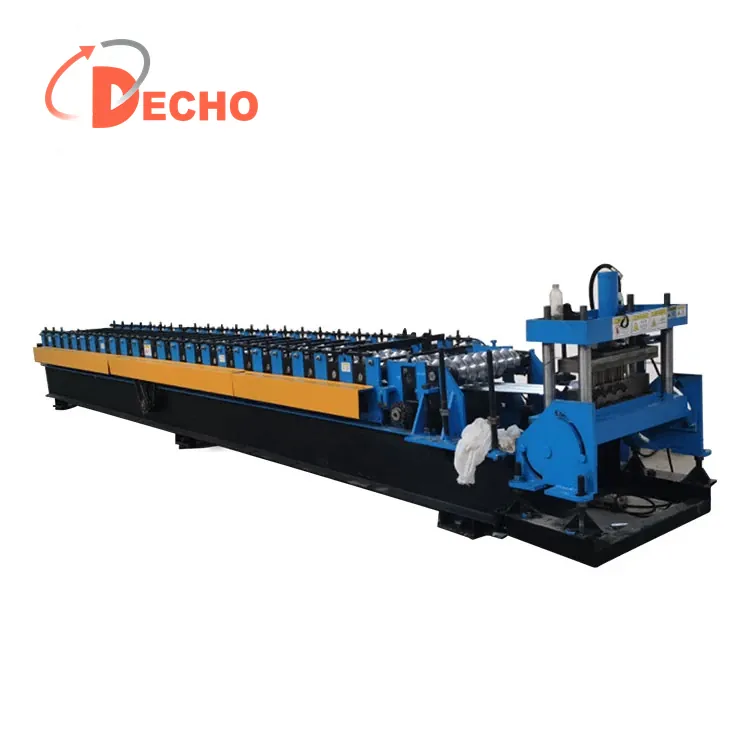
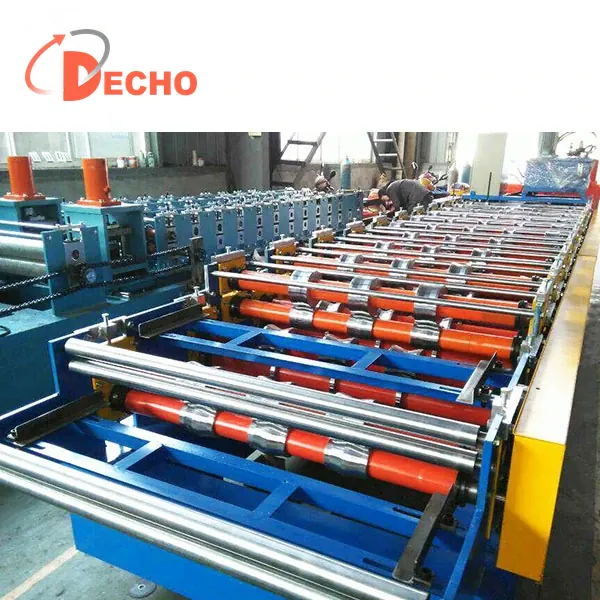
How the Control Cabinet Works with the Metal Roof Forming Machine
The connection between the electrical control cabinet and the metal roof forming machine is seamless. When the machine starts up, the PLC initiates a start - up sequence. It first checks all the safety sensors and switches to ensure that everything is in the right place and working properly. Once the safety checks are completed, it sends signals to the contactors to start the motors.
As the machine starts forming the metal sheets, the PLC continuously monitors sensors placed at various points on the machine. These sensors can detect things like the position of the rollers, the tension of the metal sheet, and the speed of the conveyor belts. Based on the data received from these sensors, the PLC makes real - time adjustments to the machine's operation. For example, if the sensor detects that the tension of the metal sheet is too high, the PLC can send a signal to the motor to reduce the speed of the conveyor belt.
Benefits of a Good Electrical Control Cabinet
A well - designed electrical control cabinet offers several benefits. Firstly, it ensures the safety of the operators. With features like circuit breakers and safety relays, the risk of electrical hazards is significantly reduced. Secondly, it improves the efficiency of the metal roof forming machine. The ability to precisely control and monitor the machine's operation means that it can produce high - quality roof sheets at a faster rate.
Moreover, a good control cabinet is also easy to maintain. Most modern control cabinets are modular, which means that if a component fails, it can be easily replaced without having to shut down the entire machine for a long time.
Our Offerings
As a Metal Roof Forming Machine supplier, we take pride in providing high - quality control cabinets for our machines. Our control cabinets are designed and built with the latest technology to ensure reliable and efficient operation. Whether you're looking for a Roof Sheet Roll Forming Machine, a Metal Roof Making Machine, or a Standing Seam Roll Former, we've got the right control cabinet solution for you.
Why Choose Us?
We understand that every customer's needs are different. That's why we offer customized control cabinet solutions. We work closely with you to understand your specific requirements and then design a control cabinet that meets those needs. Our team of experienced engineers is always available to provide after - sales support and technical assistance.
Ready to Purchase?
If you're in the market for a metal roof forming machine and want to know more about our electrical control cabinets or our machines in general, we'd love to hear from you. Contact us for a free consultation and let's discuss how we can help you with your roofing production needs. Our experts are on standby to answer all your questions and guide you through the purchasing process.
References
- Industrial Electrical Control Handbook. McGraw - Hill.
- Programmable Logic Controllers: Principles and Applications. Pearson.
- Electrical Control Systems for Machines and Processes. Taylor & Francis.