As a supplier of forming machines, I've often been asked about the maximum forming capacity of these remarkable pieces of equipment. The concept of maximum forming capacity is crucial for both manufacturers and end - users, as it directly impacts production efficiency, product quality, and overall business profitability.
Understanding Forming Capacity
Forming capacity refers to the upper limits of what a forming machine can achieve in terms of processing materials. It encompasses several key aspects, including the maximum thickness and width of the materials that can be formed, the complexity of shapes that can be produced, and the production speed under optimal conditions.
Material Thickness and Width
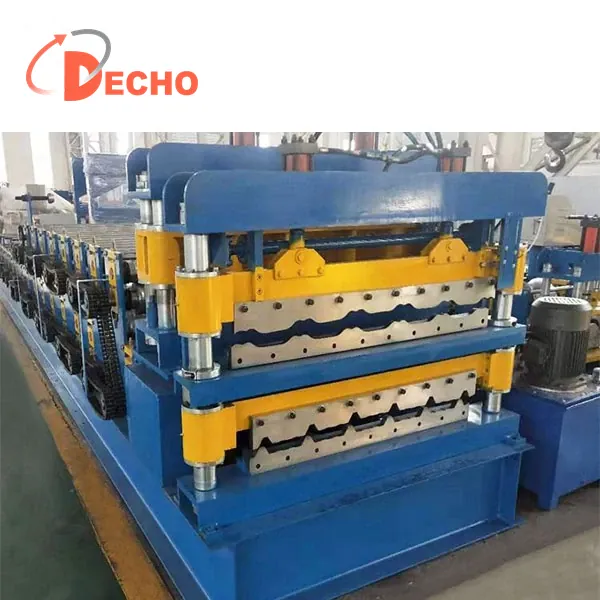
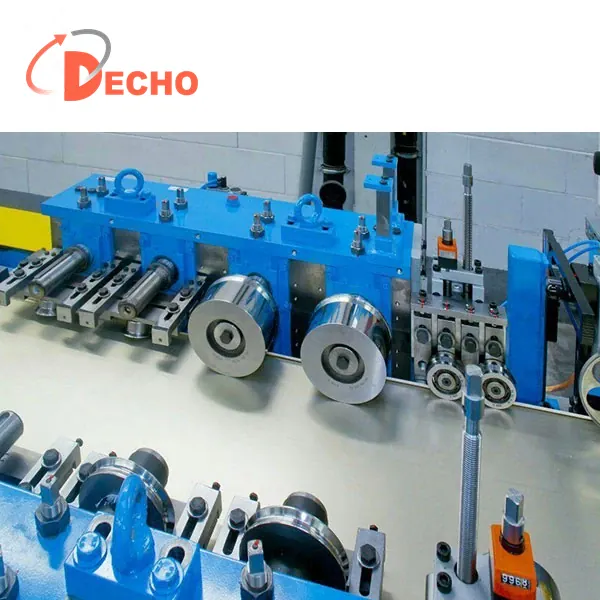
One of the primary factors defining forming capacity is the ability to handle different material thicknesses and widths. For instance, in the case of a roll forming machine, the maximum thickness of the metal sheet it can process is determined by the power of its drive system, the strength of its rollers, and the rigidity of its frame. A high - capacity roll forming machine can typically handle thicker materials, which are often used in heavy - duty applications such as construction and automotive manufacturing.
Regarding width, the forming machine's design must accommodate the widest possible material that a customer might need to process. This requires careful engineering of the roller spacing, the width of the forming stations, and the overall machine footprint. Our Double Layer Roll Forming Machine is designed with a wide range of adjustable settings to handle various material widths, making it suitable for a diverse set of applications.
Complexity of Shapes
The ability to form complex shapes is another important measure of a forming machine's capacity. Simple shapes like straight profiles or basic curves are relatively easy to produce, but more intricate geometries such as multi - radius bends, embossed patterns, and custom - designed cross - sections require advanced forming techniques and precision control systems.
Modern forming machines are equipped with computer - numerical - control (CNC) systems that allow for highly accurate and repeatable forming operations. These systems can store and execute complex forming programs, enabling the production of parts with tight tolerances. Our Steel Silo Roll Forming Machine is capable of creating the complex shapes required for steel silos, which often involve precise curves and interlocking profiles.
Production Speed
Production speed is a critical factor in determining the overall forming capacity of a machine. Higher production speeds mean more parts can be produced in a given time, increasing productivity and reducing costs. However, speed must be balanced with quality. If a machine operates too fast, it may compromise the accuracy of the forming process, leading to defective parts.
The maximum production speed of a forming machine is influenced by factors such as the power of the drive motors, the efficiency of the forming process, and the speed at which the material can be fed into the machine. Our Rolling Shutter Strip Making Machine is designed to achieve high production speeds while maintaining excellent product quality, making it a popular choice for manufacturers of rolling shutters.
Factors Affecting Maximum Forming Capacity
Several factors can affect the maximum forming capacity of a forming machine. These include the type of material being processed, the machine's design and construction, and the operating environment.
Material Properties
Different materials have different mechanical properties, such as hardness, ductility, and elasticity. These properties can significantly impact the forming process. For example, harder materials require more force to form, which may limit the maximum thickness that a machine can handle. Ductile materials, on the other hand, are more easily formed into complex shapes but may require special lubrication to prevent cracking.
Machine Design and Construction
The design and construction of the forming machine play a crucial role in determining its maximum forming capacity. A well - designed machine with a robust frame, high - quality components, and advanced control systems is more likely to achieve higher forming capacities. For example, a machine with a heavy - duty frame can better withstand the forces generated during the forming process, allowing for the processing of thicker materials.
Operating Environment
The operating environment can also affect the performance of a forming machine. Factors such as temperature, humidity, and dust levels can impact the machine's components and the quality of the formed parts. For example, high temperatures can cause the machine's components to expand, leading to misalignments and reduced forming accuracy.
Measuring and Improving Forming Capacity
Measuring the forming capacity of a machine is a complex process that involves testing the machine under various conditions. Manufacturers typically conduct tests using different materials, thicknesses, and shapes to determine the machine's maximum capabilities. These tests are often performed in a controlled environment to ensure accurate results.
To improve the forming capacity of a machine, several strategies can be employed. One approach is to upgrade the machine's components, such as the drive motors, rollers, and control systems. Another strategy is to optimize the forming process by adjusting the machine settings, such as the roller pressure, feed speed, and forming sequence.
Conclusion
Understanding the maximum forming capacity of a forming machine is essential for both manufacturers and end - users. It allows manufacturers to design and build machines that meet the specific needs of their customers, and it enables end - users to select the right machine for their production requirements.
As a leading supplier of forming machines, we are committed to providing our customers with high - quality machines that offer maximum forming capacity. Our machines are designed and built using the latest technologies and materials, ensuring reliable performance and excellent product quality.
If you are interested in learning more about our forming machines or discussing your specific forming requirements, we encourage you to contact us. Our team of experts is ready to assist you in finding the perfect solution for your business.
References
- "Metal Forming Handbook: Processes and Applications" by G. Dieter
- "Roll Forming Technology" by W. Blazynski