When it comes to the manufacturing and construction industries, cold roll forming machinery plays a crucial role. As a trusted supplier of cold roll forming machinery, I often receive inquiries about various aspects of our products, and one question that frequently surfaces is, "What is the power consumption of cold roll forming machinery?"
Understanding Cold Roll Forming Machinery
Before delving into the power - consumption details, it's essential to understand what cold roll forming machinery does. Cold roll forming is a process that shapes metal sheets into specific profiles without reheating the metal to its recrystallization temperature. This method is highly efficient for producing long, uniform metal products such as roofing sheets, purlins, and various structural components.
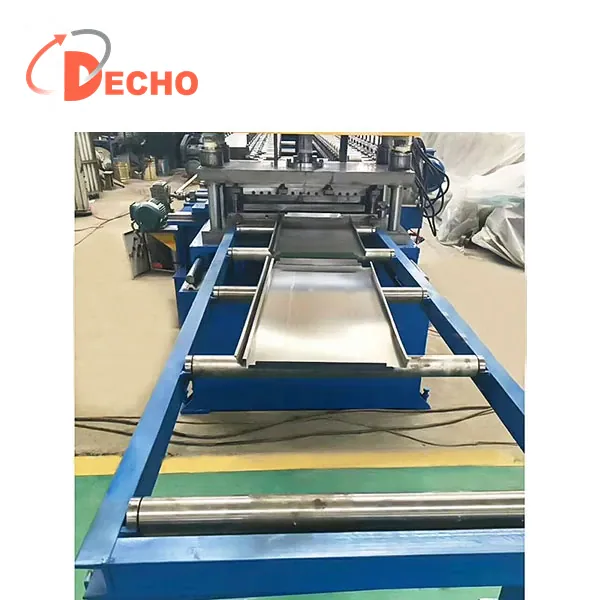
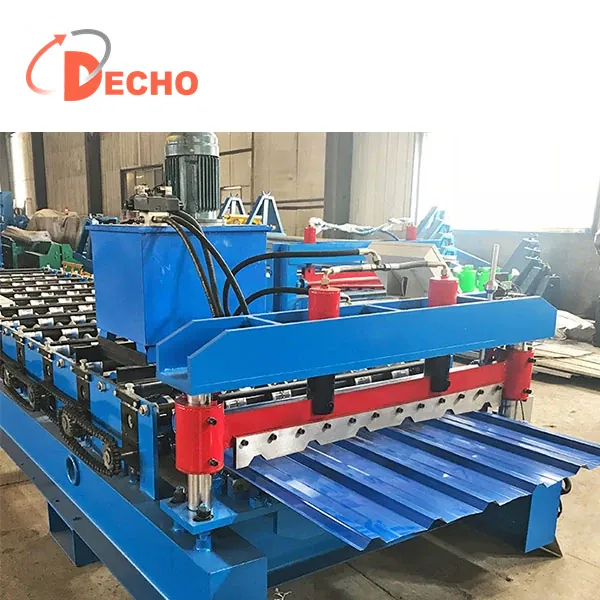
Our company offers a wide range of cold roll forming machines, including Sheet Metal Forming Machines, Purlin Forming Machine, and Roof Sheet Making Machine. Each of these machines is designed to meet different industrial needs, with varying power requirements.
Factors Affecting Power Consumption
-
Machine Size and Complexity: Larger cold roll forming machines with more complex designs generally consume more power. For instance, a machine that can produce multiple - layer or highly customized profiles will require more energy. These machines often have more motors, gears, and moving parts, which all contribute to the overall power consumption. Our Purlin Forming Machine, which is capable of handling different sizes and thicknesses of purlins, has a power consumption that is influenced by its size and the complexity of the forming process.
-
Material Thickness and Type: The thickness and type of the metal sheet being formed also have a significant impact on power consumption. Thicker materials require more force to shape, so a machine working with 3 - mm thick steel will use more power than one working with 1 - mm thick aluminum. Different metals also have different deformation resistances, with steel generally being more resistant than aluminum, thus demanding more energy during the forming process.
-
Production Speed: Faster production speeds usually mean higher power consumption. When a cold roll forming machine operates at a high speed, the motors need to work harder to drive the rollers and move the metal sheet through the forming process efficiently. However, in some cases, a well - optimized high - speed machine can achieve a better power - to - production ratio compared to a slower machine, as it can produce more products in a shorter period.
Power Consumption Calculation
Power consumption in cold roll forming machinery is typically measured in kilowatts (kW). To calculate the power consumption of a machine, we need to consider the power ratings of all its electrical components, such as motors, heaters (if any), and control systems.
Let's take a simple example. Consider a basic Sheet Metal Forming Machine with a main drive motor rated at 5 kW, a smaller motor for the decoiler rated at 1 kW, and some control systems that consume about 0.5 kW in total. The total rated power of this machine is 5 + 1+ 0.5 = 6.5 kW.
However, the actual power consumption may differ from the rated power. In real - world operation, the machine may not run at full load all the time. For example, during the start - up and shut - down phases, the power consumption is usually lower. Also, if the machine has energy - saving features such as variable - frequency drives (VFDs), which adjust the motor speed according to the actual load, the average power consumption can be significantly reduced.
Energy - Saving Strategies for Cold Roll Forming Machinery
- Variable - Frequency Drives (VFDs): As mentioned earlier, VFDs can adjust the motor speed based on the load requirements. When the machine is not under full load, the VFD reduces the motor speed, thereby saving energy. Most of our modern cold roll forming machines are equipped with VFDs to optimize power consumption.
- Regular Maintenance: Keeping the machine in good condition is crucial for energy efficiency. Regularly lubricating the moving parts, checking the alignment of the rollers, and cleaning the electrical components can reduce friction and prevent unnecessary power losses. For example, if the rollers are misaligned, the machine has to work harder to form the metal sheet, leading to increased power consumption.
- Optimal Production Planning: Planning the production process can also lead to energy savings. Loading the machine with a large batch of the same - type materials can reduce the number of start - up and shut - down cycles. Since the start - up phase usually consumes more power, minimizing these cycles can result in significant energy savings over time.
Significance of Power Consumption in the Industry
Understanding the power consumption of cold roll forming machinery is of great significance for several reasons. For manufacturers, it directly affects the production cost. Lower power consumption means lower electricity bills, which can increase the profit margin. It also helps in complying with environmental regulations. With the growing emphasis on sustainable manufacturing, reducing energy consumption is not only good for the bottom line but also for the environment.
For customers, knowing the power consumption of the machine they are considering purchasing can help them make more informed decisions. They can estimate the long - term operating costs and choose a machine that best fits their budget and production needs.
Conclusion
In summary, the power consumption of cold roll forming machinery is influenced by multiple factors, including machine size, material type and thickness, and production speed. As a supplier of cold roll forming machinery, we are committed to providing high - quality machines with optimized power consumption. Our Sheet Metal Forming Machines, Purlin Forming Machine, and Roof Sheet Making Machine are designed to balance performance and energy efficiency.
If you are interested in learning more about the power consumption of our cold roll forming machinery or are considering purchasing a machine for your business, we welcome you to contact us for further discussion and negotiation. We are here to help you find the most suitable solution for your production needs.
References
- Khurmi, R. S., & Gupta, J. K. (2005). A Textbook of Machine Design. S. Chand Publication.
- Kalpakjian, S., & Schmid, S. R. (2008). Manufacturing Engineering and Technology. Pearson Prentice Hall.