In the realm of metal fabrication, cold roll forming stands as a pivotal process, renowned for its efficiency and precision in shaping metal sheets into various profiles. As a seasoned Cold Roll Forming supplier, I've witnessed firsthand the transformative power of this technology and the critical role played by each component within the system. Among these components, the cut-off device emerges as a linchpin, dictating the final quality and functionality of the formed products. In this blog, we'll delve into the multifaceted role of the cut-off device in cold roll forming, exploring its significance, types, and impact on the overall production process.
Understanding Cold Roll Forming
Before we dive into the specifics of the cut-off device, let's briefly recap the fundamentals of cold roll forming. This process involves passing a continuous strip of metal through a series of roll stations, each equipped with custom-designed rolls that gradually shape the metal into the desired profile. Unlike traditional hot rolling, cold roll forming is performed at room temperature, which preserves the material's mechanical properties and eliminates the need for subsequent heat treatment. This results in a more cost-effective and energy-efficient manufacturing process, making it a popular choice across a wide range of industries, including construction, automotive, and aerospace.
The Role of the Cut-Off Device
At its core, the cut-off device in a cold roll forming line serves a single, yet crucial purpose: to separate the formed metal profile into individual lengths. This seemingly simple task, however, has far-reaching implications for the quality, efficiency, and productivity of the entire production process. Here are some of the key roles played by the cut-off device:
1. Precision Cutting
One of the primary functions of the cut-off device is to ensure precise and accurate cutting of the formed profile. This is essential for maintaining the dimensional accuracy and consistency of the final products. By using advanced cutting technologies, such as hydraulic or servo-driven shearing mechanisms, the cut-off device can achieve clean, straight cuts with minimal burrs or deformation. This not only enhances the aesthetic appeal of the products but also ensures a proper fit and functionality in their intended applications.
2. Length Control
In addition to precision cutting, the cut-off device also plays a vital role in controlling the length of the formed profiles. This is typically achieved through the use of a length measuring system, which accurately measures the length of the profile as it moves through the forming line. Once the desired length is reached, the cut-off device is triggered to make the cut, ensuring that each piece meets the specified length requirements. This level of length control is crucial for applications where precise dimensions are critical, such as in the construction of buildings or the manufacturing of automotive components.
3. Production Efficiency
The cut-off device also has a significant impact on the overall production efficiency of the cold roll forming line. By automating the cutting process, it eliminates the need for manual intervention, reducing the risk of human error and increasing the speed of production. Additionally, modern cut-off devices are designed to operate at high speeds, allowing for rapid and continuous cutting of the formed profiles. This results in higher throughput and lower production costs, making cold roll forming a more competitive manufacturing solution.
4. Material Optimization
Another important role of the cut-off device is to optimize the use of raw materials. By accurately measuring and cutting the profiles to the desired lengths, it minimizes waste and reduces the amount of scrap generated during the production process. This not only helps to conserve resources but also improves the overall cost-effectiveness of the manufacturing operation. Additionally, some cut-off devices are equipped with advanced nesting algorithms, which can automatically calculate the most efficient way to cut the profiles from the available material, further maximizing material utilization.
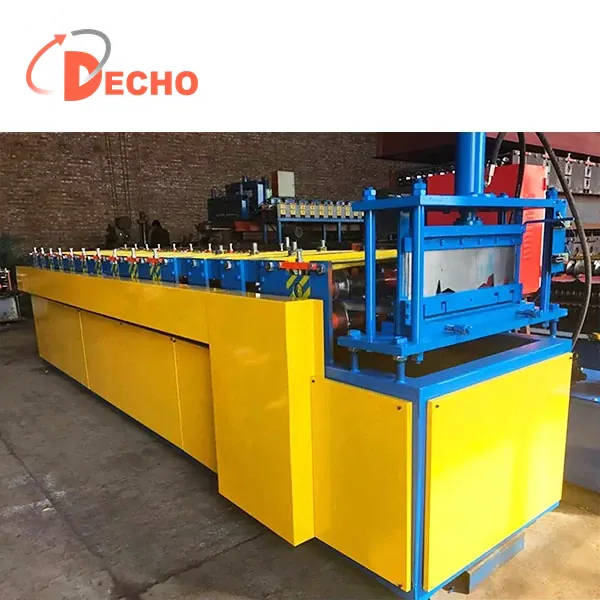
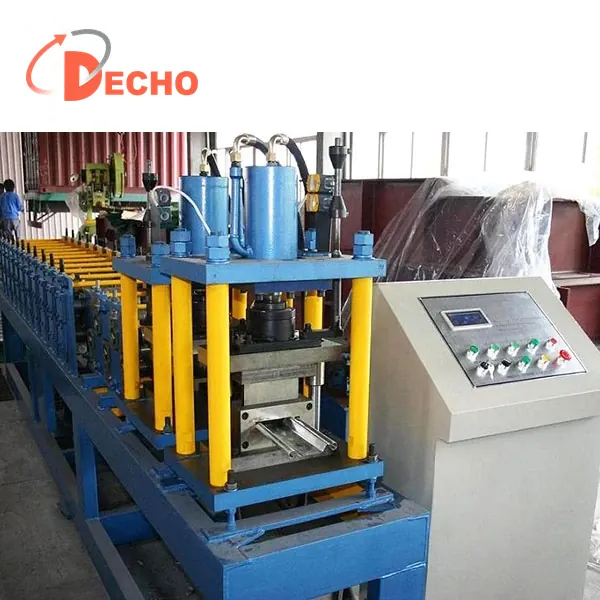
Types of Cut-Off Devices
There are several types of cut-off devices commonly used in cold roll forming lines, each with its own unique features and advantages. The choice of cut-off device depends on a variety of factors, including the type of material being formed, the desired cutting speed and accuracy, and the specific requirements of the application. Here are some of the most common types of cut-off devices:
1. Shearing Cut-Off
Shearing cut-off devices are the most widely used type of cut-off device in cold roll forming lines. They work by applying a shearing force to the formed profile, causing it to separate at the desired location. Shearing cut-off devices can be further classified into two main types: mechanical and hydraulic. Mechanical shearing cut-off devices use a mechanical linkage to generate the shearing force, while hydraulic shearing cut-off devices use a hydraulic cylinder to apply the force. Hydraulic shearing cut-off devices are generally preferred for their higher cutting force and precision, making them suitable for cutting thicker and harder materials.
2. Flying Cut-Off
Flying cut-off devices are designed to cut the formed profile while it is still in motion. This allows for continuous production without the need to stop the line for cutting, resulting in higher production speeds and efficiency. Flying cut-off devices typically use a rotating blade or a laser cutting system to make the cut. They are commonly used in applications where high-speed cutting and precise length control are required, such as in the production of roofing panels or automotive body parts.
3. Punching Cut-Off
Punching cut-off devices use a punching mechanism to cut the formed profile. They are typically used for cutting thin-gauge materials or for creating holes or slots in the profile. Punching cut-off devices can be either mechanical or hydraulic, and they offer a high degree of precision and repeatability. However, they are generally slower than shearing or flying cut-off devices and may not be suitable for cutting thicker materials.
Impact on the Overall Production Process
The cut-off device has a profound impact on the overall production process in a cold roll forming line. Its performance can affect the quality, efficiency, and productivity of the entire operation. Here are some of the ways in which the cut-off device can impact the production process:
1. Quality Control
As mentioned earlier, the cut-off device plays a crucial role in ensuring the precision and accuracy of the formed profiles. By making clean, straight cuts with minimal burrs or deformation, it helps to maintain the dimensional accuracy and consistency of the final products. This is essential for meeting the quality standards and specifications of the customers. Additionally, the cut-off device can also be used to perform quality control checks, such as measuring the length and width of the profiles, to ensure that they meet the required tolerances.
2. Production Efficiency
The efficiency of the cut-off device directly affects the production speed and throughput of the cold roll forming line. By automating the cutting process and operating at high speeds, it allows for rapid and continuous production of the formed profiles. This reduces the production time and increases the overall productivity of the operation. Additionally, the cut-off device can also be integrated with other components of the forming line, such as the length measuring system and the control system, to optimize the production process and minimize downtime.
3. Cost Savings
The cut-off device can also have a significant impact on the cost of production. By optimizing the use of raw materials and reducing waste, it helps to lower the material costs. Additionally, by increasing the production efficiency and reducing the downtime, it helps to lower the labor costs and the overall production costs. This makes cold roll forming a more cost-effective manufacturing solution, especially for large-scale production runs.
Conclusion
In conclusion, the cut-off device is a critical component in a cold roll forming line, playing a vital role in ensuring the precision, accuracy, and efficiency of the production process. By providing clean, straight cuts with minimal burrs or deformation, it helps to maintain the quality and consistency of the formed profiles. Additionally, by controlling the length of the profiles and optimizing the use of raw materials, it helps to reduce waste and lower the production costs. As a Cold Roll Forming supplier, we understand the importance of the cut-off device and offer a wide range of high-quality cut-off devices to meet the specific needs of our customers. Whether you're looking for a shearing cut-off, a flying cut-off, or a punching cut-off device, we have the expertise and experience to provide you with the right solution.
If you're interested in learning more about our Cold Roll Forming Machinery, Shutter Door Roll Forming Machine, or Duplex Roll Forming Machine, or if you have any questions or inquiries about our products or services, please don't hesitate to contact us. We're always happy to help and look forward to the opportunity to work with you.
References
- "Cold Roll Forming Technology" by X. Liu and J. Zhang
- "Metal Forming Handbook" by G. E. Dieter
- "Roll Forming: Design, Manufacturing, and Applications" by D. E. Hardt