Hey there! As a supplier of Metal Roll Forming Machines, I've been getting a lot of questions about the role of the cutting device in these machines. So, I thought I'd take some time to break it down for you.
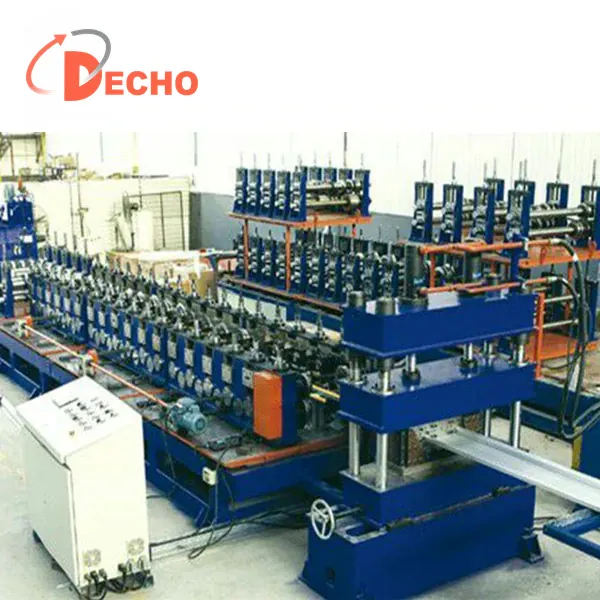
First off, let's talk about what a metal roll forming machine does. In simple terms, it takes a flat strip of metal and passes it through a series of rollers. These rollers gradually shape the metal into the desired cross - sectional profile, like a purlin or a component for a rolling shutter. You can check out our Purlin Roll Former and Rolling Shutter Roll Forming Machine on our website to see the kind of products we can make.
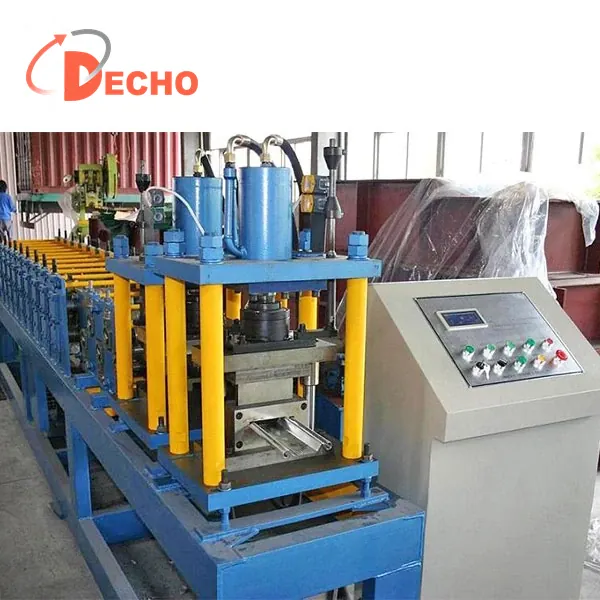
Now, the cutting device is a crucial part of this whole process. Its main job is to cut the continuously formed metal strip into the right lengths. Without a proper cutting device, you'd end up with one long, unmanageable piece of formed metal, which is pretty useless for most applications.
Accuracy is key when it comes to the cutting device. In many industries, like construction, the metal components need to be cut to very precise lengths. For example, if you're making purlins for a building, they have to fit perfectly between the supports. A slight error in cutting length can lead to installation problems and potentially compromise the structural integrity of the building. Our cutting devices are designed to offer high - precision cuts, ensuring that every piece meets the required specifications.
There are different types of cutting devices used in metal roll forming machines. One common type is the shear cutter. It works by using two blades that come together to cut through the metal. Shear cutters are great because they can make clean, straight cuts quickly. They're also relatively simple in design, which means less maintenance and fewer chances of breakdowns.
Another type is the flying cutter. This one can cut the metal while it's still in motion. It's really useful when you need to maintain a high production speed. With a flying cutter, you don't have to stop the roll forming process to make a cut, which can significantly increase the overall efficiency of the machine. You can see this in action when using our Rolling Door Machine, where high - speed production is often required.
The cutting device also needs to be compatible with the type of metal being used. Different metals have different properties, such as hardness and thickness. For example, cutting stainless steel is different from cutting mild steel. Our machines come with adjustable cutting devices that can be customized to handle various metals and thicknesses. This flexibility allows our customers to work with a wide range of materials, depending on their specific needs.
In addition to precision and compatibility, the cutting device also affects the quality of the cut edges. A good cutting device will leave smooth, burr - free edges on the metal. Burrs can be a problem because they can cause injuries during handling and may also interfere with the assembly process. Our cutting devices are engineered to minimize burrs, providing a clean finish on every cut piece.
The cutting device also plays a role in the overall productivity of the metal roll forming machine. A well - functioning cutting device can reduce downtime. For instance, if the cutting process is slow or unreliable, it can hold up the entire production line. Our advanced cutting devices are designed for quick and efficient cuts, allowing you to produce more parts in less time.
Safety is another important aspect. The cutting device is a potentially dangerous part of the machine, as it involves sharp blades and high - speed movements. We take safety seriously and equip our cutting devices with safety features like guards and sensors. These features help prevent accidents and protect the operators.
Let's talk about maintenance. Just like any other part of the machine, the cutting device needs regular maintenance. This includes cleaning, lubricating, and checking the blades for wear and tear. We provide detailed maintenance guides to our customers, so they can keep their cutting devices in top - notch condition. Regular maintenance not only extends the lifespan of the cutting device but also ensures consistent performance over time.
The cutting device also impacts the cost - effectiveness of the metal roll forming process. A high - quality cutting device may cost more upfront, but it can save you money in the long run. By reducing waste from inaccurate cuts and minimizing downtime for repairs, it can actually lower the overall production cost per part.
In conclusion, the cutting device is an essential component of a metal roll forming machine. It affects the accuracy, quality, productivity, safety, and cost - effectiveness of the entire process. Whether you're in the construction, automotive, or any other industry that uses formed metal components, a reliable cutting device is a must.
If you're in the market for a metal roll forming machine or want to upgrade your existing one, we'd love to talk to you. Our team of experts can help you find the right machine with the best - suited cutting device for your specific needs. Just reach out to us, and we'll be happy to have a detailed discussion about your requirements and how our machines can meet them.
References
- "Metal Forming Handbook: Processes and Applications"
- "Roll Forming Technology: Principles and Applications"