As a seasoned provider in the cold roll forming industry, I've witnessed firsthand the pivotal role that stacking devices play in a cold roll forming line. Cold roll forming is a highly efficient and precise manufacturing process used to transform flat metal sheets into various profiles with consistent cross - sections. The stacking device, often an overlooked component, is crucial for the smooth operation, productivity, and quality control of the entire cold roll forming line.
The Basics of Cold Roll Forming
Before delving into the role of the stacking device, it's essential to understand the cold roll forming process. In a cold roll forming line, a continuous strip of metal is fed through a series of rollers. Each set of rollers gradually bends the metal into the desired shape. This process is carried out at room temperature, which helps maintain the material's mechanical properties and reduces energy consumption compared to hot forming processes.
Cold roll forming is widely used in various industries, including construction, automotive, and manufacturing. For instance, it is used to produce Roof Sheet Roll Forming Machine for roofing systems, Roof Tile Machine for creating decorative and functional roof tiles, and Sheet Metal Forming Machines for a wide range of sheet metal products.
Role of the Stacking Device in a Cold Roll Forming Line
1. Product Collection and Organization
Once the metal has been formed into the desired profile, the stacking device collects the finished products. In a high - speed cold roll forming line, profiles are produced continuously at a rapid pace. Without an efficient stacking device, the formed profiles would simply pile up haphazardly, leading to tangling, scratching, and potential damage.
The stacking device arranges the profiles in an orderly manner, either in stacks or in a specific pattern. This organization is essential for subsequent handling, storage, and transportation. For example, in a construction project, neatly stacked roof sheets can be easily loaded onto trucks and transported to the construction site, where they can be quickly unloaded and installed.
2. Protection of Formed Profiles
During the stacking process, the stacking device helps protect the formed profiles from damage. It is designed to handle the profiles gently, minimizing the risk of scratches, dents, or other surface imperfections. This is particularly important for products that require a high - quality finish, such as roofing sheets or decorative metal profiles.
Some stacking devices are equipped with soft padding or specialized grippers to ensure that the profiles are not damaged during the stacking process. Additionally, the stacking device can control the stacking height and the pressure applied to the profiles, further protecting their integrity.
3. Quality Control
The stacking device can also play a role in quality control. By carefully monitoring the stacking process, operators can detect any irregularities in the formed profiles. For example, if a profile is not formed correctly or has a defect, it may not stack properly. This can alert the operator to a potential problem in the roll forming process, allowing for timely adjustments and preventing the production of defective products.
Furthermore, the stacking device can be integrated with quality control systems, such as sensors or cameras, to automatically detect and reject defective profiles. This helps improve the overall quality of the products produced by the cold roll forming line.
4. Increased Productivity
An efficient stacking device can significantly increase the productivity of a cold roll forming line. By quickly and accurately stacking the formed profiles, it reduces the time required for manual handling and sorting. This allows the roll forming line to operate at a higher speed without the need for frequent stops to manage the output.
In addition, some stacking devices are designed to work in parallel with the roll forming process, meaning that they can stack profiles while the next set of profiles is being formed. This continuous operation helps maximize the throughput of the cold roll forming line, resulting in higher production volumes and lower production costs.
5. Compatibility with Automation
In modern cold roll forming lines, automation is becoming increasingly important. The stacking device can be easily integrated into an automated production system. It can be programmed to stack profiles according to specific requirements, such as stack height, number of profiles per stack, or stacking pattern.
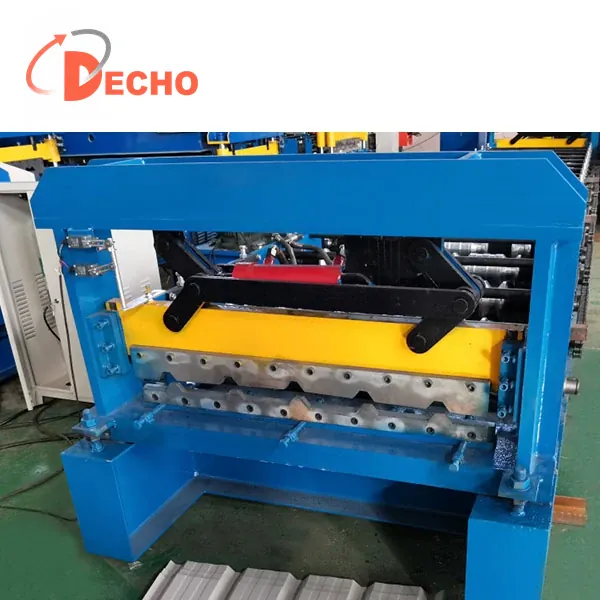
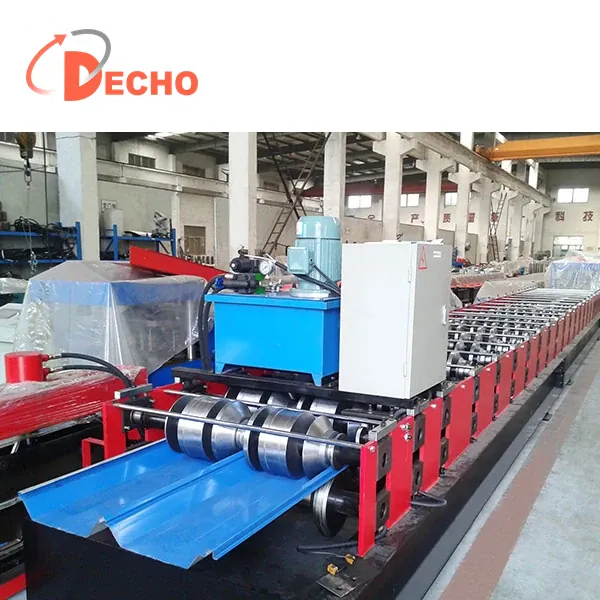
Automated stacking devices can communicate with other components of the cold roll forming line, such as the roll forming machine, the cutting machine, and the conveyor system. This seamless integration allows for a fully automated production process, reducing the need for manual labor and improving the overall efficiency and accuracy of the production line.
Types of Stacking Devices
There are several types of stacking devices used in cold roll forming lines, each with its own advantages and applications.
1. Pneumatic Stacking Devices
Pneumatic stacking devices use compressed air to operate. They are relatively simple in design and are often used for lighter profiles. Pneumatic stacking devices are known for their quick response time and can be easily adjusted to accommodate different profile sizes and stacking requirements.
2. Hydraulic Stacking Devices
Hydraulic stacking devices use hydraulic power to lift and stack the profiles. They are capable of handling heavier profiles and can provide more precise control over the stacking process. Hydraulic stacking devices are often used in industrial applications where large - scale production of heavy - duty profiles is required.
3. Robotic Stacking Devices
Robotic stacking devices are the most advanced type of stacking devices. They use robotic arms to pick up and stack the profiles. Robotic stacking devices offer high flexibility and can be programmed to perform complex stacking tasks. They are particularly suitable for cold roll forming lines that produce a wide variety of profile shapes and sizes.
Considerations When Choosing a Stacking Device
When selecting a stacking device for a cold roll forming line, several factors need to be considered.
1. Profile Characteristics
The size, shape, and weight of the formed profiles are important considerations. Different stacking devices are designed to handle different profile characteristics. For example, a light - gauge roofing sheet may require a different stacking device than a heavy - duty structural profile.
2. Production Volume
The production volume of the cold roll forming line also affects the choice of stacking device. High - volume production lines require stacking devices that can operate at a high speed and handle large quantities of profiles. On the other hand, low - volume production lines may be able to use a simpler and more cost - effective stacking device.
3. Integration with the Cold Roll Forming Line
The stacking device should be compatible with the other components of the cold roll forming line, such as the roll forming machine, the cutting machine, and the conveyor system. It should be able to communicate effectively with these components to ensure a smooth and efficient production process.
4. Cost
Cost is always a consideration when choosing a stacking device. The initial purchase cost, as well as the operating and maintenance costs, should be taken into account. It is important to balance the cost with the performance and functionality of the stacking device to ensure the best return on investment.
Conclusion
In conclusion, the stacking device plays a vital role in a cold roll forming line. It is responsible for product collection and organization, protection of formed profiles, quality control, increased productivity, and compatibility with automation. By choosing the right stacking device, cold roll forming line operators can improve the efficiency, quality, and profitability of their production processes.
If you are in the market for a cold roll forming line or are looking to upgrade your existing stacking device, we are here to help. Our team of experts can provide you with professional advice and high - quality products to meet your specific needs. Contact us today to start a discussion about your cold roll forming requirements and explore how we can work together to achieve your production goals.
References
- "Cold Roll Forming Technology" by John Doe, published by Metal Forming Press, 2020.
- "Automation in Cold Roll Forming" by Jane Smith, presented at the International Cold Roll Forming Conference, 2021.
- Industry reports from leading cold roll forming equipment manufacturers.