As a provider of sheet roll forming solutions, I've witnessed firsthand the pivotal role that tension control plays in the entire process. Sheet roll forming is a highly efficient manufacturing technique used to produce continuous lengths of formed metal sheets with a constant cross - section. From simple profiles for roofing to complex components for industrial machinery, this process is ubiquitous in various industries. In this blog, I'll delve into the significance of tension control in sheet roll forming and how it impacts the quality, efficiency, and overall success of the operation.
Understanding Sheet Roll Forming
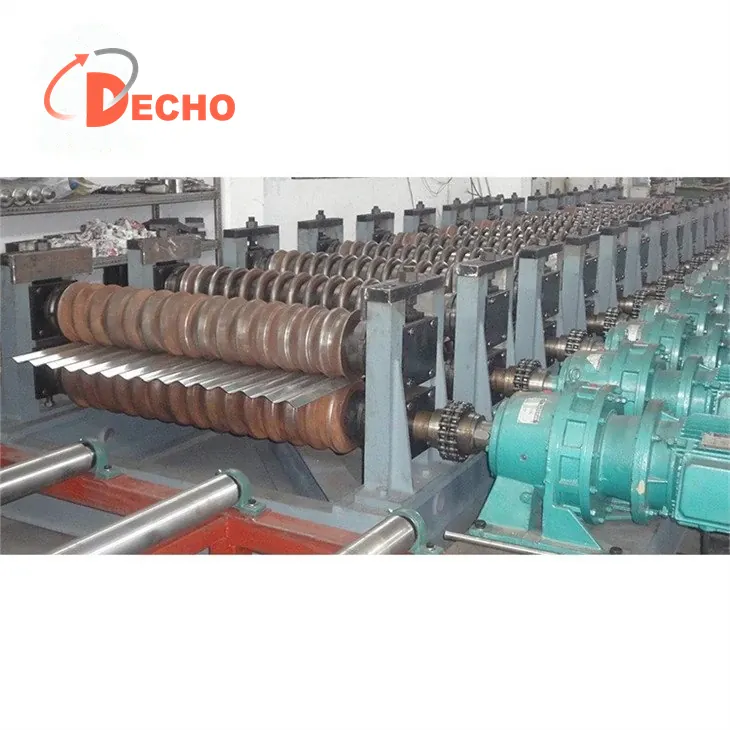
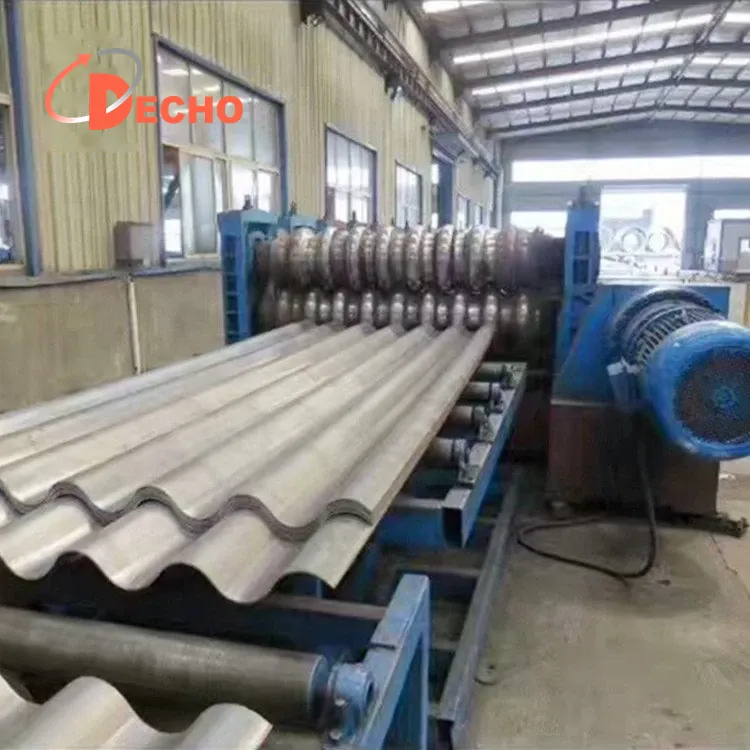
Before we discuss tension control, it's essential to have a basic understanding of sheet roll forming. The process involves passing a flat metal sheet through a series of consecutive roll stations. Each station gradually bends the sheet into the desired shape. The rolls are carefully designed to make incremental changes to the sheet's cross - section until the final profile is achieved.
The advantages of sheet roll forming are numerous. It offers high production speeds, consistent quality, and the ability to create complex shapes with precision. However, to fully realize these benefits, proper tension control is indispensable.
The Importance of Tension Control in Sheet Roll Forming
1. Ensuring Uniformity of the Formed Product
One of the primary goals of sheet roll forming is to produce a product with a consistent cross - section along its entire length. Tension control is crucial in achieving this uniformity. When the tension is not properly regulated, the metal sheet can experience uneven stretching or compression. This can lead to variations in the thickness, width, and shape of the formed product.
For example, if the tension is too high at one point in the process, the sheet may stretch more than intended, resulting in a thinner section. Conversely, low tension can cause the sheet to buckle or wrinkle, leading to an irregular shape. By maintaining a constant and appropriate tension throughout the roll - forming process, we can ensure that each part of the formed sheet has the same dimensions and quality, meeting the strictest industry standards.
2. Preventing Material Damage
Metal sheets are often expensive, and any damage during the roll - forming process can result in significant financial losses. Tension control helps prevent various types of material damage. Excessive tension can cause the sheet to tear or rupture, especially if the material has low ductility. On the other hand, insufficient tension can lead to scratches, dents, or surface imperfections as the sheet may move erratically between the rolls.
In addition, proper tension control can reduce the internal stresses within the formed product. High internal stresses can cause the product to warp or deform over time, affecting its performance and durability. By minimizing these stresses through accurate tension management, we can produce a more stable and long - lasting product.
3. Improving Process Efficiency
Tension control is also closely related to the efficiency of the sheet roll - forming process. When the tension is well - regulated, the sheet can move smoothly through the roll stations. This reduces the risk of jams, misalignments, and other production disruptions. As a result, the machine can operate at a higher speed without sacrificing quality, increasing the overall production output.
Moreover, proper tension control allows for better synchronization between different parts of the roll - forming line. For instance, it can ensure that the feeding speed of the sheet matches the speed at which the rolls are rotating. This coordinated operation not only improves efficiency but also extends the lifespan of the equipment by reducing wear and tear.
How Tension Control is Achieved in Sheet Roll Forming
1. Tension Sensors
Tension sensors are an essential component in modern sheet roll - forming systems. These sensors are placed at strategic points along the production line to measure the tension of the metal sheet in real - time. They can detect even the slightest changes in tension and send signals to the control system.
Based on the data received from the sensors, the control system can adjust the tension as needed. For example, if the sensor detects that the tension is too high, the control system can reduce the pulling force or increase the resistance at the feeding end. Conversely, if the tension is too low, it can increase the pulling force to maintain the desired tension level.
2. Drive Systems
The drive systems in a sheet roll - forming machine also play a crucial role in tension control. The motors that power the rolls and the feeding mechanism need to be precisely controlled to ensure that the sheet moves at a consistent speed and under the right amount of tension.
Variable frequency drives (VFDs) are commonly used in modern roll - forming equipment. These drives allow for precise control of the motor speed, which in turn affects the tension of the sheet. By adjusting the speed of the drives based on the feedback from the tension sensors, the system can maintain a stable tension throughout the process.
3. Brake Systems
Brake systems are another important part of tension control in sheet roll forming. They are used to provide resistance to the movement of the sheet, especially during the feeding and forming stages. By adjusting the braking force, we can control the tension of the sheet and prevent it from moving too quickly or erratically.
For example, in some roll - forming processes, a brake is applied to the coil of the metal sheet at the beginning of the line. This brake can be adjusted to control the amount of tension as the sheet is unwound. As the sheet progresses through the roll stations, additional brakes may be used to fine - tune the tension at different points in the process.
Impact of Tension Control on Different Types of Roll - Formed Products
1. Silo Roll Forming
In the production of silos using Silo Roll Forming Machine, tension control is of utmost importance. Silos are large - scale structures that need to withstand significant internal and external pressures. Any variation in the thickness or shape of the formed sheets can compromise the structural integrity of the silo.
Proper tension control ensures that the sheets used for silo construction have a uniform cross - section and are free from defects. This results in a stronger and more reliable silo that can store various materials safely for an extended period.
2. Glazed Tile Roll Forming
When it comes to Glazed Tile Roll Forming Machine, tension control is essential for achieving the desired aesthetic and functional properties of the glazed tiles. Glazed tiles are often used for roofing and wall cladding, and they need to have a smooth and consistent surface.
If the tension is not properly controlled during the roll - forming process, the tiles may develop cracks, warps, or uneven glazing. By maintaining a stable tension, we can produce glazed tiles with a high - quality finish and accurate dimensions, enhancing their visual appeal and performance.
3. Sheet Metal Forming Machines
Sheet Metal Forming Machines are used to produce a wide range of products, from simple brackets to complex automotive components. Tension control in these machines is crucial for ensuring the precision and quality of the formed parts.
In automotive applications, for example, even a small deviation in the shape or dimensions of a formed part can affect its fit and performance. By carefully controlling the tension during the roll - forming process, we can produce parts that meet the exacting requirements of the automotive industry, improving the overall safety and reliability of vehicles.
Conclusion
In conclusion, tension control is a critical factor in sheet roll forming. It plays a vital role in ensuring the uniformity, quality, and efficiency of the formed products. By using advanced tension control technologies such as sensors, drive systems, and brake systems, we can overcome the challenges associated with sheet roll forming and produce high - quality products that meet the diverse needs of different industries.
As a sheet roll - forming supplier, we are committed to providing our customers with the best - in - class roll - forming solutions that incorporate state - of the - art tension control systems. Whether you are in the market for a Silo Roll Forming Machine, a Glazed Tile Roll Forming Machine, or a Sheet Metal Forming Machines, we have the expertise and experience to meet your specific requirements.
If you are interested in learning more about our sheet roll - forming products and how tension control can benefit your production process, please feel free to contact us for a detailed discussion. We look forward to partnering with you to achieve your manufacturing goals.
References
- Kalpakjian, S., & Schmid, S. R. (2008). Manufacturing Engineering and Technology. Pearson Prentice Hall.
- Dieter, G. E. (1986). Mechanical Metallurgy. McGraw - Hill.
- Groover, M. P. (2010). Fundamentals of Modern Manufacturing: Materials, Processes, and Systems. Wiley.