In the realm of metal manufacturing, metal roll forming machines stand as pivotal tools, revolutionizing the production of various metal products. One of the critical aspects that significantly impacts the quality and performance of these formed metal products is the thickness uniformity. As a trusted Metal Roll Forming Machine supplier, I am deeply invested in understanding and optimizing this crucial factor. In this blog, we will delve into what the thickness uniformity of formed metal products by a metal roll forming machine entails, its importance, influencing factors, and how we ensure high - level thickness uniformity in our machines.
Defining Thickness Uniformity
Thickness uniformity refers to the consistency of the thickness of a metal product across its entire surface and along its length. In an ideal scenario, a formed metal product should have the same thickness at every point. For instance, when producing a metal sheet or a metal profile using a roll forming machine, the deviation in thickness from one end to the other and from the center to the edges should be minimal. A high degree of thickness uniformity is often expressed as a small variance in measured thickness values. This consistency is vital as it directly affects the structural integrity, functionality, and aesthetic appeal of the final product.
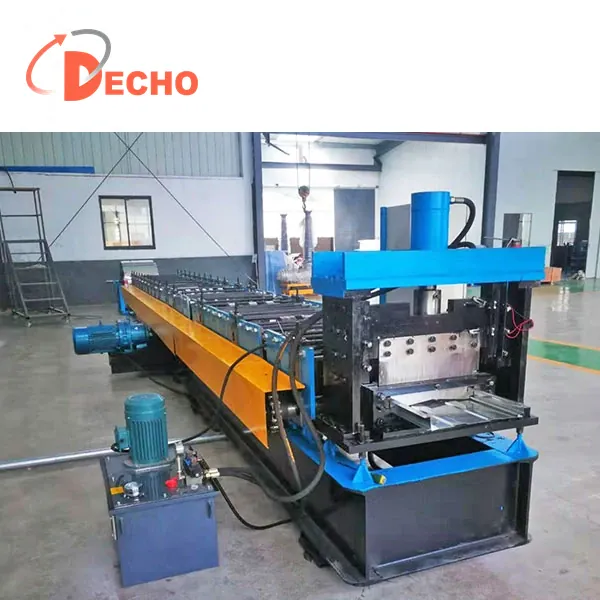
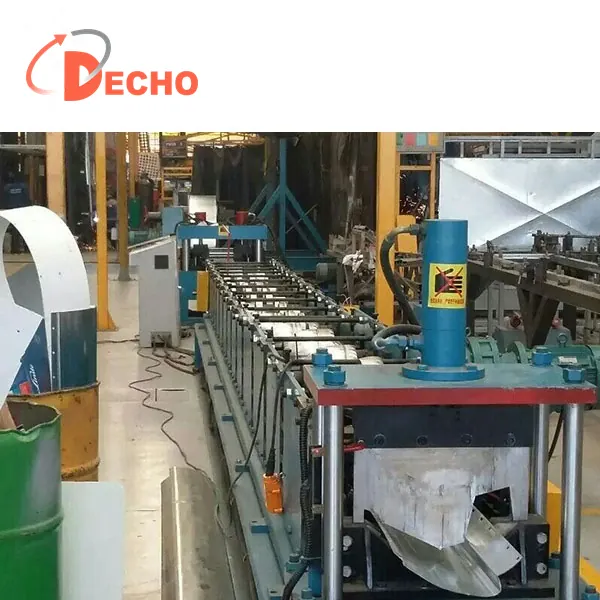
Importance of Thickness Uniformity
Structural Integrity
A metal product with uniform thickness distributes stress evenly. Consider a structural beam produced by a roll forming machine. If the thickness varies significantly, certain areas will bear more stress than others. This uneven stress distribution can lead to premature failure of the beam under load, posing a safety risk in construction projects. In contrast, a beam with consistent thickness can withstand the intended loads more effectively, ensuring the long - term stability of the structure.
Functionality
In many applications, precise thickness is essential for proper functionality. For example, in the production of Rolling Shutter Strip Making Machine, the slats need to have uniform thickness. A non - uniform thickness can cause problems such as uneven rolling, jamming, or poor insulation. Similarly, in the electronics industry, metal components with inconsistent thickness may not fit properly into the devices, leading to malfunctions.
Aesthetic Appeal
Uniform thickness also contributes to the visual appeal of metal products. In architectural applications, such as metal roofing or wall cladding, a product with consistent thickness looks more professional and polished. Any visible thickness variations can make the installation appear unprofessional and may even reduce the market value of the building.
Factors Influencing Thickness Uniformity
Raw Material Quality
The quality of the raw metal material is a fundamental factor. If the incoming metal coil has inherent thickness variations, it will be challenging to achieve high - level thickness uniformity in the formed product. Imperfections in the metal, such as uneven rolling during the initial manufacturing of the coil, can be transferred to the final product. For example, a coil with a wavy thickness profile will result in a formed product with similar thickness irregularities.
Machine Design and Calibration
The design of the metal roll forming machine plays a crucial role. A well - designed machine should have precise roll tooling and a robust frame to ensure stable operation. Incorrectly calibrated rolls can cause uneven pressure on the metal strip, leading to thickness variations. For instance, if the rolls are not parallel or if the gap between the rolls is not set correctly, the metal will be deformed unevenly, resulting in inconsistent thickness.
Process Speed
The speed at which the roll forming process operates can also affect thickness uniformity. If the process speed is too high, the metal may not have enough time to deform evenly, leading to thickness variations. On the other hand, a very slow speed may cause unnecessary wear and tear on the machine and may not be cost - effective. Finding the optimal process speed is essential for achieving good thickness uniformity.
Lubrication
Proper lubrication is necessary to reduce friction between the metal strip and the rolls. Insufficient lubrication can cause excessive heat and friction, which can lead to uneven deformation of the metal and thus affect thickness uniformity. Over - lubrication, however, can also cause problems, such as the metal slipping between the rolls, resulting in inconsistent forming.
Ensuring Thickness Uniformity in Our Metal Roll Forming Machines
High - Quality Raw Material Selection
As a Metal Roll Forming Machine supplier, we work closely with our customers to ensure they select high - quality raw materials. We provide guidance on choosing metal coils with minimal thickness variations. We also offer pre - inspection services for the raw materials to identify any potential issues before the roll forming process begins.
Precision Machine Design and Manufacturing
Our machines are designed with precision in mind. We use advanced CAD/CAM technology to design the roll tooling, ensuring that the rolls are accurately shaped and dimensioned. During the manufacturing process, we employ strict quality control measures to ensure that the rolls are parallel and the gaps between them are set precisely. Our machines are also equipped with advanced sensors and control systems that can monitor and adjust the roll forming process in real - time to maintain thickness uniformity.
Process Optimization
We help our customers optimize the roll forming process. This includes determining the optimal process speed based on the type of metal and the product specifications. We also provide training on proper lubrication techniques to ensure that the metal strip is formed evenly without excessive friction. Additionally, we offer regular maintenance services to keep the machines in optimal condition, which is crucial for maintaining thickness uniformity over time.
Case Studies
Case 1: Steel Roll Forming Machine
A customer who purchased our Steel Roll Forming Machine was producing steel profiles for a large - scale construction project. Initially, they were experiencing thickness variations in the profiles, which was affecting the structural integrity of the final product. After a thorough analysis by our technical team, we found that the raw steel coils had some minor thickness variations. We worked with the customer to select better - quality coils and optimized the machine settings. As a result, the thickness uniformity of the formed steel profiles improved significantly, and the customer was able to meet the strict quality requirements of the project.
Case 2: Glazed Tile Roll Forming Machine
Another customer using our Glazed Tile Roll Forming Machine was facing issues with the aesthetic appearance of the glazed tiles due to thickness variations. Our team identified that the process speed was too high, causing the tiles to deform unevenly. We adjusted the process speed and fine - tuned the roll tooling. After these adjustments, the glazed tiles had a much more uniform thickness, enhancing their visual appeal and increasing the customer's market competitiveness.
Conclusion
Thickness uniformity is a critical factor in the production of metal products using a metal roll forming machine. It affects the structural integrity, functionality, and aesthetic appeal of the final product. As a Metal Roll Forming Machine supplier, we are committed to helping our customers achieve high - level thickness uniformity. Through high - quality raw material selection, precision machine design and manufacturing, and process optimization, we ensure that our machines can produce metal products with consistent thickness.
If you are in the market for a metal roll forming machine and are concerned about thickness uniformity, we are here to assist you. Our team of experts can provide you with customized solutions based on your specific requirements. Contact us today to start a conversation about your metal roll forming needs and take your production to the next level.
References
- "Metal Forming Handbook: Processes and Applications" by G. E. Dieter
- "Roll Forming Technology" by Helmut Schulze
- Industry research reports on metal roll forming machine performance and quality control.