Hey there! As a supplier of metal rollformers, I often get asked if our machines can be used for making electrical enclosures. Well, the short answer is yes! But let's dive deeper into this topic to understand how and why a metal rollformer is a great choice for producing electrical enclosures.
First off, let's talk about what a metal rollformer is. A metal rollformer is a machine that shapes metal sheets into various profiles by passing them through a series of rollers. These rollers gradually bend and form the metal into the desired shape. It's a highly efficient and precise way to manufacture metal products, and it's widely used in many industries, including construction, automotive, and yes, electrical.
Now, why is a metal rollformer suitable for making electrical enclosures? There are several reasons.
Precision and Consistency
One of the key advantages of using a metal rollformer is the precision it offers. Electrical enclosures need to have accurate dimensions to ensure proper fit and function. A rollformer can produce parts with tight tolerances, which means that each enclosure will be identical to the next. This consistency is crucial, especially when you're producing enclosures in large quantities. For example, if you're making enclosures for a batch of electrical panels, you want to make sure that all the enclosures fit perfectly and can be easily installed.
Customization
Another great thing about metal rollformers is their ability to create custom profiles. Electrical enclosures come in all shapes and sizes, depending on the specific requirements of the electrical equipment they're housing. With a rollformer, you can design and produce enclosures with unique shapes and features. Whether you need a simple rectangular enclosure or a more complex design with cutouts, flanges, or bends, a rollformer can handle it. This level of customization allows you to meet the diverse needs of your customers.
Cost - Efficiency
When it comes to mass - production, a metal rollformer is a cost - effective solution. Once the tooling for a specific enclosure profile is set up, the production process can be highly automated. This reduces labor costs and increases production speed. Compared to other manufacturing methods like stamping or machining, rollforming can produce enclosures at a lower cost per unit. Additionally, rollforming uses less material waste because the metal is gradually formed rather than cut away, which further contributes to cost savings.
Material Compatibility
Metal rollformers can work with a wide range of metals, including steel, aluminum, and stainless steel. These materials are commonly used in electrical enclosures because they offer good electrical conductivity, corrosion resistance, and mechanical strength. For example, steel is a popular choice for its durability and affordability, while aluminum is lightweight and has excellent corrosion resistance. Stainless steel is often used in environments where high levels of corrosion protection are required.
Now, let's take a look at some of the types of rollforming machines that can be used for making electrical enclosures.
CZ Purlin Machine
A CZ Purlin Machine can be adapted to produce certain types of electrical enclosures. These machines are typically used for making C and Z - shaped purlins in the construction industry, but with the right tooling, they can form the basic shapes of enclosures. The continuous forming process of a CZ purlin machine allows for efficient production of long, uniform sections, which can be cut and assembled to create enclosures.
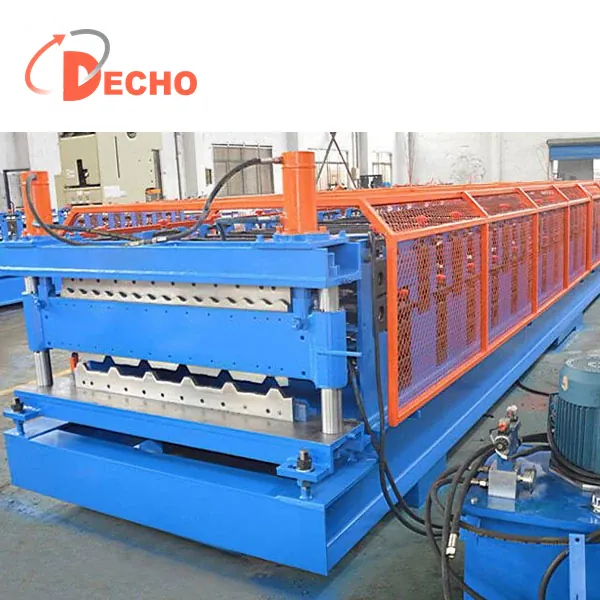
Double Layer Roll Forming Machine
The Double Layer Roll Forming Machine is another option. This machine can produce two different profiles simultaneously, which can be useful if you need to make enclosures with multiple components or if you want to increase production efficiency. For example, you could use one layer to form the main body of the enclosure and the other layer to form a lid or a side panel.
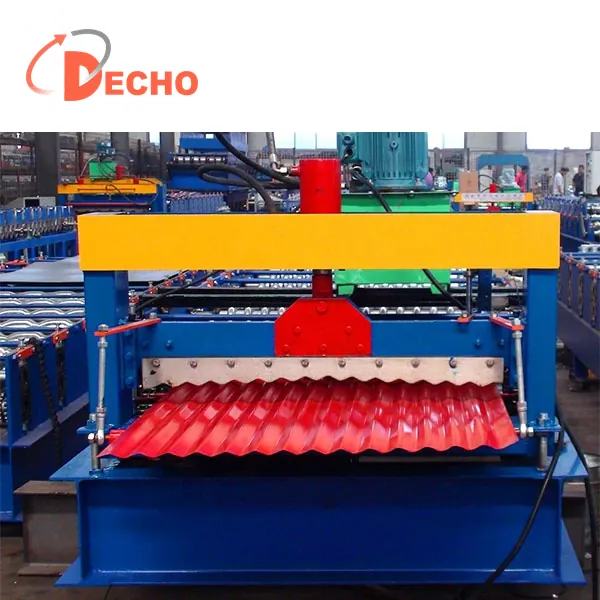
Corrugated Sheet Making Machine
A Corrugated Sheet Making Machine can also play a role in making electrical enclosures. Corrugated sheets can be used as part of the enclosure structure, providing additional strength and rigidity. These machines can produce corrugated sheets in various sizes and patterns, which can be customized to meet the specific requirements of the enclosure.
However, there are also some challenges to consider when using a metal rollformer for making electrical enclosures.
Design and Tooling
Designing the right tooling for an electrical enclosure can be complex. You need to consider factors such as the shape of the enclosure, the thickness of the metal, and the required tolerances. It's important to work with an experienced rollforming manufacturer who can help you design the tooling and optimize the production process.
Secondary Operations
In some cases, rollformed enclosures may require secondary operations such as punching, drilling, or welding. These operations are necessary to add features like holes for electrical connections, mounting brackets, or hinges. While these secondary operations can add to the production time and cost, they are often essential for the proper functioning of the enclosure.
Quality Control
Maintaining quality control throughout the production process is crucial. You need to regularly inspect the rollformed enclosures to ensure that they meet the required standards. This includes checking the dimensions, surface finish, and overall integrity of the enclosures.
In conclusion, a metal rollformer can definitely be used for making electrical enclosures. It offers precision, customization, cost - efficiency, and material compatibility. Whether you're a small - scale manufacturer or a large - scale production facility, a rollforming machine can be a valuable addition to your manufacturing setup. If you're interested in using a metal rollformer for your electrical enclosure production, I'd love to talk to you. We can discuss your specific requirements, design the right tooling, and help you get started on your project. Don't hesitate to reach out if you have any questions or want to learn more about our rollforming solutions.
References
- "Roll Forming Technology Handbook" by N. C. Arora
- "Metal Forming Processes and Die Design" by P. K. Mallick