Hey there! As a supplier of roll forming machines, I often get asked about how these nifty pieces of equipment ensure the symmetry of profiles. Well, let's dive right into it!
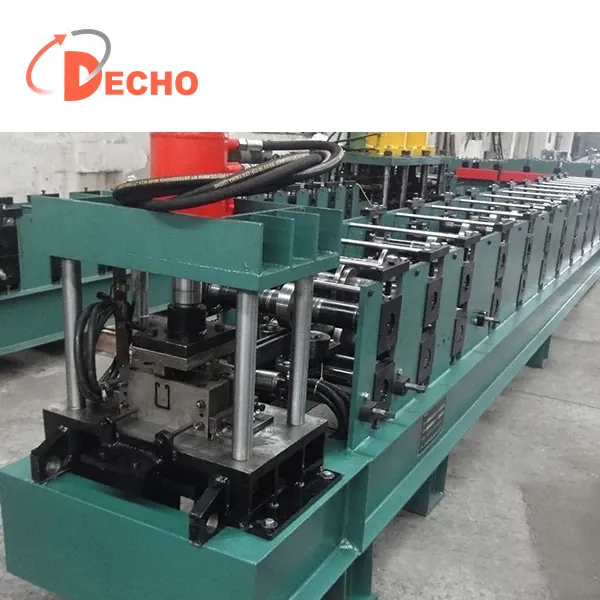
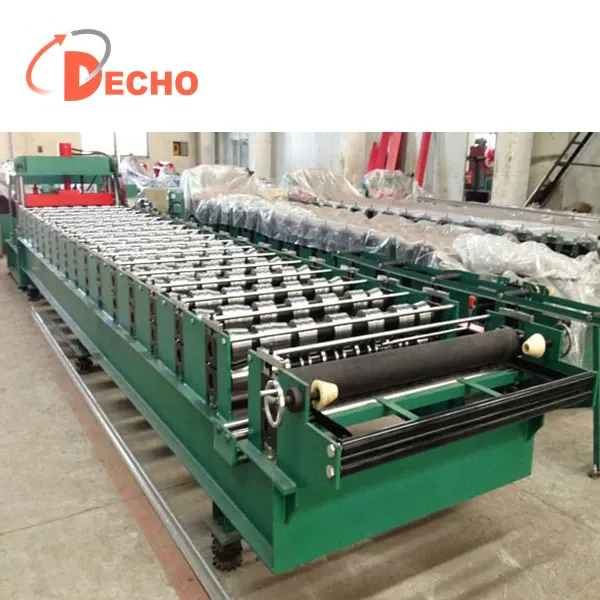
First off, what exactly is a roll forming machine? It's a piece of industrial equipment that transforms flat metal sheets into specific shapes by passing them through a series of rollers. These machines are super versatile and are used in various industries, from construction to automotive. You can check out our Roof Sheet Making Machine, Roof Roll Forming Machine, and Profile Roll Forming Machine on our website to see the different types of products we offer.
Precision in Design
One of the key factors in ensuring profile symmetry is the design of the roll forming machine itself. The rollers in a roll forming machine are carefully engineered to have a specific shape and size. Each set of rollers is designed to gradually bend the metal sheet into the desired profile. The design process involves a lot of calculations and simulations to make sure that the rollers will apply the right amount of pressure at the right places on the metal sheet.
For example, if we're making a C-shaped purlin, the rollers need to be designed in such a way that they bend the metal evenly on both sides to create a symmetrical C-shape. Any slight deviation in the roller design can lead to an asymmetrical profile. That's why we at our company invest a lot of time and resources in the design phase. We use advanced software to model the roll forming process and make sure that the rollers are perfect before we start manufacturing them.
Quality of Components
Another important aspect is the quality of the components used in the roll forming machine. The rollers are usually made from high-quality steel or other durable materials. The quality of the material affects the accuracy and longevity of the rollers. If the rollers are made from low-quality materials, they may wear out quickly or deform under pressure, which can result in an asymmetrical profile.
In addition to the rollers, other components such as the bearings and gears also play a crucial role. The bearings need to be able to support the weight of the rollers and allow them to rotate smoothly. If the bearings are faulty or not properly lubricated, the rollers may not rotate evenly, which can affect the symmetry of the profile. Similarly, the gears need to be precisely machined to ensure that the rollers move in sync.
Calibration and Adjustment
Even with a well-designed machine and high-quality components, calibration and adjustment are still necessary to ensure profile symmetry. Before starting the production process, the roll forming machine needs to be calibrated. This involves setting the correct distance between the rollers, adjusting the speed of the machine, and ensuring that the metal sheet is fed into the machine at the right angle.
During the production process, the machine may need to be adjusted from time to time. For example, if the metal sheet starts to show signs of asymmetry, the operator can make small adjustments to the rollers or the feeding mechanism. This requires some skill and experience on the part of the operator. That's why we provide comprehensive training to our customers so that they can operate the roll forming machine effectively and make the necessary adjustments when needed.
Monitoring and Control Systems
Modern roll forming machines are often equipped with monitoring and control systems. These systems use sensors to measure various parameters such as the thickness of the metal sheet, the pressure applied by the rollers, and the speed of the machine. The data collected by the sensors is then analyzed by a control system, which can make real-time adjustments to the machine to ensure profile symmetry.
For example, if the sensor detects that the metal sheet is being bent more on one side than the other, the control system can automatically adjust the pressure applied by the rollers on that side to correct the asymmetry. This not only ensures the quality of the profiles but also increases the efficiency of the production process.
Material Properties
The properties of the metal sheet also affect the symmetry of the profile. Different types of metals have different mechanical properties, such as hardness, ductility, and elasticity. These properties can affect how the metal sheet bends and deforms during the roll forming process.
For example, a harder metal may require more pressure to bend, while a more ductile metal may be more prone to stretching. That's why it's important to choose the right type of metal for the specific profile and to adjust the roll forming process accordingly. We work closely with our customers to understand their requirements and recommend the most suitable metal for their application.
Operator Skill and Experience
Last but not least, the skill and experience of the operator play a vital role in ensuring profile symmetry. An experienced operator knows how to set up the machine correctly, make the necessary adjustments during the production process, and troubleshoot any problems that may arise. They can also detect any signs of asymmetry early on and take corrective action before it becomes a major issue.
We believe in the importance of having a skilled workforce. That's why we provide continuous training and development opportunities for our operators. We also encourage our operators to share their knowledge and experience with each other to improve the overall quality of our products.
In conclusion, ensuring the symmetry of profiles in a roll forming machine is a complex process that involves many factors. From the design of the machine to the skill of the operator, every aspect needs to be carefully considered. At our company, we're committed to providing high-quality roll forming machines that can produce symmetrical profiles consistently.
If you're interested in purchasing a roll forming machine or have any questions about our products, feel free to get in touch with us. We'd be more than happy to discuss your requirements and help you find the right solution for your business.
References
- "Roll Forming Technology Handbook" by Robert W. Schuler
- "Metal Forming: Processes and Applications" by Peter Groche and Jörg Franke