When it comes to manufacturing processes for metal products, sheet roll forming and extrusion are two prominent methods that industries often consider. As a sheet roll forming supplier, I've witnessed firsthand the unique capabilities and limitations of both techniques. In this blog post, I'll delve into a detailed comparison of sheet roll forming and extrusion, highlighting their differences, advantages, and ideal applications.
Understanding Sheet Roll Forming
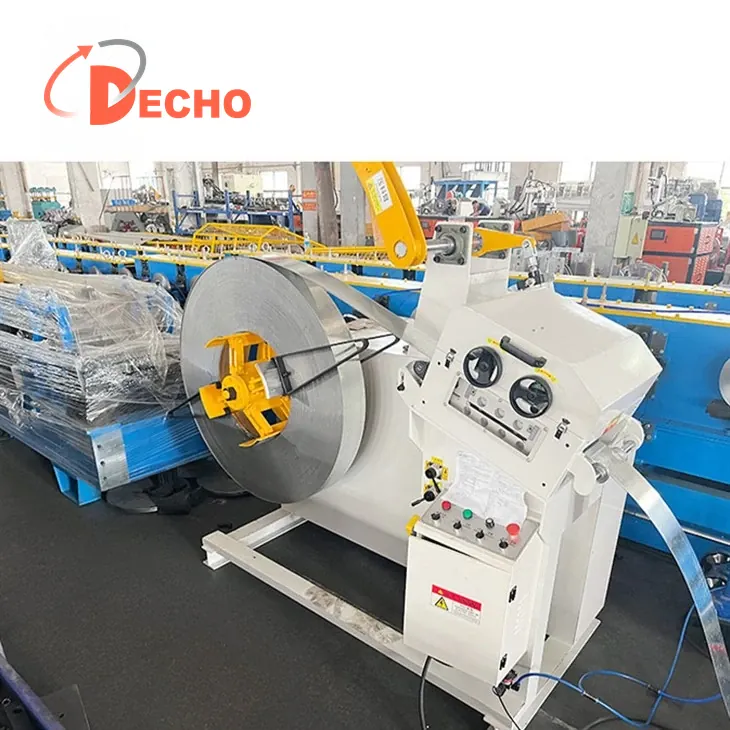
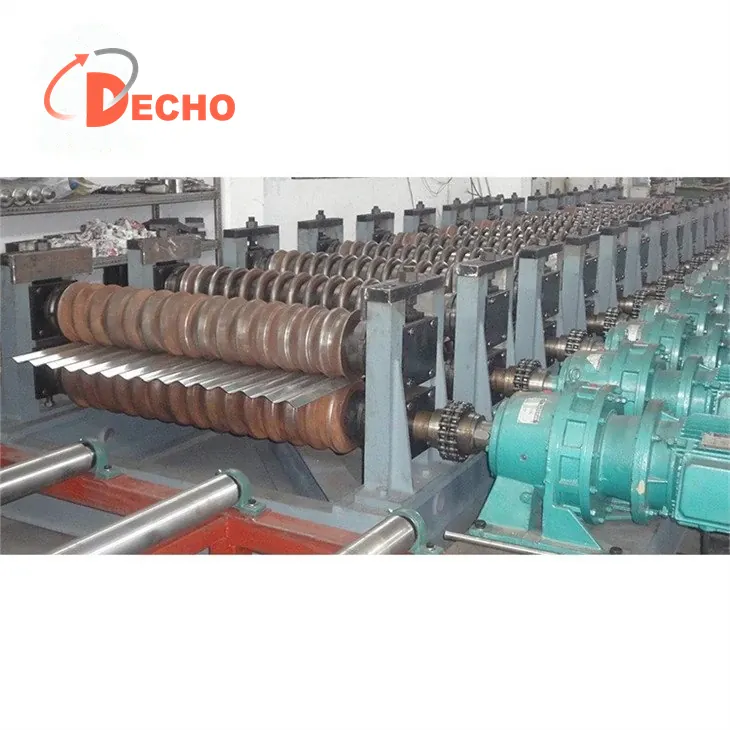
Sheet roll forming is a continuous bending operation in which a long strip of metal - typically coiled steel, aluminum, or stainless steel - is passed through consecutive sets of rolls. Each set of rolls makes an incremental bend until the desired cross - sectional shape is achieved. This process is highly versatile and can produce a wide range of profiles, from simple angles and channels to complex, custom - designed shapes.
One of the key advantages of sheet roll forming is its ability to create long, uniform lengths of material with consistent cross - sections. This makes it ideal for applications where length and uniformity are crucial, such as in the construction of metal studs, roofing panels, and automotive components. For instance, our Metal Stud Roll Forming Machine can produce high - quality metal studs with precise dimensions and excellent structural integrity, which are widely used in the construction industry for framing walls and partitions.
Another benefit of sheet roll forming is its efficiency. Once the roll tooling is set up, the process can run continuously at high speeds, resulting in high production volumes. Additionally, the scrap rate is relatively low compared to other manufacturing processes, as the material is gradually formed without significant cutting or waste.
Understanding Extrusion
Extrusion, on the other hand, is a process where a billet of metal is forced through a die under high pressure to create a continuous profile. The die determines the cross - sectional shape of the extruded product. Extrusion can be used with a variety of metals, including aluminum, copper, and brass.
One of the main advantages of extrusion is its ability to create complex cross - sectional shapes that may be difficult or impossible to achieve with sheet roll forming. For example, extrusion can produce hollow profiles with internal ribs or intricate geometries, which are commonly used in the aerospace and automotive industries for lightweight structural components.
Extrusion also offers excellent surface finish and dimensional accuracy. The high - pressure nature of the process ensures that the extruded product closely matches the shape of the die, resulting in tight tolerances and a smooth surface. Moreover, extrusion can be used to create products with variable wall thicknesses, which can be beneficial for optimizing strength and weight.
Comparing Sheet Roll Forming and Extrusion
1. Material Selection
Sheet roll forming is primarily used with sheet metal, which is available in a wide range of thicknesses and grades. Common materials include steel, aluminum, and stainless steel. These materials offer good strength, durability, and corrosion resistance, making them suitable for a variety of applications.
Extrusion, on the other hand, can be used with a broader range of metals, including non - ferrous metals such as aluminum, copper, and brass. Aluminum is particularly popular in extrusion due to its lightweight, high strength - to - weight ratio, and excellent corrosion resistance. However, extrusion of some metals, such as steel, can be more challenging and may require specialized equipment and processes.
2. Shape Complexity
As mentioned earlier, extrusion has an edge when it comes to creating complex cross - sectional shapes. The die design in extrusion allows for the production of intricate geometries, including hollow sections, internal ribs, and undercuts. Sheet roll forming, while versatile, is generally better suited for simpler shapes that can be formed by a series of incremental bends. However, with advancements in roll tooling technology, more complex shapes are becoming achievable through sheet roll forming as well.
3. Production Volume
Sheet roll forming is well - suited for high - volume production. Once the roll tooling is set up, the process can run continuously at high speeds, making it efficient for large - scale manufacturing. Extrusion can also be used for high - volume production, but the setup time for the extrusion die can be longer and more expensive. Additionally, the extrusion process may require more frequent maintenance due to the high - pressure nature of the operation.
4. Cost
The cost of sheet roll forming and extrusion depends on several factors, including the material, the complexity of the shape, and the production volume. In general, sheet roll forming has lower tooling costs compared to extrusion, especially for simple shapes. The roll tooling for sheet roll forming is typically less expensive to manufacture and can be easily modified or replaced. Extrusion dies, on the other hand, can be more expensive to design and produce, especially for complex shapes. However, for high - volume production of complex shapes, the cost per unit may be lower with extrusion due to its ability to create more intricate profiles in a single operation.
5. Surface Finish
Extrusion generally provides a smoother surface finish compared to sheet roll forming. The high - pressure nature of the extrusion process ensures that the extruded product has a uniform surface texture. Sheet roll forming may leave some minor marks or ridges on the surface, especially if the roll tooling is not properly maintained. However, these surface imperfections can often be minimized through post - processing operations such as polishing or painting.
Ideal Applications
Sheet Roll Forming Applications
- Construction: Metal studs, roofing panels, siding, and decking are commonly produced using sheet roll forming. Our Silo Roll Forming Machine can be used to manufacture high - quality steel silos for storing grains, cement, and other bulk materials.
- Automotive: Automotive components such as door frames, window channels, and body reinforcements are often made through sheet roll forming. Our Door Frame Roll Forming Machine can produce precise and durable door frames for various types of vehicles.
- Furniture: Sheet roll forming is used to create frames and structural components for furniture, providing strength and stability.
Extrusion Applications
- Aerospace: Extruded aluminum profiles are widely used in the aerospace industry for lightweight structural components, such as wing spars and fuselage frames.
- Electronics: Extruded heat sinks are commonly used in electronic devices to dissipate heat, taking advantage of aluminum's excellent thermal conductivity.
- Consumer Goods: Extruded plastic and metal products, such as window frames, curtain rods, and tubing, are commonly found in consumer goods.
Conclusion
In conclusion, both sheet roll forming and extrusion have their own unique advantages and are suitable for different applications. Sheet roll forming is a cost - effective and efficient method for producing long, uniform profiles with relatively simple shapes, making it ideal for high - volume production in industries such as construction and automotive. Extrusion, on the other hand, is better suited for creating complex cross - sectional shapes and offers excellent surface finish and dimensional accuracy, making it a popular choice in industries such as aerospace and electronics.
As a sheet roll forming supplier, I'm committed to providing high - quality roll forming solutions tailored to the specific needs of our customers. Whether you're looking for a reliable metal stud roll forming machine or a custom - designed roll forming solution, we have the expertise and experience to meet your requirements. If you're interested in learning more about our products or discussing your manufacturing needs, please don't hesitate to contact us for a consultation and procurement discussion.
References
- Kalpakjian, S., & Schmid, S. R. (2008). Manufacturing Engineering and Technology. Pearson Prentice Hall.
- Dieter, G. E., & Schmidt, L. C. (2008). Mechanical Metallurgy. McGraw - Hill.
- Groover, M. P. (2010). Fundamentals of Modern Manufacturing: Materials, Processes, and Systems. Wiley.