Hey there! As a rollformer supplier, I've seen firsthand how crucial the straightness of rollformed products is. In this blog, I'm gonna break down the factors that can affect the straightness of these products. Let's dive right in!
1. Material Properties
The material you're using for rollforming plays a huge role in the straightness of the final product. Different materials have different mechanical properties, and these can impact how they behave during the rollforming process.
Hardness and Ductility
Materials with high hardness are more resistant to deformation. When you try to rollform a hard material, it might not bend as smoothly as a more ductile one. For example, stainless steel is relatively hard compared to aluminum. If the rollforming machine isn't adjusted properly for the hardness of the stainless steel, it can lead to uneven bending and affect the straightness. On the other hand, a highly ductile material like copper can be easily formed, but it might also be more prone to springback. Springback occurs when the material tries to return to its original shape after being formed. This can cause the rollformed product to be less straight than desired.
Thickness Variation
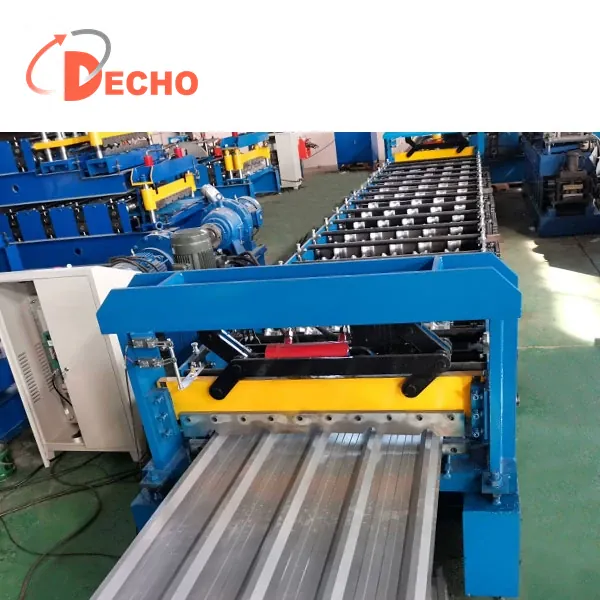
Even small variations in material thickness can have a big impact on straightness. If the thickness of the sheet metal varies along its length or width, the rollforming process will be affected. The machine is designed to work with a specific thickness, and when the thickness changes, the amount of deformation applied to the material will also change. This can result in uneven bends and a non - straight product. For instance, if you're using a Metal Siding Roll Forming Machine and the metal siding material has thickness variations, the final siding panels might not be straight.
2. Machine Settings
The settings of the rollforming machine are another critical factor in determining the straightness of the products.
Roll Gap Adjustment
The roll gap is the space between the rolls in the rollforming machine. If the roll gap is not set correctly, it can lead to uneven pressure on the material. If the gap is too wide, the material might not be deformed enough, and if it's too narrow, the material can be over - deformed. This can cause the product to warp or twist, affecting its straightness. For example, when using a Rain Gutter Roll Forming Machine, incorrect roll gap adjustment can result in gutters that are not straight, which can lead to drainage problems.
Roll Speed
The speed at which the rolls rotate also matters. If the roll speed is too high, the material might not have enough time to deform properly. This can cause the product to have inconsistent bends and reduced straightness. On the other hand, if the speed is too low, it can be inefficient, and it might also cause uneven cooling of the material, which can lead to warping. You need to find the right balance for the specific material and product you're working with.
Alignment of Rolls
The alignment of the rolls is crucial for straight rollforming. If the rolls are not aligned properly, the material will be subjected to uneven forces during the forming process. This can cause the product to bend or twist in unexpected ways. For example, if the rolls in a Roof Tile Machine are misaligned, the roof tiles might come out with a curve or a twist, which can affect their installation and performance.
3. Tooling Condition
The condition of the tooling in the rollforming machine can significantly affect the straightness of the products.
Wear and Tear
Over time, the rolls and other tooling components in the rollforming machine will experience wear and tear. Worn - out rolls can have uneven surfaces, which can transfer these irregularities to the material during the forming process. This can result in a non - straight product. For example, if the rolls have grooves or pits due to wear, the material will be deformed in an uneven manner, causing the final product to be less straight.
Tooling Design
The design of the tooling also matters. If the rolls are not designed to match the shape and requirements of the rollformed product, it can lead to problems with straightness. For example, if the roll profile is not precise enough, the material might not be formed into the correct shape, and the product will not be straight.
4. Environmental Factors
The environment in which the rollforming process takes place can also have an impact on the straightness of the products.
Temperature
Temperature can affect the material properties and the performance of the rollforming machine. If the temperature is too high, the material might become softer and more prone to deformation. This can lead to over - deformation and a non - straight product. On the other hand, if the temperature is too low, the material might become more brittle, and it can crack or break during the forming process. Additionally, temperature changes can also affect the dimensions of the machine components, which can lead to misalignment and affect the straightness of the products.
Humidity
High humidity can cause corrosion on the material and the machine components. Corrosion can affect the surface quality of the material and the performance of the rolls. This can lead to uneven deformation and a reduction in the straightness of the rollformed products.
5. Operator Skill
The skill of the operator running the rollforming machine is very important.
Experience
An experienced operator knows how to adjust the machine settings, monitor the process, and detect problems early. They can make quick adjustments to ensure the straightness of the products. For example, they can recognize when the material is not feeding properly or when the rolls need adjustment and take appropriate action.
Attention to Detail
An operator who pays attention to detail can catch small issues before they become big problems. They can check the straightness of the products regularly during the production process and make necessary adjustments. This can help to ensure that the final products meet the required straightness standards.
In conclusion, there are many factors that can affect the straightness of rollformed products, including material properties, machine settings, tooling condition, environmental factors, and operator skill. As a rollformer supplier, we need to take all these factors into account to produce high - quality, straight rollformed products. If you're in the market for a rollforming machine or need advice on improving the straightness of your rollformed products, don't hesitate to get in touch. We're here to help you with all your rollforming needs!
References
- Smith, J. (2018). Metal Forming Handbook. Publisher: Metal Press.
- Johnson, A. (2020). Rollforming Technology: Principles and Applications. Publisher: Forming Tech Press.