Hey there! As a supplier of forming machines, I've been in the thick of the industry for quite a while. One question that comes up a lot is, "What are the forming parameters that need to be adjusted in a forming machine?" Well, let's dive right in and explore this topic.
First off, let's understand why adjusting these parameters is so important. A forming machine is like a high - tech artist. If you don't set the right parameters, the final product won't come out as expected. It could be misshapen, have structural weaknesses, or not meet the required specifications. So, getting these settings spot - on is crucial for producing high - quality products efficiently.
1. Material Thickness
The thickness of the material you're working with is one of the most fundamental parameters. Different materials, whether it's steel, aluminum, or plastic, have different properties. Thicker materials generally require more force to form. For instance, if you're using a Roller Shutter Door Machine to make shutter doors from thick steel sheets, the machine needs to apply a greater amount of pressure during the forming process.
When the material thickness is not properly accounted for in the machine settings, you might end up with issues like incomplete forming or excessive stress on the machine. The machine's hydraulic or mechanical system must be adjusted to handle the right level of force. If the force is too low for a thick material, the bend might not be sharp enough, and the part will not have the correct shape. On the other hand, if the force is too high for a thin material, it could cause the material to crack or break.
2. Bend Angle
The bend angle is another critical parameter. Different products require different bend angles. For example, in a Roller Shutter Door Forming Machine, the angle of the bends in the shutter slats needs to be precise for the door to assemble correctly and function smoothly. A slight deviation in the bend angle can lead to misalignment when the parts are put together, affecting the overall quality and performance of the final product.
Adjusting the bend angle in a forming machine often involves setting the position of the bending tools. This can be done manually or through a computer - controlled system. Modern forming machines usually have a step - by - step process to adjust the bend angle. You can input the desired angle into the machine's control panel, and it will automatically adjust the tools accordingly. However, it's still important to do a test run and check the actual bend angle to ensure accuracy.
3. Feed Rate
The feed rate refers to how fast the material is fed into the forming machine. This parameter is closely related to the speed of the forming process and the quality of the final product. If the feed rate is too high, the machine might not have enough time to form the material properly, resulting in a lower - quality product. On the other hand, if the feed rate is too low, it can slow down the production process and increase costs.
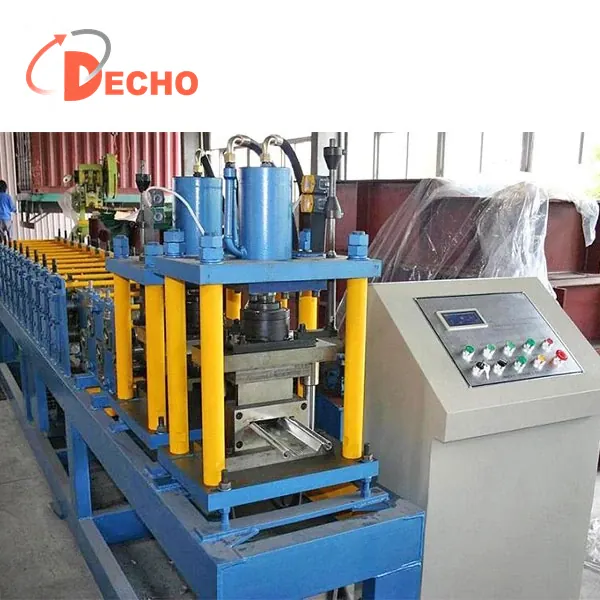
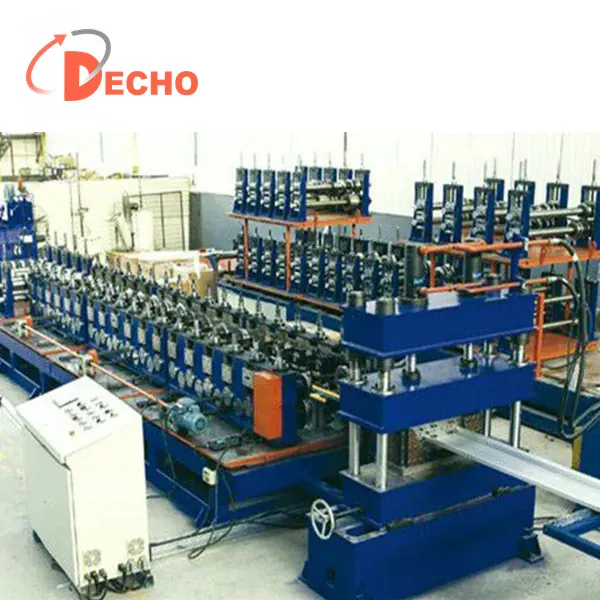
The optimal feed rate depends on several factors, including the type of material, the complexity of the forming operation, and the capabilities of the machine. For example, when using a Purlin Roll Former, a slower feed rate might be required for more complex purlin shapes to ensure accurate forming. Operators need to find the right balance to achieve both high - quality products and efficient production.
4. Tooling Clearance
Tooling clearance is the space between the forming tools and the material. It's a very important parameter because it affects the final shape and surface finish of the product. If the tooling clearance is too small, the material might get squeezed too tightly, causing deformation or damage. If the clearance is too large, the forming might not be precise enough, and the part might have a loose fit or inconsistent dimensions.
Adjusting the tooling clearance usually involves making small adjustments to the tooling setup. This might require some trial and error, especially when working with a new type of material or a different forming operation. Some advanced forming machines have built - in sensors that can measure the tooling clearance and make automatic adjustments to ensure optimal performance.
5. Temperature
In some cases, temperature can also be an important forming parameter. For certain materials, especially plastics and some metals, heating the material to a specific temperature can make it more malleable and easier to form. For example, when forming plastic sheets, heating the material can reduce the amount of force required and improve the quality of the final product.
However, controlling the temperature is not always easy. It requires a proper heating system in the forming machine and accurate temperature sensors. If the temperature is too high, the material might degrade or lose its structural integrity. If the temperature is too low, the forming process might not be effective.
6. Tension
Tension is also a parameter that needs to be considered in some forming operations. For example, when rolling thin strips of material, maintaining the right tension can prevent wrinkling and ensure a smooth and even surface. If the tension is too low, the material might bunch up or wrinkle during the forming process. If the tension is too high, it could cause the material to stretch or break.
Adjusting the tension usually involves using tension controllers in the machine. These controllers can be set to maintain a specific level of tension throughout the forming process. Operators need to monitor the tension closely to ensure that the final product meets the quality standards.
In conclusion, adjusting the forming parameters in a forming machine is a complex but essential part of the manufacturing process. Each parameter has a significant impact on the quality and efficiency of the final product. As a supplier of forming machines, we understand the importance of providing our customers with machines that are easy to operate and adjust these parameters.
If you're looking to purchase a forming machine for your manufacturing needs, we're here to help. Whether you need a Roller Shutter Door Machine, a Roller Shutter Door Forming Machine, or a Purlin Roll Former, we've got a wide range of high - quality machines to choose from. We can also offer professional advice on adjusting the forming parameters to ensure that you get the best results. Feel free to reach out and start a conversation about your specific requirements. We're eager to work with you to find the perfect forming solution for your business.
References
- Manufacturing Technology Handbook, various authors
- Forming Machine Operation Manuals
- Industry - specific research papers on metal and plastic forming