In the realm of profile production, the accuracy of a roll former machine plays a pivotal role in determining the quality and efficiency of the manufacturing process. As a dedicated roll former machine supplier, I have witnessed firsthand the significance of precision in profile shaping. This blog post aims to delve into the concept of accuracy in roll former machines, exploring its various aspects, influencing factors, and the impact it has on profile production.
Understanding the Accuracy of Roll Former Machines
Accuracy in a roll former machine refers to its ability to produce profiles with dimensions, shapes, and surface finishes that closely match the design specifications. It encompasses several key elements:
Dimensional Accuracy
Dimensional accuracy is perhaps the most critical aspect of roll former machine performance. It involves the machine's capacity to produce profiles with consistent and precise measurements. For example, in the production of roofing sheets, the width, thickness, and length of the sheets must adhere to the specified tolerances. Even minor deviations can lead to installation issues, compromised structural integrity, and aesthetic flaws. A high - precision roll former machine can maintain dimensional accuracy within extremely tight tolerances, often in the range of ±0.1mm to ±0.5mm, depending on the complexity of the profile and the material being processed.
Shape Accuracy
Shape accuracy pertains to the machine's ability to replicate the intended cross - sectional shape of the profile. Whether it's a simple corrugated shape, a complex architectural profile, or a structural beam, the roll former must form the material into the correct geometry. Any distortion or deviation from the design can affect the functionality and appearance of the final product. For instance, in a Corrugated Roof Sheet Making Machine, the corrugation height, pitch, and angle must be accurately formed to ensure proper water drainage and structural stability.
Surface Finish Accuracy
Surface finish accuracy is about achieving a smooth, uniform, and defect - free surface on the formed profiles. Imperfections such as scratches, dents, or unevenness can not only mar the aesthetic appeal of the product but also reduce its corrosion resistance and durability. A well - calibrated roll former machine with high - quality forming rolls and proper lubrication systems can produce profiles with excellent surface finish, meeting the strictest industry standards.
Factors Influencing the Accuracy of Roll Former Machines
Several factors can affect the accuracy of a roll former machine in profile production:
Machine Design and Construction
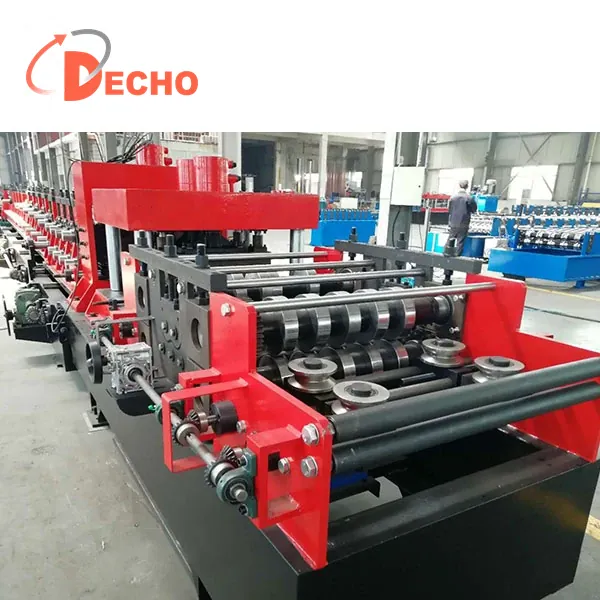
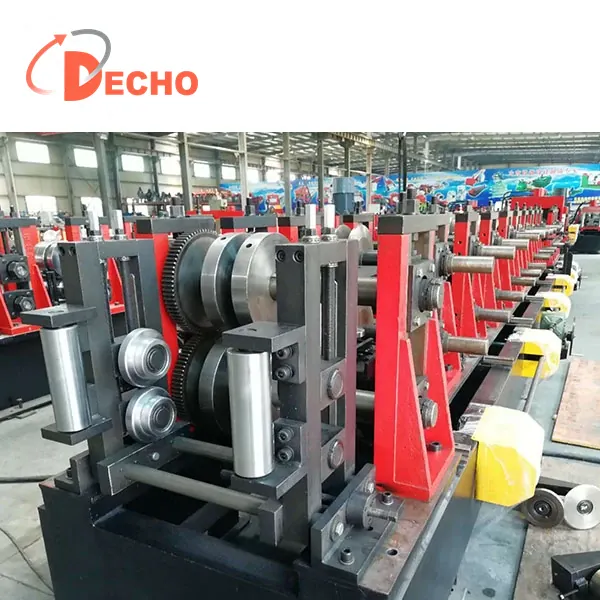
The design and construction of the roll former machine are fundamental to its accuracy. A robust and rigid frame provides a stable foundation for the forming process, minimizing vibrations and deflections that could lead to inaccuracies. High - quality components, such as precision - machined shafts, bearings, and gears, ensure smooth and consistent operation. Additionally, advanced control systems, such as servo - motor drives and CNC (Computer Numerical Control), allow for precise adjustment of the machine's parameters, enhancing accuracy and repeatability.
Roll Tooling Quality
The quality of the roll tooling is another crucial factor. Precision - machined roll tools with accurate profiles and surface finishes are essential for producing high - quality profiles. The material selection for the roll tools also matters, as it affects their hardness, wear resistance, and ability to maintain their shape over time. Regular maintenance and re - profiling of the roll tools are necessary to ensure consistent accuracy throughout their service life.
Material Properties
The properties of the material being processed can significantly impact the accuracy of the roll forming process. Different materials have varying degrees of ductility, elasticity, and hardness, which affect how they deform under the pressure of the roll tools. For example, softer materials may be more prone to stretching and wrinkling, while harder materials may require more force to form, increasing the risk of tool wear and dimensional variations. Understanding the material properties and adjusting the machine settings accordingly is essential for achieving optimal accuracy.
Operator Skill and Experience
The skill and experience of the machine operator also play a vital role in ensuring accuracy. A knowledgeable operator can make informed decisions regarding machine setup, tooling adjustment, and process monitoring. They can detect and address issues such as material misalignment, tool wear, and process variations in a timely manner, minimizing the impact on product quality. Proper training and ongoing professional development for machine operators are crucial for maintaining high levels of accuracy in profile production.
The Impact of Accuracy on Profile Production
The accuracy of a roll former machine has far - reaching implications for profile production:
Product Quality
High accuracy directly translates into superior product quality. Profiles with precise dimensions, accurate shapes, and excellent surface finishes meet or exceed customer expectations, enhancing the reputation of the manufacturer. In industries such as construction, automotive, and aerospace, where product quality is of utmost importance, accurate roll - formed profiles are essential for ensuring the safety, performance, and durability of the final products.
Production Efficiency
Accurate roll former machines can improve production efficiency by reducing waste and rework. When profiles are produced with high precision, there is less need for manual adjustment or correction, minimizing downtime and increasing throughput. Additionally, consistent accuracy allows for better integration with other manufacturing processes, such as welding, cutting, and assembly, streamlining the overall production workflow.
Cost Savings
By producing high - quality profiles with minimal waste and rework, accurate roll former machines can result in significant cost savings. Reduced material waste, lower labor costs associated with rework, and improved production efficiency all contribute to a more cost - effective manufacturing process. Moreover, the ability to meet strict customer specifications without incurring additional costs for corrective measures can enhance the competitiveness of the manufacturer in the market.
Ensuring Accuracy in Roll Former Machines
As a roll former machine supplier, we take several measures to ensure the accuracy of our machines:
Rigorous Testing and Quality Control
Before leaving the factory, each roll former machine undergoes a series of rigorous tests and quality control checks. These include dimensional inspections, shape verification, and surface finish analysis of the formed profiles. We use advanced measuring instruments, such as coordinate measuring machines (CMM) and laser scanners, to ensure that the machine meets the specified accuracy requirements.
Customized Solutions
We understand that different customers have different requirements for profile production. Therefore, we offer customized roll former machines that are tailored to the specific needs of each customer. Our team of engineers works closely with the customers to understand their design specifications, material properties, and production volume requirements, and then develops a customized solution that ensures optimal accuracy and efficiency.
After - Sales Support
We provide comprehensive after - sales support to our customers, including installation, training, maintenance, and technical assistance. Our experienced service technicians are available to assist customers with any issues they may encounter, ensuring that the roll former machines continue to operate at peak accuracy throughout their service life.
Conclusion
The accuracy of a roll former machine is a critical factor in profile production. It determines the quality, efficiency, and cost - effectiveness of the manufacturing process. As a roll former machine supplier, we are committed to providing our customers with high - precision machines that meet the most demanding accuracy requirements. If you are in the market for a Roofing Sheet Roll Forming Machine, Beam Roll Forming Machine, or any other type of roll former machine, we invite you to contact us to discuss your specific needs and explore how our solutions can help you achieve the highest level of accuracy in profile production.
References
- "Roll Forming Technology Handbook" by John W. Dunshee
- "Metal Forming: Mechanics and Metallurgy" by Dieter K. Matthes
- Industry standards and guidelines related to roll - formed profiles