Hey there! As a supplier of Cold Roll Formers, I've been getting a lot of questions lately about how these machines fit into different production line layouts. So, I thought I'd take some time to break it down for you all.
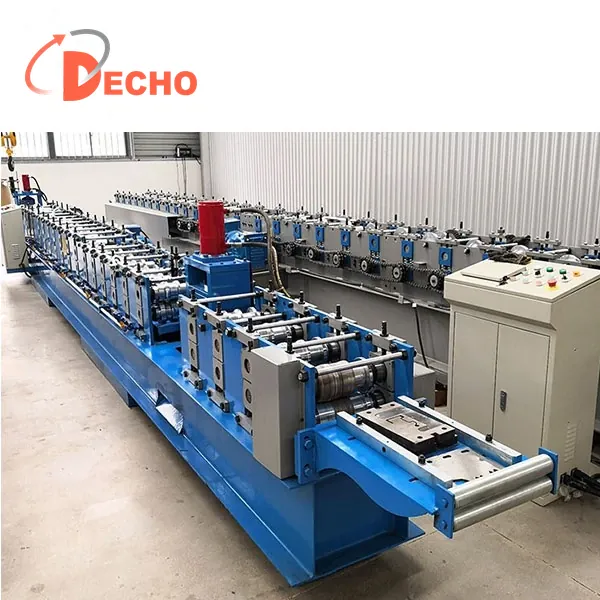
First off, let's talk about what a Cold Roll Former actually is. In simple terms, it's a machine that takes a flat strip of metal and bends it into a specific shape through a series of rollers. This process is done at room temperature, hence the name "cold" roll forming. These machines are super versatile and can be used to make all sorts of products, like Roller Shutter Door Forming Machine parts, double - layer structures, and various steel components. You can check out our Roller Shutter Door Forming Machine on our website to get a better idea of what they can produce.
Now, let's dive into the compatibility of Cold Roll Formers with different production line layouts. There are basically three main types of production line layouts: linear, U - shaped, and cellular.
Linear Layout
A linear layout is probably the most straightforward one. In this setup, all the machines in the production line are arranged in a straight line. The raw material comes in at one end, goes through each machine step - by - step, and the finished product comes out at the other end.
The good thing about a Cold Roll Former in a linear layout is that it's easy to integrate. Since the flow of materials is simple and unidirectional, the Cold Roll Former can be placed right in the middle of the line where the forming process needs to happen. For example, if you're making steel products, the steel strip can be fed directly into the Cold Roll Former from the decoiler at the beginning of the line. After the forming process, the shaped metal can then move on to the next machine, like a cutting machine or a punching machine, in a smooth and continuous manner.
However, there are also some drawbacks. If there's a problem with the Cold Roll Former, it can cause a bottleneck in the entire production line. Since everything is in a straight line, the whole process has to stop until the issue is fixed. Also, the linear layout can take up a lot of floor space, especially if you have a long production line with multiple machines.
U - shaped Layout
The U - shaped layout is a bit more flexible. In this setup, the machines are arranged in a U - shape. The raw material enters and the finished product exits at the same end of the U.
The Cold Roll Former fits well in a U - shaped layout because it allows for better communication and interaction between operators. For instance, if the operator is working on the Cold Roll Former and notices an issue, they can quickly communicate with the operators at the other end of the U, who might be working on the finishing touches of the product. This layout also reduces the distance that the materials have to travel, which can save time and increase efficiency.
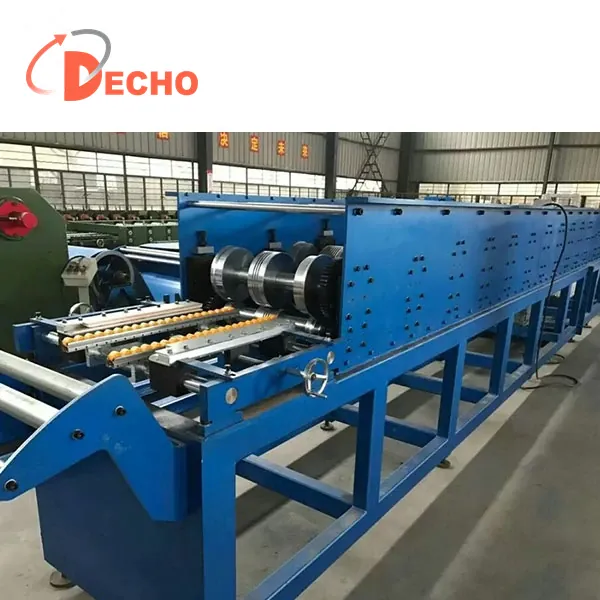
Another advantage is that it's easier to balance the workload in a U - shaped layout. If one machine, like the Cold Roll Former, is running a bit slower, the operators can adjust the speed of the other machines in the U to keep the overall production rate stable. However, designing a U - shaped layout requires more planning and careful consideration of the flow of materials and the interaction between machines.
Cellular Layout
The cellular layout divides the production line into small, self - contained cells. Each cell is responsible for a specific part of the production process.
A Cold Roll Former can be part of a cell that focuses on the forming process. This layout is great for custom - made products or small - batch production. Since each cell is independent, if there's a problem with the Cold Roll Former in one cell, it won't affect the other cells. This means that the overall production can still continue, albeit at a reduced capacity.
However, the cellular layout also has its challenges. It requires a high level of coordination between the cells. The transfer of materials between cells needs to be well - organized to avoid delays. Also, setting up a cellular layout can be more expensive initially, as it might require more equipment and space for each cell.
We also offer a Double Layer Roll Former and a Steel Roll Forming Machine, which can be customized to fit different production line layouts. Our team of experts can work with you to determine the best layout for your specific needs and how our Cold Roll Formers can be integrated seamlessly.
When choosing the right layout for your Cold Roll Former, there are a few factors you need to consider. First, think about the type of products you're making. If you're producing large - volume, standardized products, a linear layout might be the best choice. But if you're into custom - made or small - batch products, a cellular or U - shaped layout could be more suitable.
Second, consider the available floor space in your factory. As I mentioned earlier, the linear layout can take up a lot of space, while the U - shaped and cellular layouts are more space - efficient.
Finally, think about your budget. Setting up a cellular layout can be more expensive, while the linear layout is usually the most cost - effective in terms of initial investment.
In conclusion, the compatibility of a Cold Roll Former with different production line layouts depends on various factors, including the layout type, the type of products, floor space, and budget. Our Cold Roll Formers are designed to be versatile and can be integrated into different layouts to meet your production needs.
If you're interested in learning more about our Cold Roll Formers and how they can fit into your production line, don't hesitate to reach out. We're always happy to have a chat and discuss how we can help you optimize your production process. Whether you're a small - scale manufacturer or a large - scale industrial company, we've got the solutions for you. So, let's start this journey together and take your production to the next level!
References
- "Manufacturing Engineering and Technology" by Serope Kalpakjian and Steven R. Schmid
- "Production and Operations Management: Concepts, Models, and Behavior" by Jay Heizer and Barry Render