As a seasoned supplier in the cold roll forming industry, I've often been asked about the differences between cold roll forming and press braking. These two metal - shaping processes are widely used in various manufacturing sectors, but they have distinct characteristics, advantages, and applications. In this blog, I'll delve into the details to help you understand which process might be the best fit for your specific needs.
Cold Roll Forming: An Overview
Cold roll forming is a continuous bending process in which a long strip of metal, typically coiled steel or aluminum, is passed through a series of rollers. Each set of rollers makes a small incremental bend in the metal until the desired cross - sectional shape is achieved. This process is carried out at room temperature, hence the term "cold" roll forming.
One of the key advantages of cold roll forming is its ability to produce complex shapes with high precision and consistency. The process can create long lengths of formed products, which is ideal for applications such as roofing, wall cladding, and automotive components. For example, our Rain Gutter Roll Forming Machine can produce seamless rain gutters with a consistent profile, ensuring proper water drainage.
Cold roll forming also offers excellent material utilization. Since the metal is gradually bent rather than cut and welded, there is minimal waste. This not only reduces material costs but also makes the process more environmentally friendly. Additionally, the continuous nature of the process allows for high - volume production, making it cost - effective for large - scale projects.
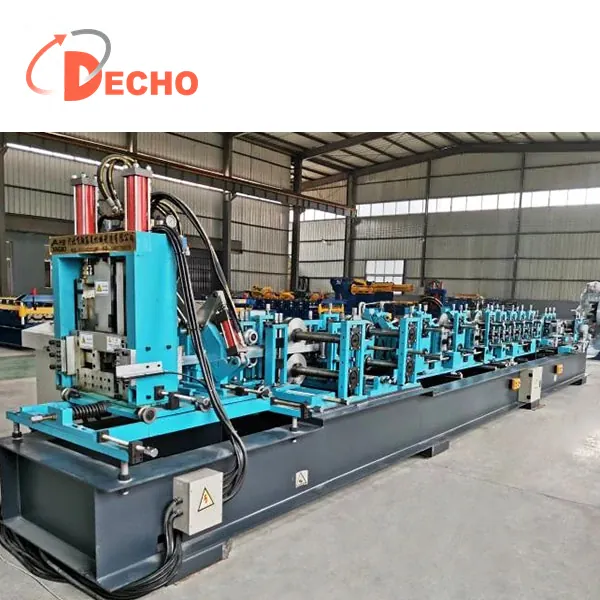
Another benefit is the enhanced strength of the formed products. The cold working process during roll forming increases the material's yield strength, making the final product more durable. For instance, our C&Z Purlin Forming Machine produces C and Z purlins that can withstand significant structural loads in building construction.
Press Braking: An Overview
Press braking, on the other hand, is a sheet metal forming process that uses a press brake machine to bend metal sheets into various angles. The machine consists of a punch and a die. The metal sheet is placed between the punch and the die, and a hydraulic or mechanical force is applied to bend the sheet to the desired angle.
Press braking is highly versatile and can be used to create a wide range of simple to moderately complex bends. It is well - suited for small - to medium - sized production runs and custom - made parts. For example, if you need to produce a small number of uniquely shaped brackets, press braking can be a cost - effective solution.
One of the main advantages of press braking is its flexibility. The process can be easily adjusted to accommodate different sheet thicknesses, materials, and bend angles. This makes it a popular choice for prototyping and short - run production, where quick changes in design are often required.
However, press braking also has some limitations. The process is more labor - intensive compared to cold roll forming, especially for complex shapes. Each bend requires careful setup and positioning of the sheet metal, which can increase production time and cost. Additionally, press braking is generally limited to producing parts with relatively simple geometries, as creating complex cross - sectional shapes can be challenging and time - consuming.
Key Differences between Cold Roll Forming and Press Braking
1. Shape Complexity
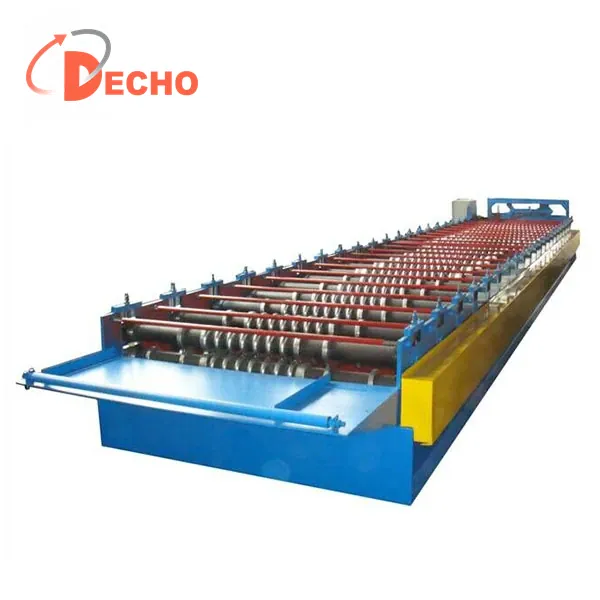
Cold roll forming excels at producing complex, continuous cross - sectional shapes. The multiple sets of rollers can gradually shape the metal into intricate profiles that would be difficult or impossible to achieve with press braking. For example, a corrugated sheet with a specific wave pattern can be easily produced using a Corrugated Sheet Roll Forming Machine. In contrast, press braking is better suited for simple bends and angles, such as 90 - degree bends in flat sheets.
2. Production Volume
Cold roll forming is ideal for high - volume production. Once the rollers are set up, the process can run continuously, producing large quantities of formed products with consistent quality. This makes it a cost - effective option for industries that require a large number of identical parts, such as the construction and automotive industries. Press braking, on the other hand, is more suitable for small - to medium - sized production runs. The setup time for each bend and the labor - intensive nature of the process make it less efficient for large - scale production.
3. Material Thickness and Length
Cold roll forming can handle a wide range of material thicknesses and lengths. It is commonly used for thin - gauge metals, but it can also process thicker materials. The continuous nature of the process allows for the production of very long lengths of formed products. Press braking, however, is more limited in terms of material length. The size of the press brake machine and the handling of the sheet metal restrict the maximum length of the parts that can be produced. Additionally, press braking may have more difficulty with very thick materials, as the bending force required increases significantly.
4. Precision and Consistency
Cold roll forming offers high precision and consistency in the final product. The rollers are designed to make precise incremental bends, ensuring that each section of the formed product has the same cross - sectional shape. This is crucial for applications where tight tolerances are required, such as in the aerospace and electronics industries. Press braking can also achieve good precision, but it is more dependent on the skill of the operator and the accuracy of the machine setup. Small variations in setup can lead to differences in bend angles and dimensions between parts.
5. Cost
In terms of cost, cold roll forming is generally more cost - effective for high - volume production. The initial setup cost for the roll forming machine and the rollers can be high, but the low per - unit cost for large quantities offsets this investment. Press braking has a lower initial setup cost, making it a more affordable option for small - scale production. However, the labor costs associated with press braking can add up, especially for complex parts or large production runs.
Applications of Cold Roll Forming and Press Braking
Applications of Cold Roll Forming
- Construction Industry: Cold roll - formed products such as C and Z purlins, wall studs, and roofing panels are widely used in building construction. These products provide structural support and are known for their strength and durability.
- Automotive Industry: Cold roll forming is used to produce various automotive components, including door frames, window channels, and seat frames. The ability to create complex shapes with high precision makes it suitable for automotive applications.
- Electronics Industry: The production of enclosures, brackets, and frames for electronic devices often involves cold roll forming. The process can produce parts with tight tolerances and consistent quality, which is essential for the proper functioning of electronic equipment.
Applications of Press Braking
- Fabrication Shops: Press braking is commonly used in metal fabrication shops to create custom - made parts for a variety of industries. It is ideal for producing small - to medium - sized components such as brackets, frames, and panels.
- Prototyping: The flexibility of press braking makes it a popular choice for prototyping new products. Designers can quickly produce sample parts to test their functionality and make necessary adjustments before moving on to mass production.
- Small - Scale Manufacturing: For businesses that require a limited number of parts, press braking offers a cost - effective solution. It allows for the production of custom parts without the need for expensive tooling or long setup times.
Which Process is Right for You?
Choosing between cold roll forming and press braking depends on several factors, including the complexity of the part, production volume, material requirements, and budget. If you need to produce large quantities of complex - shaped parts with high precision and consistency, cold roll forming is likely the better option. On the other hand, if you have a small - to medium - sized production run and require flexibility in design and quick turnaround times, press braking may be more suitable.
As a cold roll forming supplier, I have the expertise and equipment to provide high - quality cold roll - formed products. Whether you are in the construction, automotive, or electronics industry, I can help you find the right solution for your specific needs. If you are interested in learning more about our cold roll forming machines and services, or if you have a project that you think could benefit from cold roll forming, I encourage you to contact me for a consultation. We can discuss your requirements in detail and provide you with a customized solution.
References
- ASM Handbook, Volume 14A: Metalworking: Bulk Forming. ASM International.
- Kalpakjian, S., & Schmid, S. R. (2008). Manufacturing Engineering and Technology. Pearson Prentice Hall.
- Dieter, G. E. (1988). Engineering Metallurgy: Principles and Applications. McGraw - Hill.