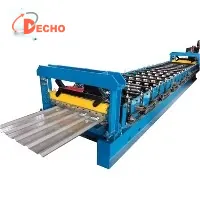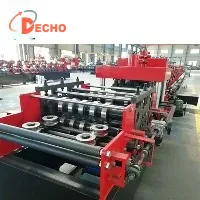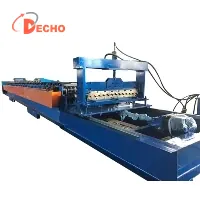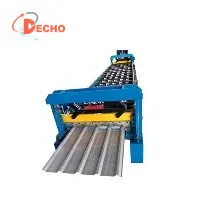

When it comes to sheet metal fabrication, two commonly used techniques are roll forming and press braking. As a sheet roll forming supplier, I've had the privilege of working closely with these processes and understanding their nuances. In this blog, I'll delve into the differences between roll forming and press braking for sheets, highlighting their unique characteristics, applications, and advantages.
1. Basic Principles
Roll Forming
Roll forming is a continuous bending process in which a long strip of sheet metal passes through a series of rollers. Each set of rollers gradually bends the metal into the desired cross - sectional shape. The process starts with a flat sheet, and as it moves through the roll forming machine, it is incrementally shaped until the final profile is achieved. This is a highly efficient method for producing long, uniform shapes with consistent cross - sections, such as channels, angles, and tubes.
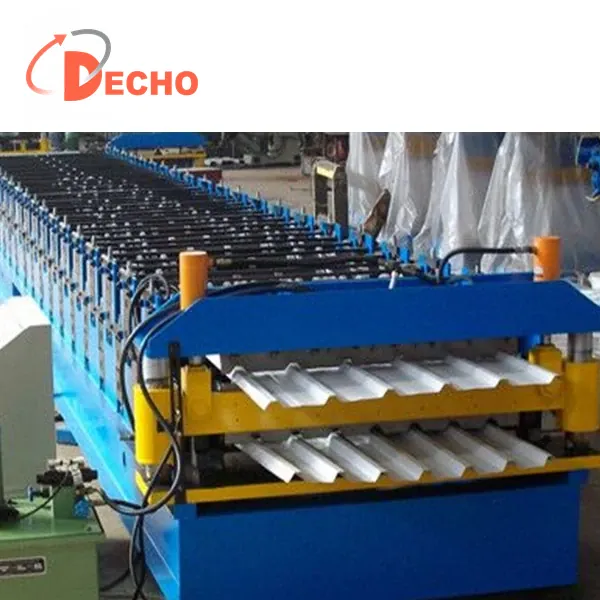
For example, our Double Layer Roll Forming Machine is a great illustration of roll forming technology. It can produce two different profiles simultaneously, increasing productivity and reducing costs.
Press Braking
Press braking, on the other hand, is a discrete bending process. A sheet of metal is placed on a die, and a punch presses down on the metal to bend it at a specific angle. The bending is done in one or more steps, depending on the complexity of the shape. Press brakes are versatile machines that can create a wide range of bends, from simple 90 - degree angles to more complex multi - bend shapes. They are often used for short runs and custom - made parts.
2. Tooling and Setup
Roll Forming
Roll forming requires custom - designed rollers for each specific profile. The tooling design and manufacturing process can be time - consuming and expensive, especially for complex shapes. However, once the tooling is set up, the production process can be highly automated and efficient. The rollers are typically made of high - quality steel and are designed to withstand the forces exerted during the roll forming process.
Press Braking
Press braking tooling is more flexible and generally less expensive than roll forming tooling. A single press brake can use a variety of punches and dies to create different bends. The setup time for press braking is relatively short, making it ideal for small - batch production. However, for complex shapes, multiple setups and operations may be required, which can increase the overall production time.
3. Production Speed and Volume
Roll Forming
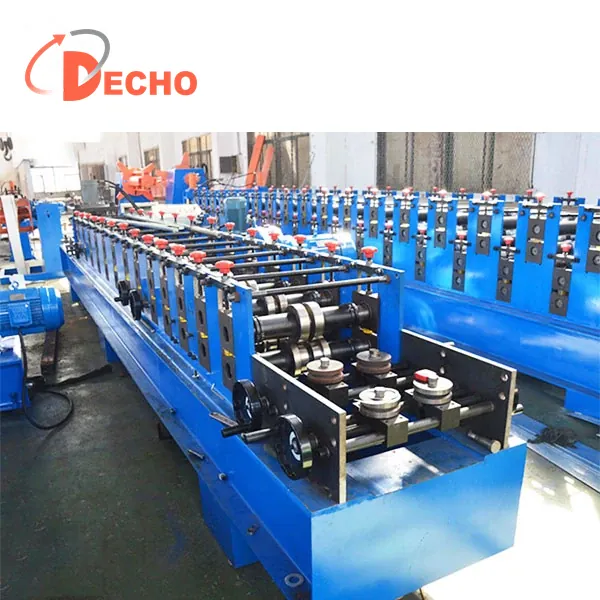
Roll forming is a high - speed production process. Once the machine is set up and running, it can produce long lengths of formed sheet metal at a rapid pace. This makes it suitable for large - volume production. For example, in the construction industry, roll - formed C - and Z - purlins are produced in large quantities using roll forming machines like our CZ Purlin Machine. The continuous nature of the process allows for a smooth and efficient production flow.
Press Braking
Press braking is generally slower than roll forming, especially for large - volume production. Each bend is made one at a time, and the machine may need to be re - set for different bends. However, for small - batch production or custom - made parts, press braking can be more efficient as it does not require the long setup time associated with roll forming.
4. Material Thickness and Type
Roll Forming
Roll forming can handle a wide range of material thicknesses, from thin gauge sheets to relatively thick plates. However, the maximum thickness that can be roll - formed depends on the capabilities of the machine and the complexity of the profile. Roll forming is suitable for various materials, including steel, aluminum, stainless steel, and copper.
Press Braking
Press braking can also work with different material thicknesses and types. It is particularly well - suited for thicker materials and can create sharp bends with high precision. However, for very thin materials, press braking may cause damage or distortion, especially if the bending radius is too small.
5. Shape Complexity
Roll Forming
Roll forming is best suited for producing shapes with a constant cross - section along the length. While it can create relatively complex profiles, the shape must be able to be formed incrementally by the rollers. For example, shapes with multiple curves or irregular cross - sections may be difficult or impossible to roll - form.
Press Braking
Press braking is more flexible when it comes to shape complexity. It can create a wide variety of bends and shapes, including those with non - uniform cross - sections. This makes it a popular choice for custom - made parts and prototypes.
6. Surface Finish
Roll Forming
Roll forming generally produces a smooth surface finish on the formed sheet metal. The continuous rolling action of the rollers minimizes surface marks and scratches. However, if the rollers are not properly maintained or if the material has surface defects, it can affect the final surface finish.
Press Braking
Press braking can sometimes leave marks or indentations on the surface of the metal, especially at the bend points. However, with proper tooling design and lubrication, these marks can be minimized. Additionally, post - processing operations such as grinding or polishing can be used to improve the surface finish.
7. Cost Considerations
Roll Forming
The initial investment for roll forming equipment and tooling can be high. However, for large - volume production, the cost per unit is relatively low due to the high production speed and efficiency. The long - term cost savings can be significant, especially for products that are produced in large quantities over an extended period.
Press Braking
Press braking equipment is generally less expensive than roll forming equipment. The lower tooling costs and shorter setup times make it a cost - effective option for small - batch production. However, for large - volume production, the higher labor costs and slower production speed can make press braking more expensive in the long run.
8. Applications
Roll Forming
Roll forming is widely used in various industries, including construction, automotive, and manufacturing. In the construction industry, roll - formed products such as purlins, wall panels, and roofing sheets are commonly used. In the automotive industry, roll - formed parts are used for frames, body panels, and structural components. Our Portable Metal Roof Roll Forming Machine is a popular choice for on - site roofing installations, providing a convenient and efficient solution.
Press Braking
Press braking is often used for custom - made parts, prototypes, and small - batch production. It is commonly used in industries such as aerospace, furniture manufacturing, and metal art. In the aerospace industry, press - braked parts are used for aircraft frames, brackets, and panels.
Conclusion
In conclusion, both roll forming and press braking are important techniques in sheet metal fabrication, each with its own unique advantages and limitations. Roll forming is ideal for large - volume production of long, uniform shapes, while press braking is more suitable for small - batch production and complex custom - made parts. As a sheet roll forming supplier, we understand the importance of choosing the right process for each project. We offer a wide range of roll forming machines and services to meet the diverse needs of our customers.
If you are looking for a reliable sheet roll forming solution or have questions about the differences between roll forming and press braking, we would be happy to assist you. Contact us to discuss your specific requirements and explore how our products can benefit your business.
References
- ASM Handbook, Volume 14A: Metalworking: Bulk Forming. ASM International.
- "Sheet Metal Forming Processes and Die Design" by P. S. Goel.
- "Manufacturing Engineering and Technology" by S. Kalpakjian and S. R. Schmid.