As a supplier of Deck Roll Forming Machines, I've been frequently asked about the forming force required for these machines to process different materials. This topic is crucial as it directly impacts the machine's performance, the quality of the final product, and the overall efficiency of the production process. In this blog, I'll delve into the factors that influence the forming force and how it varies across different materials.
Understanding the Basics of Forming Force
Before we discuss the specific materials, it's essential to understand what forming force is. In the context of a Deck Roll Forming Machine, the forming force refers to the amount of pressure needed to reshape the raw material into the desired deck profile. This force is generated by the rollers in the machine, which gradually bend and shape the material as it passes through them.
The forming force is determined by several factors, including the material's mechanical properties (such as yield strength, tensile strength, and hardness), the thickness of the material, the complexity of the deck profile, and the speed of the machine. A higher forming force is generally required for materials with higher strength and hardness, thicker gauges, more complex profiles, and faster production speeds.
Forming Force for Different Materials
Steel
Steel is one of the most commonly used materials in deck roll forming due to its high strength, durability, and versatility. The forming force required for steel depends on its grade and thickness. For example, mild steel, which has a relatively low yield strength, requires less forming force compared to high-strength steel.
Mild steel with a thickness of around 1 - 2 mm typically requires a forming force in the range of 5 - 10 tons per meter of the deck width. As the thickness increases to 3 - 4 mm, the forming force may increase to 15 - 20 tons per meter. High-strength steel, on the other hand, can require significantly more forming force, especially if it has a yield strength of over 500 MPa. In such cases, the forming force may exceed 30 tons per meter for thicker gauges.
It's important to note that the forming force can also be affected by the surface finish of the steel. Galvanized steel, for instance, has a protective zinc coating that can slightly increase the friction between the material and the rollers, requiring a slightly higher forming force.
Aluminum
Aluminum is another popular material for deck roll forming, especially in applications where weight is a concern. Aluminum has a lower density and strength compared to steel, which means it generally requires less forming force.
For aluminum sheets with a thickness of 1 - 2 mm, the forming force is typically in the range of 2 - 5 tons per meter of the deck width. Thicker aluminum sheets (3 - 4 mm) may require a forming force of 5 - 10 tons per meter. The alloy type also plays a role in determining the forming force. For example, aluminum alloys with higher copper or magnesium content tend to have higher strength and may require more forming force.
Stainless Steel
Stainless steel is known for its corrosion resistance and aesthetic appeal, making it a preferred choice for certain deck applications. However, stainless steel has a higher strength and hardness compared to mild steel and aluminum, which means it requires more forming force.
The forming force for stainless steel depends on its grade and thickness. For austenitic stainless steel (such as 304 and 316) with a thickness of 1 - 2 mm, the forming force is usually in the range of 10 - 15 tons per meter of the deck width. Thicker stainless steel sheets (3 - 4 mm) may require a forming force of 20 - 30 tons per meter. Ferritic stainless steel, which has a lower strength compared to austenitic stainless steel, may require slightly less forming force.
Impact of Profile Complexity on Forming Force
In addition to the material properties, the complexity of the deck profile also has a significant impact on the forming force. A simple flat or slightly curved deck profile requires less forming force compared to a profile with multiple bends, embossments, or ribs.
For example, a deck profile with a single 90-degree bend may require a forming force of around 5 - 10 tons per meter, depending on the material and thickness. However, a profile with multiple bends and embossments may require a forming force of 15 - 30 tons per meter or more.
To reduce the forming force for complex profiles, some deck roll forming machines are equipped with advanced features such as pre-bending stations, intermediate rollers, and adjustable roller pressures. These features help to distribute the forming force more evenly and gradually shape the material, reducing the risk of cracking or deformation.
Importance of Proper Forming Force
Using the correct forming force is crucial for ensuring the quality of the final product and the longevity of the Deck Roll Forming Machine. If the forming force is too low, the material may not be fully formed, resulting in an incomplete or inaccurate deck profile. On the other hand, if the forming force is too high, it can cause excessive stress on the material, leading to cracking, wrinkling, or other defects.
Moreover, using an incorrect forming force can also put unnecessary strain on the machine's components, such as the rollers, gears, and motors. This can lead to premature wear and tear, increased maintenance costs, and even machine breakdowns.
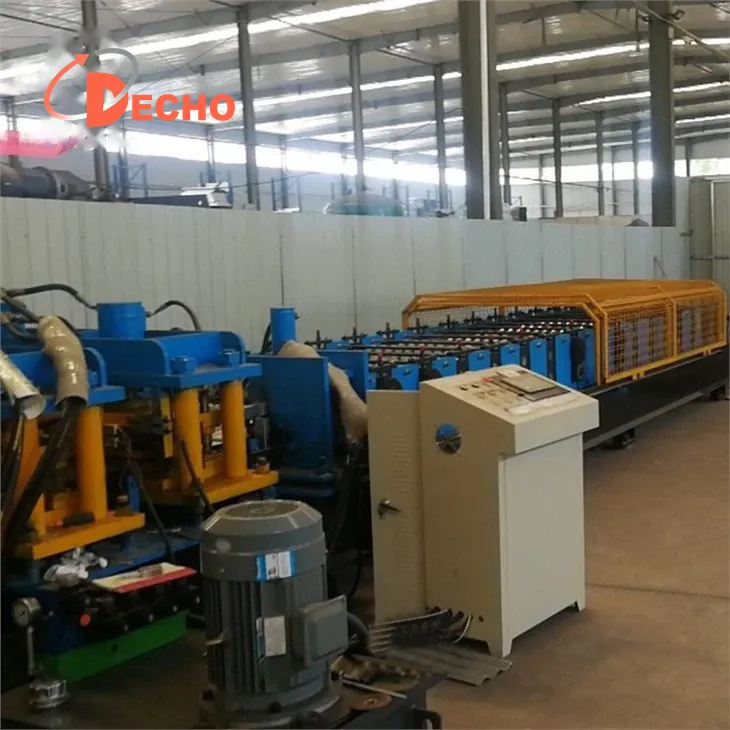
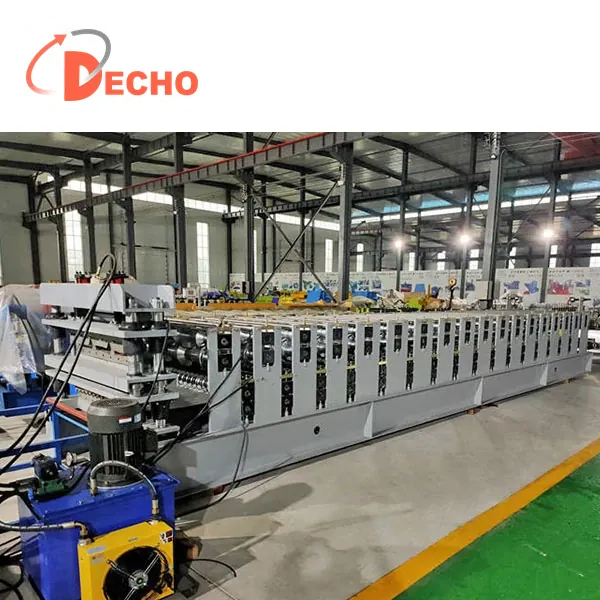
Other Roll Forming Machines in Our Product Range
In addition to Deck Roll Forming Machines, we also offer a wide range of other roll forming machines, such as Silo Roll Forming Machine, Double Layer Roll Forming Machine, and Double Layer Roofing Sheet Roll Forming Machine. These machines are designed to meet the diverse needs of our customers and can process a variety of materials with different forming requirements.
Conclusion
In conclusion, the forming force required for a Deck Roll Forming Machine to process different materials depends on several factors, including the material's mechanical properties, thickness, profile complexity, and production speed. As a supplier, we understand the importance of providing our customers with machines that can handle different materials and profiles with the right forming force.
If you're in the market for a Deck Roll Forming Machine or any other roll forming equipment, we'd be happy to assist you. Our team of experts can help you select the right machine for your specific needs and provide you with detailed information about the forming force requirements. Contact us today to start a discussion about your procurement needs.
References
- ASM Handbook, Volume 14A: Metalworking: Bulk Forming, ASM International
- Roll Forming Technology Handbook, William H. Dietz
- Design and Manufacturing of Roll Forming Tools, Leif Aspenberg