Hey there! As a supplier of Cold Roll Formers, I often get asked about the forming speed of these machines. It's a crucial factor for many businesses looking to invest in this equipment, as it directly impacts production efficiency and overall output. So, let's dive right into what the forming speed of a Cold Roll Former is all about.
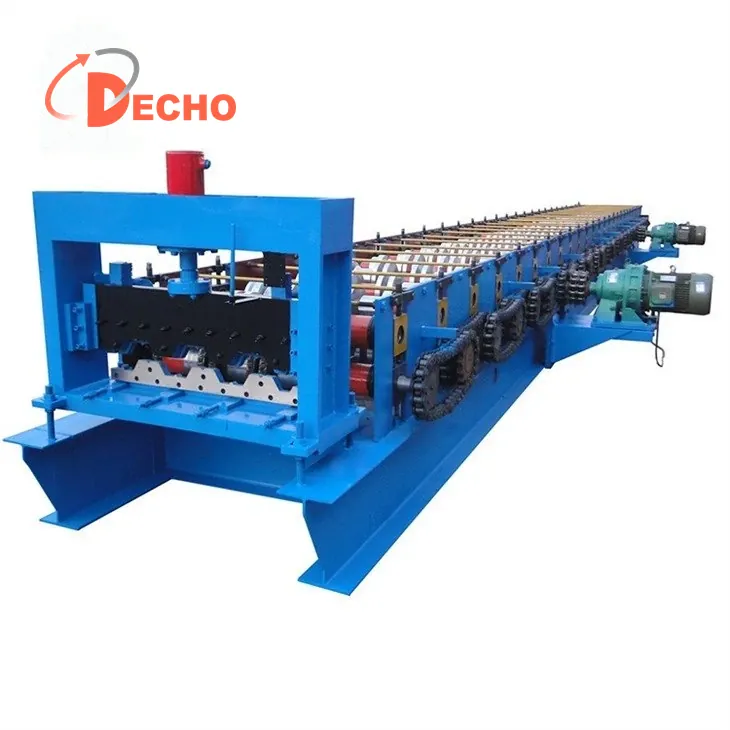
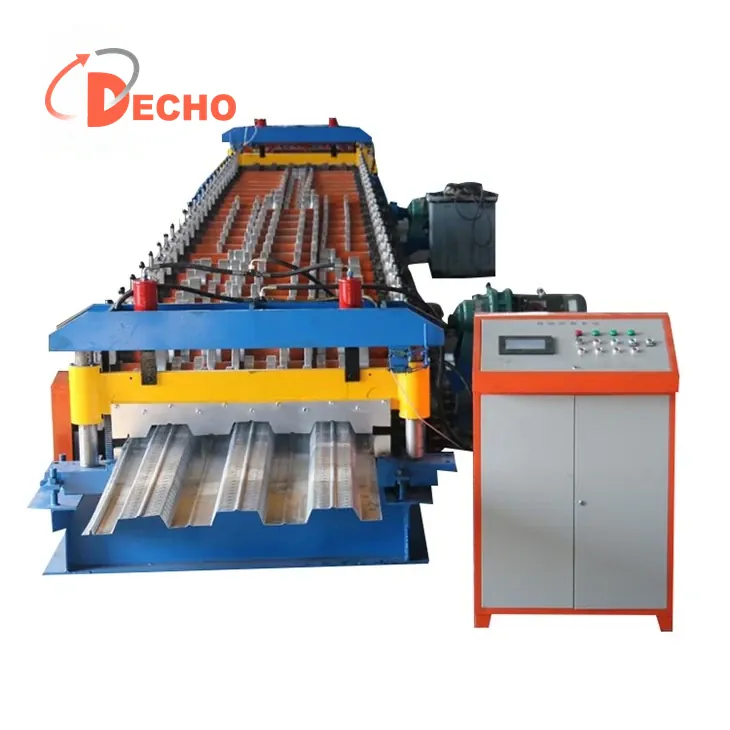
First off, what exactly is a Cold Roll Former? Well, it's a machine that takes flat metal sheets and transforms them into various shapes and profiles through a series of rolling processes. These machines are used in a wide range of industries, from construction to automotive, to create products like Stainless Steel Water Tank Making Machine, Roller Shutter Door Forming Machine, and Floor Deck Roll Forming Machine.
Now, the forming speed of a Cold Roll Former refers to how quickly it can convert the flat metal into the desired profile. This speed is usually measured in feet per minute (FPM) or meters per minute (MPM). But it's not as simple as just having a high number. There are several factors that can affect the actual forming speed of the machine.
One of the most significant factors is the complexity of the profile. If you're creating a simple, straight profile, the machine can usually operate at a higher speed. However, if the profile has intricate curves, bends, or multiple layers, the forming speed will likely be slower. This is because the machine needs to make precise adjustments at each step to ensure the accuracy of the final product.
The type of material being used also plays a role. Different metals have different properties, such as hardness and ductility. Harder materials, like stainless steel, can be more difficult to form and may require a slower speed to prevent cracking or other defects. On the other hand, softer materials, like aluminum, can often be formed at a faster rate.
The thickness of the material is another important consideration. Thicker sheets generally require more force to form, which can slow down the machine. Additionally, the machine may need to make more passes or use more powerful rollers to achieve the desired shape.
The design and quality of the Cold Roll Former itself are also crucial. A well-designed machine with high-quality components and advanced control systems can often operate at a faster speed while maintaining accuracy and reliability. Cheaper, lower-quality machines may have limitations in terms of speed and performance.
Let's take a closer look at some real-world examples. Suppose you're using a Cold Roll Former to produce a simple C-channel profile from mild steel. In this case, the machine might be able to achieve a forming speed of around 30 to 50 FPM. However, if you're creating a more complex profile, like a custom-shaped architectural panel, the speed could drop to 10 to 20 FPM.
When it comes to our Cold Roll Formers, we've invested a lot of time and effort in optimizing the design and performance to achieve the best possible forming speeds. Our machines are equipped with state-of-the-art technology and high-quality components that allow for fast and accurate forming. We also offer customizable solutions to meet the specific needs of our customers.
For example, if you're in the market for a Stainless Steel Water Tank Making Machine, our Cold Roll Former can be configured to produce the corrugated panels at an efficient speed, ensuring a high-quality end product. Similarly, our Roller Shutter Door Forming Machine is designed to quickly and accurately form the slats for roller shutter doors, helping you meet your production targets.
If you're considering investing in a Cold Roll Former, it's important to carefully evaluate your production requirements. Think about the types of profiles you'll be creating, the materials you'll be using, and the volume of production you need to achieve. This will help you determine the ideal forming speed for your business.
It's also a good idea to work with a reputable supplier who can provide you with expert advice and support. At our company, we have a team of experienced engineers and technicians who can help you select the right Cold Roll Former for your needs and ensure that it's installed and set up correctly.
In conclusion, the forming speed of a Cold Roll Former is a critical factor that can have a significant impact on your business's productivity and profitability. By understanding the factors that affect forming speed and working with a reliable supplier, you can make an informed decision and choose a machine that will meet your specific requirements.
If you're interested in learning more about our Cold Roll Formers or have any questions about forming speed, don't hesitate to get in touch. We'd be happy to discuss your needs and provide you with a customized solution. Let's work together to take your production to the next level!
References:
- Industry standards and best practices for Cold Roll Forming
- Technical documentation and specifications of our Cold Roll Formers
- Case studies and customer feedback on forming speed and performance