Hey there! As a supplier of Deck Roll Forming Machines, I often get asked about how the forming speed of our machines stacks up against other methods. So, I thought I'd take a deep dive into this topic and share some insights with you.
First off, let's talk about what a Deck Roll Forming Machine actually does. It's a piece of equipment that takes a flat metal sheet and transforms it into a deck profile through a series of rolling operations. This process is used in a wide range of industries, from construction to manufacturing, to create things like floor decks, roofing decks, and wall panels.
Now, when it comes to forming speed, there are a few factors to consider. One of the biggest advantages of a Deck Roll Forming Machine is its ability to produce profiles at a relatively high rate. Unlike some other methods, such as stamping or press braking, which may require multiple steps and longer setup times, roll forming is a continuous process. This means that once the machine is set up and running, it can produce a large number of profiles in a short amount of time.
For example, let's say you're looking to produce a large quantity of floor decks for a construction project. With a Deck Roll Forming Machine, you can feed a continuous coil of metal into the machine, and it will roll form the deck profiles as the coil unwinds. Depending on the complexity of the profile and the speed settings of the machine, you could potentially produce hundreds or even thousands of feet of decking per hour.
In contrast, stamping or press braking methods may require you to cut individual blanks of metal and then form them one at a time. This can be a much slower process, especially when dealing with large volumes. Additionally, stamping and press braking often require more complex tooling, which can be expensive to manufacture and maintain.
Another factor that affects forming speed is the type of material being used. Deck Roll Forming Machines can handle a variety of metals, including steel, aluminum, and stainless steel. The forming speed may vary depending on the thickness and hardness of the material. Generally, thinner and softer materials can be formed at a faster rate than thicker and harder materials. However, modern Deck Roll Forming Machines are designed to be versatile and can adjust their speed and pressure settings to accommodate different materials.
When comparing the forming speed of a Deck Roll Forming Machine to other methods, it's also important to consider the quality of the finished product. Roll forming produces profiles with consistent dimensions and high precision. The continuous rolling process ensures that the profiles have a smooth surface finish and uniform shape. This is especially important in applications where the profiles need to fit together precisely, such as in construction projects.
On the other hand, stamping and press braking methods may introduce some variability in the dimensions and surface finish of the profiles. This can be due to factors such as tool wear, material springback, and operator error. In some cases, additional finishing operations may be required to achieve the desired quality.
Now, let's take a look at some specific examples of how the forming speed of a Deck Roll Forming Machine compares to other methods in different applications.
Construction Industry
In the construction industry, Deck Roll Forming Machines are commonly used to produce floor decks and roofing decks. These decks need to be produced quickly and efficiently to meet the project deadlines. A Deck Roll Forming Machine can produce floor decks at a speed of up to 30 meters per minute or more, depending on the machine's specifications. This is much faster than traditional methods, such as manual fabrication or stamping.
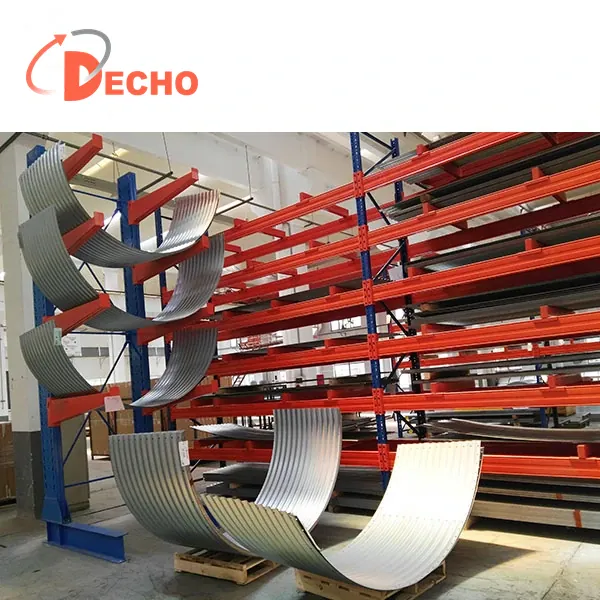
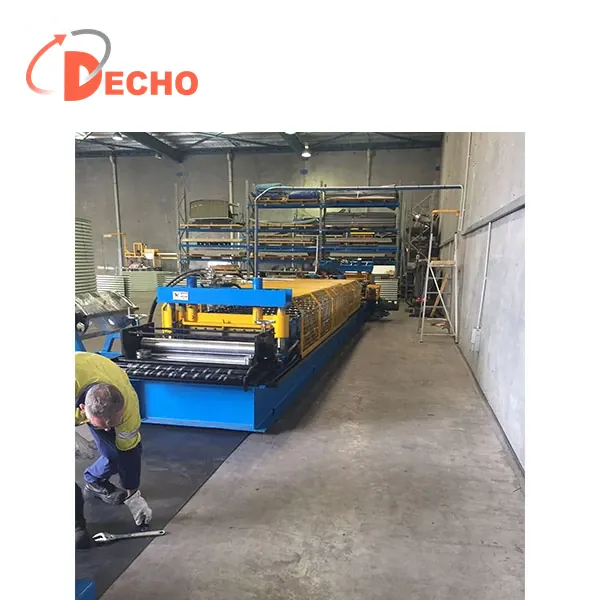
For roofing decks, the forming speed is also crucial, especially for large-scale projects. A Deck Roll Forming Machine can produce roofing decks with complex profiles at a high rate, ensuring that the project can progress smoothly. Additionally, the ability to produce continuous lengths of roofing decks reduces the number of joints, which improves the overall waterproofing and structural integrity of the roof.
Manufacturing Industry
In the manufacturing industry, Deck Roll Forming Machines are used to produce a variety of components, such as wall panels, cabinets, and enclosures. These components often require precise dimensions and high-quality finishes. A Deck Roll Forming Machine can produce these components at a consistent speed, ensuring that the production line runs smoothly.
For example, a Roofing Sheet Roll Forming Machine can produce roofing sheets with different profiles and thicknesses at a high rate. This allows manufacturers to meet the demand for roofing sheets in the market quickly. Similarly, a Water Tank Making Machine can produce water tank panels at a fast pace, ensuring that the production of water tanks is efficient.
Automotive Industry
In the automotive industry, Deck Roll Forming Machines are used to produce components such as chassis frames, door frames, and body panels. These components need to be lightweight, strong, and have precise dimensions. A Deck Roll Forming Machine can produce these components at a high speed, while also ensuring that the quality is consistent.
For example, a Roof And Wall Panel Roll Forming Machine can produce automotive body panels with complex shapes and profiles at a fast rate. This allows automotive manufacturers to increase their production capacity and meet the demand for new vehicles.
In conclusion, the forming speed of a Deck Roll Forming Machine is generally much faster than other methods, such as stamping or press braking. The continuous rolling process, combined with the ability to handle a variety of materials and produce consistent profiles, makes it an ideal choice for high-volume production. Whether you're in the construction, manufacturing, or automotive industry, a Deck Roll Forming Machine can help you increase your production efficiency and reduce your costs.
If you're interested in learning more about our Deck Roll Forming Machines or have any questions about the forming speed or other features, please don't hesitate to contact us. We'd be happy to discuss your specific requirements and provide you with a customized solution. Let's work together to take your production to the next level!
References
- "Roll Forming Technology Handbook" by Wayne T. Boyer
- "Metal Forming Handbook" by Carl L. Wilson