Hey there! As a supplier of Sheet Making Machines, I often get asked about the hydraulic system of these machines. So, I thought I'd take a moment to break it down for you.
What's a Hydraulic System in a Nutshell?
First off, let's talk about what a hydraulic system is. In simple terms, it's a way of using fluid pressure to do work. It's like the muscle of the sheet making machine, allowing it to perform heavy - duty tasks with precision.
The basic principle behind a hydraulic system is Pascal's Law. This law states that when pressure is applied to a confined fluid, the pressure change occurs throughout the entire fluid. In a sheet making machine, this means that a small amount of force applied to a small area can be transformed into a large amount of force over a larger area.
Components of the Hydraulic System in a Sheet Making Machine
Hydraulic Pump
The hydraulic pump is the heart of the system. It's responsible for converting mechanical energy into hydraulic energy. There are different types of pumps used in sheet making machines, like gear pumps, vane pumps, and piston pumps. Gear pumps are simple and cost - effective, while piston pumps are more efficient and can handle higher pressures.
Hydraulic Cylinders
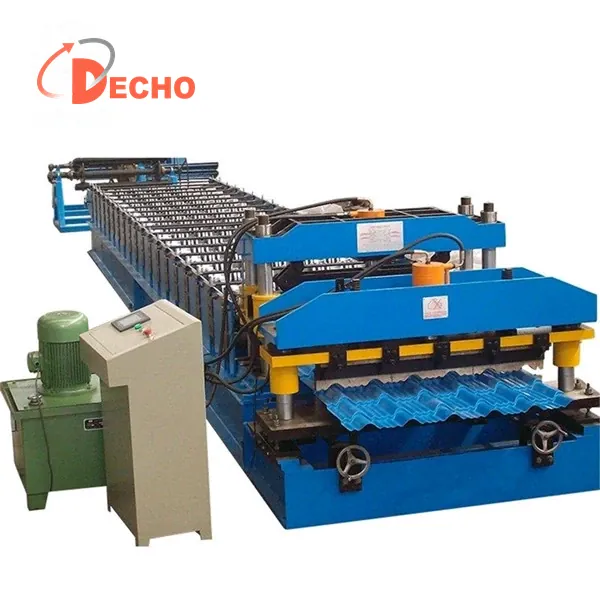
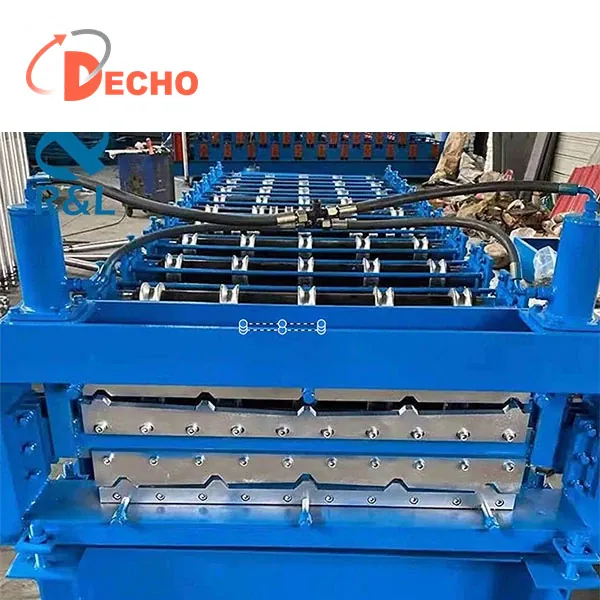
These are like the arms of the machine. Hydraulic cylinders convert the hydraulic energy back into mechanical energy. They use the pressure from the fluid to move a piston, which in turn can perform tasks like bending, cutting, or pressing the sheets. In a sheet making machine, cylinders are used to shape the metal sheets into the desired form. For example, they can be used to create the corrugations in a Roofing Sheet Roll Forming Machine.
Hydraulic Fluid
The hydraulic fluid is the lifeblood of the system. It transfers the pressure and also lubricates the moving parts. It needs to have good viscosity, anti - wear properties, and be resistant to oxidation. Mineral oils are commonly used as hydraulic fluids, but synthetic fluids are also an option, especially in high - performance applications.
Valves
Valves control the flow and pressure of the hydraulic fluid. There are different types of valves, such as directional control valves, pressure control valves, and flow control valves. Directional control valves determine the direction of the fluid flow, pressure control valves maintain the desired pressure in the system, and flow control valves regulate the speed of the cylinders.
How the Hydraulic System Works in a Sheet Making Machine
Let's say you're using a sheet making machine to produce roofing sheets. When you start the machine, the hydraulic pump begins to draw in the hydraulic fluid from the reservoir. It then pressurizes the fluid and sends it through the pipes to the valves.
The directional control valves direct the pressurized fluid to the appropriate hydraulic cylinders. For example, if you want to create a bend in the sheet, the valve will send the fluid to the cylinder that's responsible for the bending operation.
The pressurized fluid enters the cylinder and pushes the piston. The piston then moves the tool or die that's in contact with the metal sheet, creating the desired shape. Once the operation is complete, the valve changes the direction of the fluid flow, and the piston retracts.
Advantages of a Hydraulic System in a Sheet Making Machine
High Power Density
Hydraulic systems can generate a large amount of force in a relatively small space. This means that sheet making machines can be more compact while still being able to handle heavy - duty tasks. For instance, a small hydraulic cylinder can exert a force of several tons, which is essential for shaping thick metal sheets.
Precise Control
The valves in the hydraulic system allow for very precise control of the force, speed, and position of the cylinders. This is crucial for producing high - quality sheets with consistent dimensions. Whether you're making Roof Tile Making Machine products or water tank components with a Water Tank Machine, precise control ensures that each piece meets the required specifications.
Smooth Operation
Hydraulic systems provide smooth and continuous motion. There are no jerks or sudden movements, which is important for preventing damage to the metal sheets and the machine itself. This smooth operation also reduces wear and tear on the components, increasing the lifespan of the machine.
Maintenance of the Hydraulic System
To keep the hydraulic system of your sheet making machine in good working condition, regular maintenance is essential. You need to check the hydraulic fluid level regularly and top it up if necessary. You should also change the fluid at the recommended intervals to prevent contamination.
Inspect the pipes and hoses for any signs of leaks or damage. Leaks can not only reduce the efficiency of the system but also pose a safety hazard. Check the filters regularly and replace them when they're dirty.
The valves and pumps should be inspected for proper operation. If you notice any abnormal noises or vibrations, it could be a sign of a problem with the hydraulic system. In such cases, it's best to have a professional technician take a look.
Conclusion
The hydraulic system is a crucial part of a sheet making machine. It provides the power, control, and precision needed to produce high - quality metal sheets. Whether you're in the business of making roofing sheets, roof tiles, or water tanks, understanding how the hydraulic system works can help you get the most out of your machine.
If you're interested in purchasing a sheet making machine or have any questions about the hydraulic system, don't hesitate to get in touch. We're here to help you find the right machine for your needs and ensure that it operates smoothly.
References
- "Hydraulic Systems: Principles and Maintenance" by John F. Caruthers
- "Industrial Hydraulics" by David Crolla