As a supplier of Metal Roll Forming Machines, I've witnessed firsthand the pivotal role that roller design plays in the forming quality of metal products. In this blog, I'll delve into the various aspects of how roller design influences forming quality, drawing on my industry experience and knowledge.
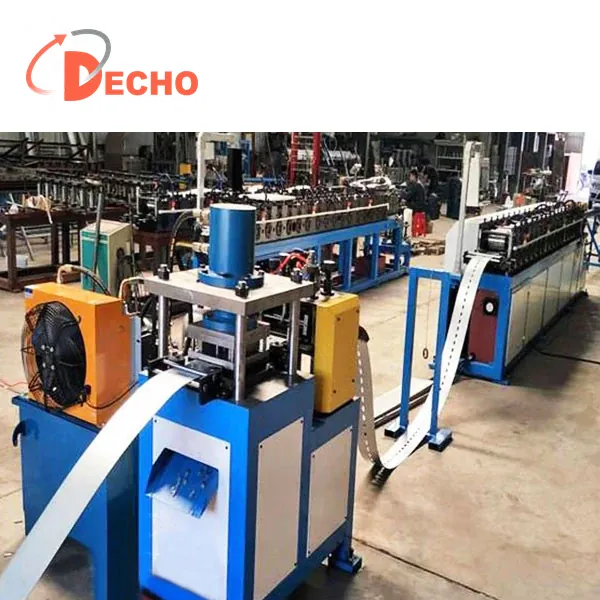
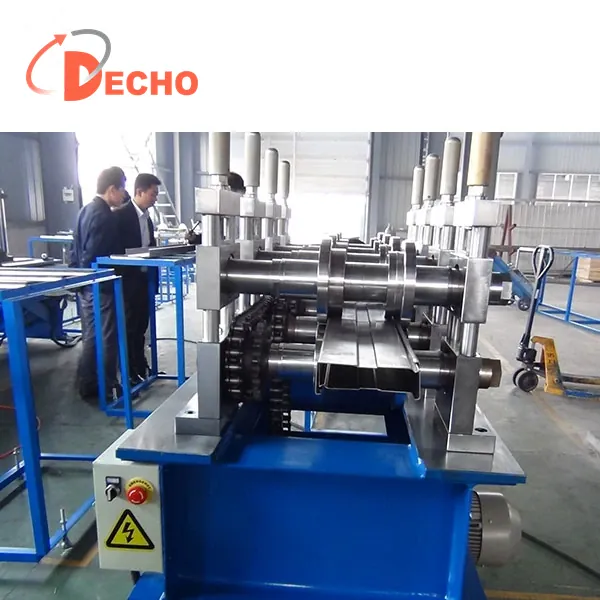
1. Precision in Roller Dimensions
The dimensions of rollers are the cornerstone of achieving high - quality formed products. The diameter, width, and contour of each roller must be precisely engineered to match the specifications of the metal profile being produced. For instance, in the production of a Roof Sheet Roll Forming Machine, the rollers need to be designed to create the specific corrugations and curves required for an effective roofing sheet.
If the roller diameter is too large or too small, it can lead to uneven stretching or compression of the metal. An oversized roller may not provide enough pressure to form the desired shape, resulting in a loose - fitting or misshapen product. Conversely, an undersized roller can cause excessive stress on the metal, leading to cracking or tearing.
The width of the roller also matters. A roller that is too narrow may not cover the entire width of the metal strip, causing uneven forming along the edges. This can lead to inconsistent product dimensions and a decrease in overall structural integrity. On the other hand, a roller that is too wide can waste material and may not provide the necessary precision in forming the detailed features of the profile.
2. Surface Finish of Rollers
The surface finish of rollers has a direct impact on the appearance and quality of the formed metal products. A smooth roller surface reduces friction between the roller and the metal strip during the forming process. This not only makes the forming operation more efficient but also prevents scratches and marks on the surface of the metal.
For products where aesthetics are important, such as decorative metal panels, a high - quality surface finish on the rollers is essential. Any imperfections on the roller surface, such as pits or roughness, will be transferred to the metal, marring its appearance. Additionally, a rough surface can increase the likelihood of the metal sticking to the roller, which can disrupt the forming process and lead to production delays.
In some cases, rollers may be coated with special materials to improve their surface properties. For example, a hard - chrome coating can enhance the wear resistance of the roller, extending its service life and maintaining a smooth surface finish over a longer period. This is particularly important in high - volume production environments where the rollers are subjected to continuous wear and tear.
3. Roller Material Selection
The choice of roller material is another critical factor that affects forming quality. Different metals have different mechanical properties, such as hardness, toughness, and heat resistance. These properties determine how well the roller can withstand the forces and stresses involved in the forming process.
For applications where high precision and durability are required, such as in the production of Cable Tray Forming Machine components, tool steels are often used. Tool steels offer high hardness and wear resistance, which is essential for maintaining the shape and surface finish of the rollers over a large number of forming cycles.
However, tool steels can be expensive, and in some cases, other materials may be more suitable. For example, in less demanding applications or where cost is a major concern, cast iron or aluminum rollers may be used. Cast iron rollers are relatively inexpensive and have good damping properties, which can reduce vibration during the forming process. Aluminum rollers are lightweight and have good thermal conductivity, which can be beneficial in applications where heat dissipation is important.
4. Roller Arrangement and Configuration
The arrangement and configuration of rollers in a roll - forming machine are crucial for achieving uniform and accurate forming. The number of rollers, their spacing, and the angle at which they are positioned all affect how the metal strip is deformed.
In a multi - stage roll - forming process, each set of rollers is designed to perform a specific function. The initial rollers may be used to gradually bend the metal strip into a rough shape, while the subsequent rollers refine the shape and add the final details. The spacing between the rollers must be carefully calculated to ensure that the metal is deformed at the right rate and to prevent over - bending or under - bending.
The angle of the rollers also plays a role in the forming process. For example, in the production of a C Purlin Machine, the rollers are typically arranged at a specific angle to create the characteristic C - shape of the purlin. If the angle is incorrect, the purlin may not have the correct dimensions or may have a distorted shape.
5. Impact on Production Efficiency
Good roller design not only improves the quality of the formed products but also enhances production efficiency. Well - designed rollers can reduce the number of rejects and rework, which saves time and materials. They also allow for higher production speeds, as the metal can be formed more smoothly and consistently.
For example, if the rollers are precisely engineered to match the metal profile, the forming process can be completed in fewer passes. This reduces the overall production time and increases the throughput of the roll - forming machine. Additionally, rollers with a good surface finish and appropriate material selection require less maintenance, minimizing downtime and ensuring continuous production.
6. Influence on Product Performance
The quality of the formed products, which is largely determined by roller design, has a direct impact on their performance in real - world applications. For example, a well - formed roofing sheet produced by a Roof Sheet Roll Forming Machine will have better water - shedding properties and structural integrity. It will be more resistant to wind uplift and other environmental factors, ensuring a longer service life.
Similarly, cable trays formed with high - quality rollers will have consistent dimensions and smooth surfaces, which are essential for proper cable management. They will also be more durable and less likely to deform under the weight of the cables. C purlins produced by a C Purlin Machine with well - designed rollers will have the correct strength and stiffness, providing reliable support for roofing and wall systems.
Conclusion
In conclusion, roller design is a critical factor that significantly influences the forming quality of metal products. From precision in dimensions and surface finish to material selection and roller arrangement, every aspect of roller design plays a role in determining the appearance, structural integrity, and performance of the formed products. As a supplier of Metal Roll Forming Machines, we understand the importance of getting the roller design right. We are committed to providing our customers with machines that are equipped with high - quality rollers, ensuring that they can produce top - notch metal products.
If you are in the market for a Metal Roll Forming Machine and want to ensure the best forming quality for your products, we invite you to contact us for a detailed discussion. Our team of experts is ready to assist you in selecting the right machine and roller design for your specific needs.
References
- "Roll Forming Technology" by George E. Dieter
- "Metal Forming: Mechanics and Metallurgy" by S. Kalpakjian and S. R. Schmid