As a seasoned provider of Profile Forming Machines, I've witnessed firsthand the transformative impact these machines have on various industries. Profile forming machines are essential in shaping metal sheets into specific profiles for a wide range of applications, from construction to automotive manufacturing. In this blog post, I'll delve into the key components of a profile forming machine, explaining their functions and how they contribute to the overall performance of the machine.
1. Uncoiler
The uncoiler is the starting point of the profile forming process. Its primary function is to hold and unwind the metal coil smoothly. A good uncoiler should be able to handle different coil widths, thicknesses, and weights. It typically consists of a hydraulic or mechanical system that controls the tension of the coil as it unwinds. This ensures a consistent feed of the metal sheet into the subsequent components of the machine. For example, in our machines, we use advanced hydraulic uncoilers that can precisely adjust the tension, preventing the metal sheet from wrinkling or stretching during the unwinding process.
2. Feeding System
Once the metal sheet is unwound from the coil, it enters the feeding system. This system is responsible for guiding the metal sheet into the roll forming section at a consistent speed and alignment. It usually includes a set of rollers or guides that keep the sheet centered and moving forward. Some feeding systems are equipped with sensors to detect any misalignment or irregularities in the sheet, which can then be corrected automatically. Our feeding systems are designed to be highly accurate, ensuring that the metal sheet is fed into the roll forming section with minimal deviation, resulting in high - quality profiles.
3. Roll Forming Stations
The roll forming stations are the heart of the profile forming machine. This is where the actual shaping of the metal sheet takes place. Each roll forming station consists of a pair of rollers with a specific profile. As the metal sheet passes through these stations, the rollers gradually bend and shape the sheet into the desired profile. The number of roll forming stations depends on the complexity of the profile. For simple profiles, fewer stations may be required, while complex profiles may need a larger number of stations. Our roll forming stations are made from high - quality materials and are precision - machined to ensure accurate shaping and long - term durability.
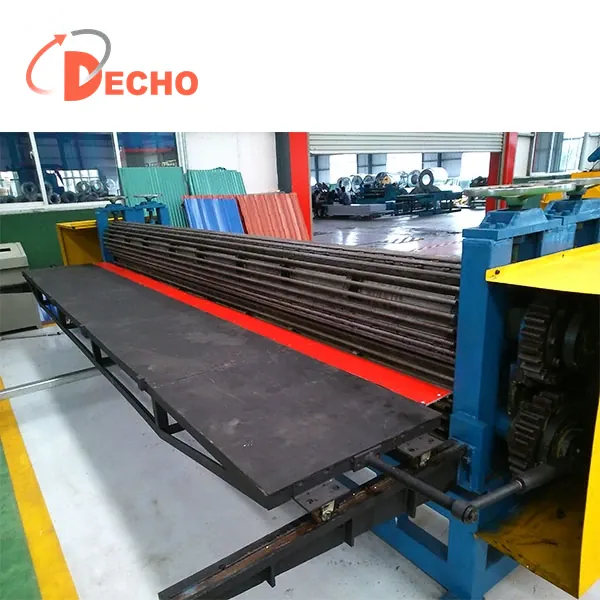
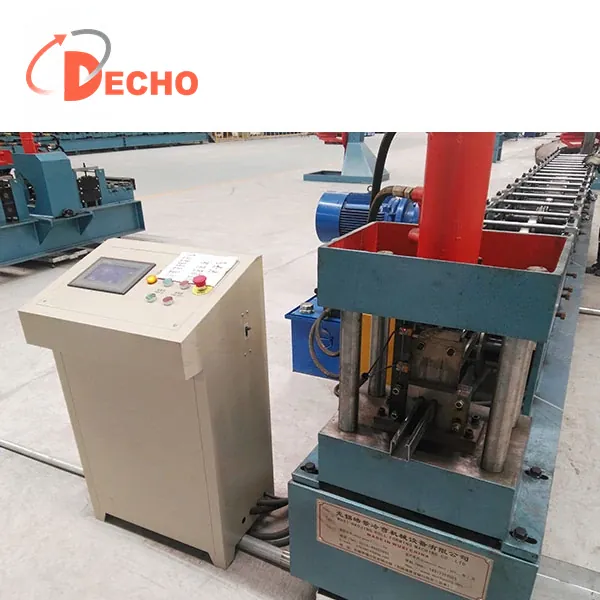
4. Cutting System
After the metal sheet has been formed into the desired profile, it needs to be cut to the appropriate length. The cutting system is responsible for this task. There are different types of cutting systems, including mechanical, hydraulic, and flying cut - off systems. Mechanical cutting systems are simple and cost - effective but may have limitations in terms of cutting speed and accuracy. Hydraulic cutting systems offer more power and precision, making them suitable for thicker metal sheets. Flying cut - off systems are the most advanced, as they can cut the profile while it is still moving, allowing for continuous production. We offer a variety of cutting systems to meet the different needs of our customers, ensuring high - quality and efficient cutting.
5. Control System
The control system is the brain of the profile forming machine. It manages and coordinates the operation of all the components, ensuring that the machine runs smoothly and efficiently. Modern control systems are usually based on programmable logic controllers (PLCs) and human - machine interfaces (HMIs). The PLC allows for precise control of the speed, position, and other parameters of the machine, while the HMI provides an intuitive interface for the operator to monitor and adjust the machine settings. Our control systems are user - friendly and can be customized to meet the specific requirements of different applications. They also have diagnostic functions that can detect and troubleshoot any issues quickly, minimizing downtime.
6. Support Structure
The support structure provides a stable foundation for all the components of the profile forming machine. It needs to be strong enough to withstand the forces generated during the roll forming process. The support structure is typically made of heavy - duty steel and is designed to be rigid and vibration - resistant. A well - designed support structure ensures the accuracy and stability of the machine, which is crucial for producing high - quality profiles. Our support structures are engineered to provide maximum stability and durability, even under heavy - duty operation.
7. Optional Components
In addition to the main components mentioned above, there are also some optional components that can enhance the functionality of the profile forming machine. For example, a pre - punching system can be added to punch holes or slots in the metal sheet before it is formed. This is useful for applications where holes are required for assembly or ventilation. Another optional component is a post - treatment system, such as a painting or galvanizing unit, which can apply a protective coating to the formed profiles.
We offer a wide range of Profile Forming Machines, including the Barrel Corrugation Machine, Rolling Shutter Roll Forming Machine, and Metal Rollformer. These machines are designed with the latest technology and high - quality components to ensure reliable performance and high - quality output.
If you are in the market for a Profile Forming Machine, we invite you to contact us for a detailed consultation. Our team of experts will work closely with you to understand your specific requirements and recommend the most suitable machine for your application. We are committed to providing excellent customer service and support throughout the entire process, from machine selection to installation and after - sales service.
References
- "Roll Forming Technology Handbook" by Thomas J. Luecke
- "Metal Forming: Mechanics and Metallurgy" by Dieter Kleiner, Andreas Erman Tekkaya, and Friedrich Klocke