Hey there! As a sheet roll forming supplier, I often get asked about the maximum thickness of sheets that can be roll-formed. It's a crucial question for anyone in the construction, manufacturing, or DIY scene, so I thought I'd break it down for you.
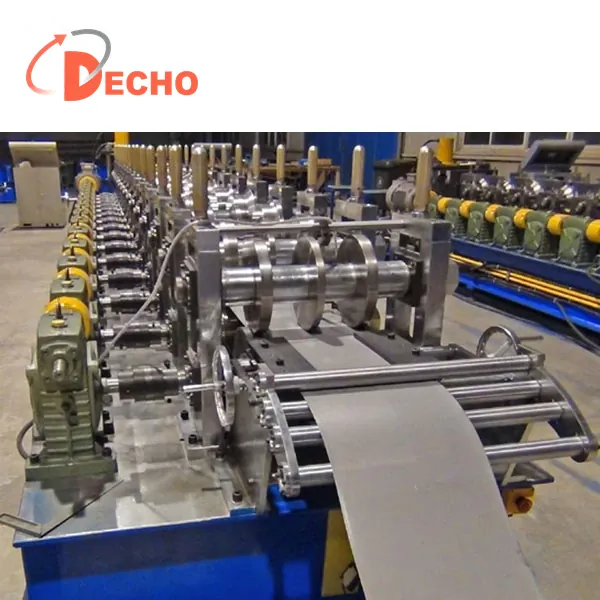
First off, let's talk about what roll forming is. Roll forming is a process where a long strip of metal, like steel or aluminum, is passed through a series of rollers. Each set of rollers makes a small change to the shape of the metal until it finally takes on the desired profile. It's a super efficient way to make all sorts of products, from roofing sheets to door frames.
Now, the maximum thickness of sheets that can be roll-formed depends on a bunch of factors. One of the biggest factors is the type of material. Different metals have different properties, like hardness and ductility. For example, steel is generally stronger and harder than aluminum. So, you can usually roll-form thicker steel sheets compared to aluminum ones.
Let's start with steel. Mild steel, which is one of the most commonly used types, can typically be roll-formed up to around 6 - 8 mm in thickness. This is because mild steel has a good balance of strength and ductility. It can withstand the bending and shaping forces in the roll forming process without cracking or breaking. However, if you're using high-strength steel, the maximum thickness might be a bit less, maybe around 4 - 6 mm. High-strength steel is tougher, but it's also less ductile, so it's more likely to crack if you try to roll-form very thick sheets.
Aluminum, on the other hand, is a bit more delicate. Due to its relatively low strength compared to steel, the maximum thickness for roll forming aluminum sheets is usually around 3 - 5 mm. Aluminum is great because it's lightweight and corrosion-resistant, but it just can't handle as much stress as steel during the roll forming process.
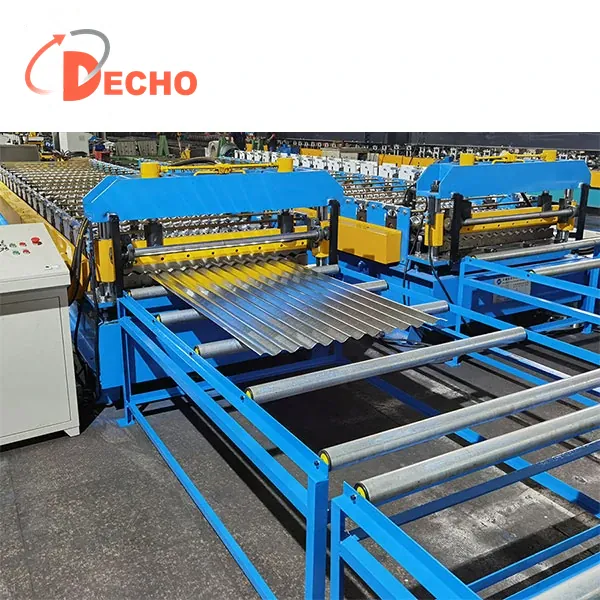
Another important factor is the design of the roll forming machine. A well-built, heavy-duty machine can handle thicker sheets than a smaller, more basic one. Our Double Layer Roll Forming Machine is a beast when it comes to roll forming. It's designed with high-quality components and a powerful motor, which allows it to handle relatively thick sheets with ease. The rollers are precisely engineered to ensure a smooth and accurate forming process, even for thicker materials.
The complexity of the profile you want to create also matters. If you're making a simple, straight profile, you can usually roll-form thicker sheets. But if you're going for a more intricate design with lots of curves and bends, the maximum thickness will be lower. That's because more complex profiles require the metal to be bent and shaped more, which puts more stress on the material. For example, if you're using a Rolling Shutter Making Machine to make rolling shutters, which have a specific and somewhat complex shape, you'll need to keep the sheet thickness within a certain range to ensure a good quality product.
The speed of the roll forming process can also impact the maximum thickness. If you're running the machine at a high speed, the metal has less time to deform gradually. This can lead to cracking or other defects, especially with thicker sheets. So, when working with thicker materials, it's often necessary to slow down the machine to ensure a proper forming process.
Surface finish is another consideration. If the sheet has a rough or uneven surface, it can cause problems during roll forming. The rollers might not grip the material properly, or the uneven surface can lead to stress concentrations, which can cause the sheet to crack. So, it's important to use sheets with a smooth and consistent surface finish, especially when dealing with thicker materials.
Now, let's talk about some real-world applications. In the construction industry, corrugated roofing sheets are a popular product made through roll forming. Our Corrugated Roof Sheeting Machine can handle a range of sheet thicknesses depending on the specific requirements of the project. For residential roofing, sheets around 0.4 - 0.6 mm thick are commonly used. These thinner sheets are lightweight and easy to install. But for commercial or industrial buildings, where more durability is required, sheets up to 1 - 2 mm thick might be used.
In the automotive industry, roll forming is used to make various components like door frames and body panels. The thickness of the sheets used here can vary widely depending on the part's function and location in the vehicle. For structural components, thicker sheets up to 3 - 4 mm might be used to provide strength and rigidity. For non-structural parts, thinner sheets around 1 - 2 mm can be sufficient.
So, as you can see, there's no one-size-fits-all answer to the question of the maximum thickness of sheets that can be roll-formed. It depends on the material, the machine, the profile design, and other factors. But as a sheet roll forming supplier, we have the expertise and the right equipment to help you find the best solution for your specific needs.
If you're interested in our roll forming machines or have any questions about the roll forming process, don't hesitate to reach out. We're here to assist you in making the right choices for your projects. Whether you're a small DIY enthusiast or a large-scale manufacturer, we can provide the products and support you need.
References
- "Metal Forming Handbook: Processes and Applications" by J. Paulo Davim
- "Roll Forming Technology" by James W. Denton