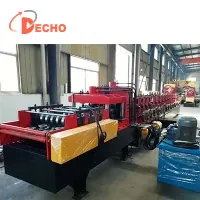
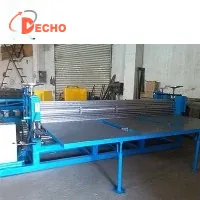
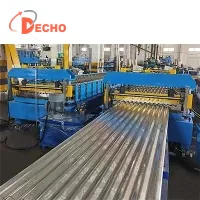
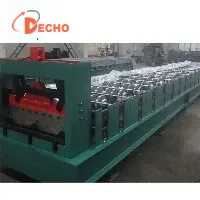
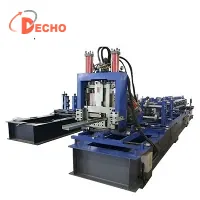
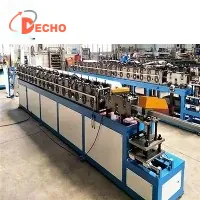
A rack roll forming machine works through a sequence of processes to transform flat metal coils into racks with specific shapes and structures. The working process is as follows:
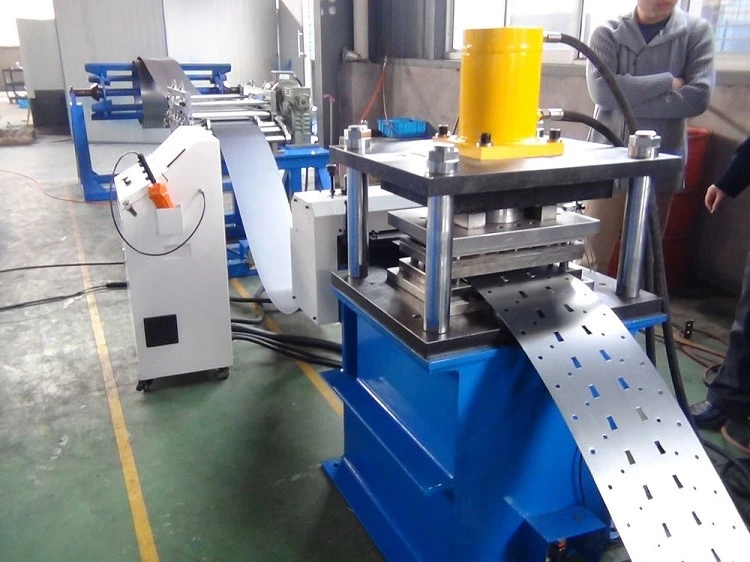
Uncoiling
The process begins with an uncoiling device. A large metal coil is placed on the uncoiler. The uncoiler is responsible for smoothly unwinding the metal strip from the coil. It adjusts the tension and rotation speed to ensure a continuous and stable supply of the metal material, providing a steady feed for the subsequent operations.
Leveling
After uncoiling, the metal strip passes through a leveling mechanism. This typically consists of multiple rollers arranged in a specific pattern. As the metal strip moves between these rollers, any curvatures, bends, or unevenness in the strip are straightened out. The leveling process is crucial as it ensures the metal strip has a flat and even surface, which is essential for the accurate formation of the rack in the following steps.
Guiding and Feeding
The leveled metal strip then enters the guiding and feeding system. This system precisely guides the metal strip into the roll forming unit. It maintains the strip's position and alignment, ensuring it moves through the machine in a straight and consistent manner. The feeding speed can be adjusted according to the production requirements and is synchronized with the operation of the roll forming unit to prevent any jams or misalignments.
Roll Forming
The roll forming unit is the core of the rack roll forming machine. It consists of multiple sets of rolls, each with a specific shape and function. As the metal strip passes through these rolls, each set applies a specific amount of deformation to the strip. The rolls work in coordination to gradually bend and shape the metal strip into the desired rack profile. They can create features such as the uprights, crossbars, and any additional flanges or grooves required for the rack structure. The precise design and arrangement of the rolls determine the final shape and dimensions of the rack.
Punching and Notching
During or after the roll forming process, the machine may perform punching and notching operations. Punching is used to create holes in the metal strip for purposes such as assembling the rack components, attaching accessories, or facilitating ventilation. Notching is carried out to create specific cutouts or openings in the rack for functions like accommodating pipes, cables, or for providing access points. These operations are usually carried out by dedicated punching and notching tools that are integrated into the machine. The positions and sizes of the punches and notches are precisely controlled to meet the design requirements of the rack.
Welding or Assembly (if applicable)
For some rack designs, a welding or assembly process may be required. In the case of welded racks, the machine may be equipped with welding equipment that precisely welds the joints between different parts of the rack to ensure a strong and secure connection. For racks that are assembled using other methods, such as bolts or clips, the machine may have provisions to assist in the assembly process, such as pre-forming the necessary shapes or features for easy assembly.
Cutting
Once the rack has been formed and any additional operations have been completed, it needs to be cut to the required length. The cutting device, located at the end of the production line, is responsible for this task. It can use various cutting methods, such as mechanical cutting with a shear blade, hydraulic cutting for more forceful and precise cuts, or laser cutting for high-precision and clean cuts. The cutting operation is triggered based on a preset length, which can be adjusted according to the specific needs of the rack.
Output and Stacking
After cutting, the finished racks are discharged from the machine. They can be collected and stacked either manually or using an automated stacking system. In an automated system, a conveyor belt or robotic arm may be used to move the racks to a designated stacking area. The racks are stacked in an organized manner to facilitate easy transportation and storage.
The entire operation of the rack roll forming machine is typically controlled by a programmable logic controller (PLC) or a similar control system. The operator can input parameters such as the speed of the machine, the dimensions of the rack, and the cutting length into the control panel. The PLC monitors and regulates the operation of each component in real-time to ensure the machine produces racks with high precision and quality.
https://www.jr-rollformingmachine.com/