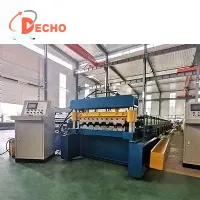
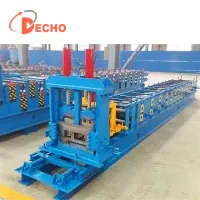
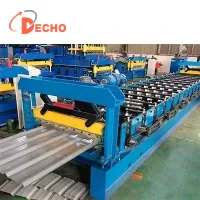
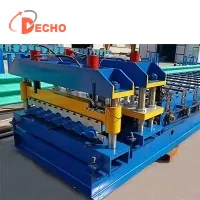
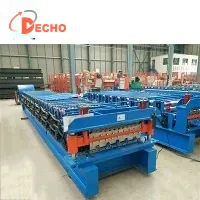
1. Preparation Stage
Equipment inspection: Before starting the shelf forming machine, the operator needs to conduct a comprehensive inspection of the equipment. The inspection content includes whether the connection of each component is tight, whether the electrical system is normal, whether the lubrication system is sufficient, etc. For example, check whether the tension of the transmission chain is appropriate. If it is too loose, it may cause the chain to jump and affect the stability of the equipment operation; check whether the electrical circuit is damaged or has poor contact to ensure the safe operation of the equipment.
Mold installation: According to the specifications and shape of the shelf to be produced, select the appropriate forming mold and install it on the equipment. When installing the mold, make sure that the mold is firmly installed and accurately positioned to ensure the forming effect. For example, for shelves of different heights and layers, it is necessary to replace the roller mold of the corresponding size, and adjust the spacing between the molds to match the size of the shelf.
Raw material preparation: Prepare the raw materials (such as steel, aluminum, etc.) and place them at the feeding position of the equipment. The quality and specifications of the raw materials must meet the production requirements. For example, the strength and thickness of the steel must meet the load-bearing requirements of the shelf, and the surface quality of the aluminum must be good without obvious scratches and oxidation.
2. Loading Stage
Unwinding and unloading: If the raw material is in the form of a roll, such as steel strip or aluminum strip, it needs to be unrolled through an unwinding device. The unwinding device is usually composed of a motor, a reducer, a tensioning device, etc., which can smoothly unwind the coil and transport it to the subsequent processing link. During the unwinding process, it is necessary to control the tension of the coil to avoid the coil being too loose or too tight, which will affect the molding quality.
Feed guide: The unrolled raw material enters the molding machine through the feed guide device. The function of the feed guide device is to ensure that the raw material can accurately enter the molding mold to avoid offset or distortion. The feed guide device is usually composed of multiple guide rollers, which can be adjusted according to the width and thickness of the raw material.
3. Forming Stage
Preliminary forming: After the raw material enters the molding machine, it first passes through the preliminary forming device. The preliminary forming device is usually composed of one or more groups of rollers, which are designed and arranged according to the shape and size of the shelf. The raw material is initially formed into the shape of the shelf under the extrusion and bending of the rollers. During the preliminary forming process, the pressure and speed of the rollers must be controlled to ensure that the raw material can be smoothly preliminarily formed.
Precision forming: The raw materials after preliminary forming enter the precision forming device. The precision forming device is usually composed of more groups of rollers, which have higher precision and can further accurately adjust the shape and size of the shelf. During the precision forming process, pay close attention to the forming quality of the shelf, such as dimensional accuracy, surface flatness, bending angle, etc., and adjust the parameters of the rollers in time to ensure that the quality of the shelf meets the requirements.
Welding (optional): For some metal shelves, welding may be required. If the storage rack roll forming machine is equipped with a welding device, the shelf can be welded during the forming process. The welding method can be selected according to the material and requirements of the shelf, such as argon arc welding, resistance welding, etc. During the welding process, ensure the welding quality, such as the strength and sealing of the weld, to ensure the performance of the shelf.
4. Cutting Stage
Length measurement: When the formed shelf reaches the set length, it needs to be cut. Before cutting, the length of the shelf needs to be measured by a length measuring device. The length measuring device can use an encoder, a photoelectric sensor, etc., which can accurately measure the length of the shelf and feed back the measurement results to the control system.
Cutting operation: When the length measuring device detects that the shelf has reached the set length, the control system will send a signal to start the cutting device. The cutting device usually uses hydraulic cutting, mechanical cutting and other methods to quickly and accurately cut the shelf. During the cutting process, it is necessary to ensure that the cutting position is accurate and the cut is flat to ensure the appearance quality of the shelf.
5. Discharging Stage
Finished product output: The cut shelf is output from the molding machine through the discharging device. The discharging device is usually composed of a conveyor belt, a discharging roller, etc., which can smoothly transport the shelf to the finished product stacking area. During the discharging process, care should be taken to avoid collision and friction between the shelves to avoid damaging the surface quality of the shelf.
Quality inspection: The output shelves are inspected for quality, including dimensional accuracy, surface quality, welding quality, etc. If quality problems are found, they should be dealt with in a timely manner, such as adjusting equipment parameters, repairing welding defects, etc., to ensure that the quality of the guardrail meets the requirements.
6. Equipment Maintenance Stage
Clean equipment: After completing the production of a batch of shelves, the equipment needs to be cleaned. The cleaning content includes removing residual raw materials, dust, oil stains, etc. on the equipment to keep the equipment clean. For example, use compressed air to clean impurities on the rollers, and use detergent to clean the surface of the equipment.
Lubrication and maintenance: Lubricate and maintain the moving parts of the equipment to extend the service life of the equipment. The lubrication method can be selected according to the requirements of the equipment, such as manual lubrication, automatic lubrication, etc. For example, add lubricating oil to the transmission chain, bearings and other parts to ensure smooth operation.
Inspection and maintenance: Regularly conduct a comprehensive inspection and maintenance of the equipment, including whether the various parts of the equipment are worn, loose, damaged, etc., and repair or replace them in time. For example, check whether the surface of the roller is worn. If the wear is serious, it needs to be replaced; check whether the connection of the electrical system is firm, and tighten it in time if it is loose.
https://www.jr-rollformingmachine.com/