1. Loading:
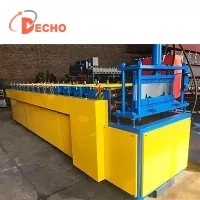
Place the rolled metal sheet (such as galvanized steel sheet, etc.) on the unwinding device of the forming machine. The material, thickness, width, etc. of the metal sheet must meet the design requirements of the cable tray.
The unwinding device usually has a certain load-bearing capacity and tension adjustment function to ensure that the sheet can enter the subsequent processing link smoothly and continuously. For example, the expansion and contraction range of the unwinding device can be adjusted to adapt to rolls with different inner diameters.
2. Unwinding:
As the equipment starts, the unwinding device starts to rotate and gradually unwinds the rolled sheet. In this process, it is necessary to ensure that the speed of sheet unwinding is uniform and stable to prevent problems such as sheet distortion and wrinkles.
For some large cable tray making machines, auxiliary unwinding equipment, such as unwinding machines or unwinding trolleys, may be equipped to facilitate the unwinding and transportation of the sheet.
3. Leveling:
The unwinding sheet will enter the leveling device, which is usually composed of multiple rollers arranged up and down.
Under the extrusion and stretching action of the rollers, the plate eliminates deformations such as bending and waves caused by winding or transportation, so that its surface flatness meets the requirements of subsequent processing.
The accuracy of leveling directly affects the molding quality and dimensional accuracy of the cable tray. Therefore, the roller spacing, pressure and other parameters of the leveling device need to be reasonably adjusted according to the material and thickness of the plate.
4. Punching (optional):
If the cable tray needs to be punched (such as for installation, fixing or threading, etc.), the plate after leveling will enter the punching link.
The punching device punches the plate according to the preset hole type and position. The punching die can be replaced according to different hole type requirements to meet the punching needs of various cable trays.
During the punching process, it is necessary to ensure that the punching position is accurate, the hole size is consistent, and the edge of the punched plate has no defects such as burrs and deformation.
5. Cutting (optional):
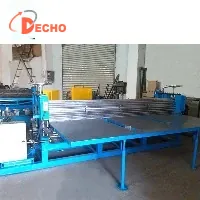
According to the length requirements of the cable tray, when the punched plate reaches the set length, the cutting device will cut the plate.
There are hydraulic cutting, mechanical cutting, etc. The cutting accuracy and speed need to match the overall production efficiency of the forming machine.
For some cable tray making machines that require continuous production, online cutting may be used, that is, cutting is performed during the continuous conveying of the plate to improve production efficiency.
6. Conveying:
The plate after punching and cutting (if there are these two links) will be transported to the forming area through the conveying device.
The conveying device usually takes the form of a conveyor belt, a conveyor roller, etc. to ensure that the plate can accurately and smoothly enter the rolling area of the forming machine.
7. Roller forming:
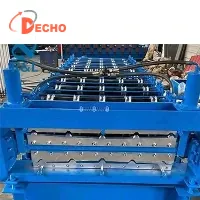
After the plate enters the rolling area of the forming machine, it will be gradually rolled into the shape of the cable tray under the action of one or more groups of rollers.
The arrangement and shape of the rollers are determined according to the design shape and size of the cable tray. Through the cooperation of different rollers, the plate is bent, stretched and compressed many times, and finally a cable tray with certain strength and stability is formed.
During the rolling process, it is necessary to control the pressure, speed and other parameters of the roller to ensure the forming quality and dimensional accuracy of the cable tray.
8. Discharging:
The formed cable tray is discharged from the molding machine through the discharging device.
The discharging device must ensure that the cable tray can leave the molding machine smoothly and steadily, and will not cause damage to the formed product.
9. Quality inspection (optional):
In order to ensure the quality of the cable tray, the product can be inspected after discharging. The inspection content includes dimensional accuracy, shape accuracy, surface quality, punching quality, etc.
For unqualified products, they need to be marked and classified for subsequent processing and improvement.
10. Packaging and storage:
Qualified cable trays will be packaged, and the packaging method can be selected according to customer requirements and transportation methods, such as wooden box packaging, plastic film packaging, etc.
The packaged cable trays will be stored in the warehouse, waiting for shipment or installation. During storage, care should be taken to prevent the cable tray from being damaged by extrusion, collision, corrosion, etc.
https://www.jr-rollformingmachine.com/