Hey there! As a supplier of forming machines, I often get asked this question: Can a forming machine be used for non-metallic materials? Well, let's dive right into it and find out.
First off, let's talk a bit about what forming machines are. These bad boys are designed to shape materials into specific forms. You've got different types, like Sheet Roll Forming, Corrugated Sheet Making Machine, and Tile Roll Forming Machine. Traditionally, they've been used a lot for metals. Metals like steel, aluminum, and copper are common materials you'd see going through these machines. They're malleable, and the forming machines can easily bend, roll, or cut them into the desired shapes.
But what about non-metallic materials? Can our trusty forming machines handle them? The answer is, it depends. There are several types of non-metallic materials out there, and each has its own properties that determine whether a forming machine can work with it.
Let's start with plastics. Plastics are a huge category of non-metallic materials. Some plastics are thermoplastics, which means they can be heated up, made soft, and then shaped. A lot of forming machines can be adjusted to work with thermoplastics. For example, in a roll forming machine, the rollers can be set at the right temperature and pressure to shape plastic sheets into various profiles. You can make things like plastic pipes, window frames, or even decorative trim using a forming machine with thermoplastics.
On the other hand, there are thermosetting plastics. Once these are cured, they can't be re - melted and reshaped like thermoplastics. Working with thermosetting plastics in a forming machine is a bit more tricky. You usually need to use special techniques and machines that can handle the curing process while shaping. But it's still possible in some cases.
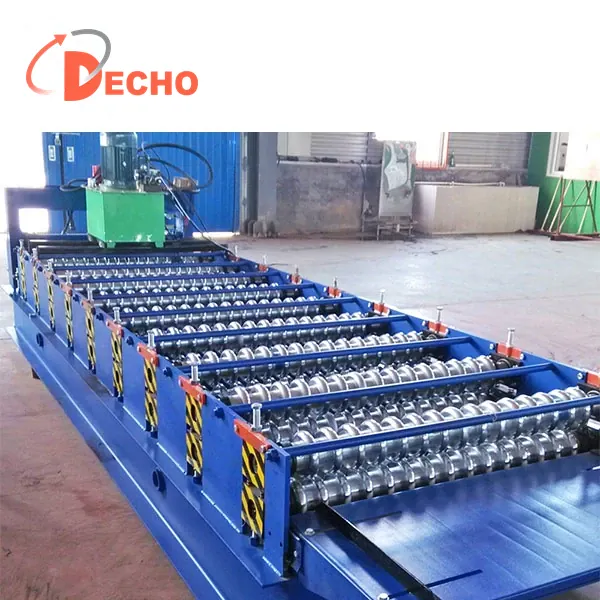
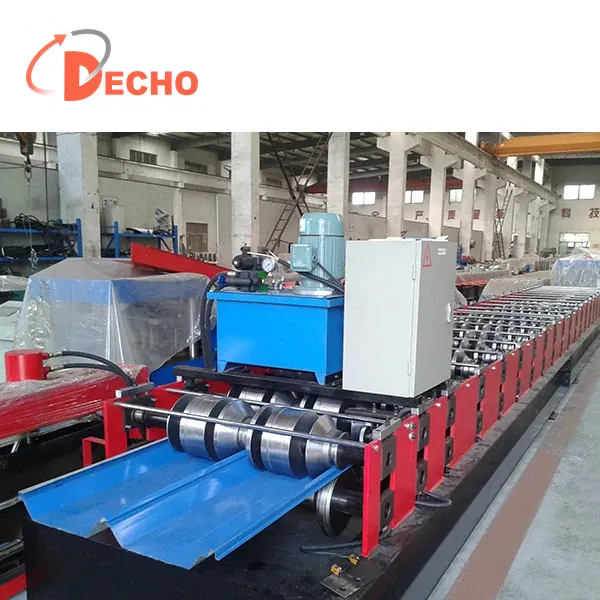
Another common non-metallic material is wood. Wood has been used for centuries in construction and furniture making. Forming machines can be used to shape wood in certain ways. For instance, a roll forming machine can be adapted to create curved wooden pieces. You might need to pre - treat the wood to make it more flexible, like steaming it. Then, the forming machine can gradually bend the wood into the desired curve. However, wood has its limitations. It can crack or split if too much pressure is applied, so you have to be really careful with the settings on the forming machine.
Fiberglass is also a non-metallic material that can be used with forming machines. Fiberglass is strong and lightweight, and it's often used in the automotive and aerospace industries. A forming machine can be used to shape fiberglass sheets or composites. You can create parts like body panels or interior components. The key here is to use the right type of forming process and ensure that the machine can handle the fiberglass's abrasive nature.
Ceramics are a bit more challenging. Ceramics are brittle and hard. Most traditional forming machines aren't really designed to work with ceramics because they can easily break during the forming process. However, there are some advanced forming techniques and specialized machines that can work with ceramics. For example, in some cases, you can use a slow - speed, high - precision forming machine to gradually shape a ceramic piece from a soft clay - like state before firing it.
Now, let's talk about the advantages of using a forming machine for non - metallic materials. One big advantage is efficiency. If you're making a large number of the same non - metallic parts, a forming machine can produce them much faster than manual methods. It also ensures consistency in the shape and size of the parts. For example, if you're making plastic window frames using a forming machine, each frame will be identical, which is great for quality control.
Another advantage is cost - effectiveness. Once you've set up the forming machine for a particular non - metallic material, the cost per unit of production can be quite low. You save on labor costs, and there's less waste because the machine can cut and shape the material more precisely.
However, there are also some challenges. As I mentioned earlier, different non - metallic materials have different properties, and you might need to make significant adjustments to the forming machine. This could involve changing the temperature settings, the pressure applied by the rollers, or even the cutting tools. There's also a learning curve. Your operators need to be trained to work with non - metallic materials in the forming machine. They need to understand how to handle the unique characteristics of each material to avoid defects in the final product.
In conclusion, a forming machine can definitely be used for non - metallic materials in many cases. But it's not a one - size - fits - all situation. You need to consider the type of non - metallic material, its properties, and whether your forming machine can be adapted to work with it. If you're thinking about using a forming machine for non - metallic materials, it's a good idea to do some testing first. Start with small batches to see how the material behaves in the machine and make any necessary adjustments.
If you're interested in exploring the possibilities of using a forming machine for non - metallic materials, or if you have any questions about our Sheet Roll Forming, Corrugated Sheet Making Machine, or Tile Roll Forming Machine, don't hesitate to reach out. We're here to help you find the best solutions for your manufacturing needs. Let's start a conversation and see how we can work together to achieve your goals.
References
- Various industry reports on non - metallic material processing
- Manufacturer's guides for forming machines