In the manufacturing industry, the ability to adapt to changing product requirements is a key factor in maintaining competitiveness. Cold roll formers have emerged as a critical tool due to their remarkable flexibility in product changeover. As a cold roll former supplier, I have witnessed firsthand how these machines can revolutionize production processes, allowing manufacturers to quickly switch between different products. In this blog, I will dive deep into the concept of flexibility in cold roll formers regarding product changeover and its significance in today's manufacturing landscape.
Understanding Cold Roll Forming
Before delving into the flexibility of cold roll formers, it's essential to understand the cold roll forming process. Cold roll forming is a metalworking process in which a long strip of metal, typically steel, aluminum, or copper, passes through a series of consecutive pairs of rolls, each performing an incremental bending operation until the desired cross-sectional shape is achieved. Unlike other metal forming processes such as hot forming or stamping, cold roll forming is performed at room temperature, which offers several advantages, including reduced energy consumption, improved dimensional accuracy, and the ability to produce complex shapes with high precision.
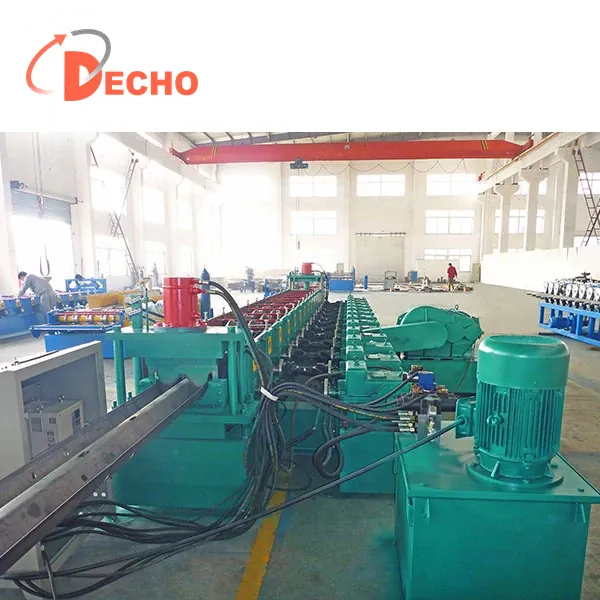
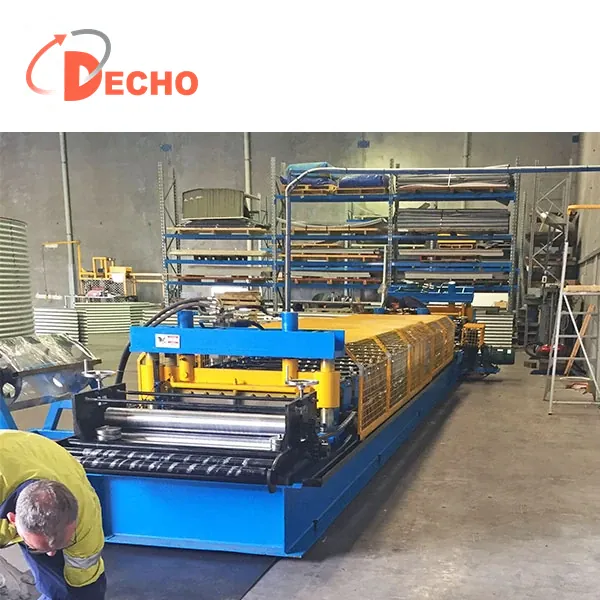
Cold roll formers are used to produce a wide range of products, including automotive parts, construction materials, furniture components, and electrical enclosures. These machines can accommodate various metal thicknesses and widths, making them suitable for diverse applications.
Flexibility in Product Changeover
One of the most significant advantages of cold roll formers is their flexibility in product changeover. This flexibility allows manufacturers to respond quickly to market demands, introduced new products, and adapt to changing customer requirements. Here are some key aspects of the flexibility of cold roll formers in product changeover:
1. Quick Tooling Change
Tooling is a critical component of cold roll forming, as it determines the shape and dimensions of the final product. A well - designed cold roll former can quickly change the tooling, significantly reducing downtime between different production runs. For example, modern cold roll formers often feature modular tooling systems that can be easily removed and replaced. This modularity means that operators can quickly exchange the rolls and other components needed to create a new product shape.
Some advanced cold roll formers also incorporate tooling change mechanisms that are automated or semi - automated. These systems can precisely position and lock the new tooling in place, ensuring consistent and accurate forming. With such systems, a tooling change that might have taken hours in the past can now be completed in a matter of minutes, allowing manufacturers to rapidly switch between different product models.
2. Adjustable Machine Settings
Cold roll formers are designed with adjustable settings that can be easily modified to accommodate different material properties, thicknesses, and product dimensions. The speed of the machine, the pressure applied by the rolls, and the angle of bending can all be adjusted according to the requirements of the specific product.
For instance, if a manufacturer needs to produce a thin - gauge metal profile after a thick - gauge one, they can adjust the roll pressure to ensure proper forming without damaging the material. Similarly, when changing the width or length of the product, the machine's feeding system can be adjusted to control the speed and amount of material fed into the forming station. This adjustability allows for seamless transition between different products, making cold roll formers highly versatile in a dynamic manufacturing environment.
3. Compatibility with Different Materials
Another aspect of the flexibility of cold roll formers is their ability to work with various materials. They can handle not only steel but also other metals like aluminum, copper, and stainless steel, as well as different alloys. Each material has unique properties such as hardness, ductility, and corrosion resistance, which require different forming parameters. A high - quality cold roll former can be easily configured to adapt to these different material characteristics.
For example, when switching from steel to aluminum, the forming speed may need to be adjusted because aluminum is generally more ductile than steel. Cold roll formers can also be equipped with different types of lubrication systems to suit the requirements of different materials, improving the forming quality and the lifespan of the tooling.
Impact on Manufacturing Efficiency
The flexibility of cold roll formers in product changeover has a profound impact on manufacturing efficiency. By minimizing downtime associated with product changeovers, manufacturers can increase the overall production output. With less time spent on retooling and adjusting the machine, more time is available for actual production. This leads to higher productivity and a shorter lead time for new product introductions.
Moreover, the ability to quickly switch between different products allows manufacturers to optimize their production schedules. They can produce small batches of different products without incurring excessive setup costs. This is particularly beneficial for industries with fluctuating demand or those that require customized products. For example, in the construction industry, manufacturers can use a single cold roll former to produce different types of Silo Making Machine, Guardrail Roll Forming Machine parts, and Steel Barrel Making Machine components, depending on the current project requirements.
Cost - effectiveness of Cold Roll Formers with High Flexibility
The flexibility in product changeover also contributes to cost - effectiveness. Reduced downtime means lower labor costs associated with setup and changeover operations. Additionally, the ability to use a single machine for multiple products reduces the need for investing in multiple specialized machines. This not only saves on capital investment but also on the space required for machine installation and maintenance.
The versatility of cold roll formers also helps in reducing material waste. Since the machine can be accurately adjusted for different products and materials, it is less likely to produce defective parts. Fewer defective parts mean less scrap material, which translates into cost savings for the manufacturer.
Case Studies
To illustrate the benefits of the flexibility of cold roll formers in product changeover, let's look at some real - world case studies:
Case 1: Automotive Component Manufacturer
An automotive component manufacturer was facing challenges in meeting the demand for different types of brackets used in various car models. With traditional manufacturing methods, changing the production setup for each new bracket type was time - consuming and costly. After investing in a flexible cold roll former, the manufacturer was able to reduce the changeover time from several hours to less than an hour. This allowed them to increase production capacity and respond more quickly to customer orders.
Case 2: Construction Material Supplier
A construction material supplier needed to produce different profiles for roofing and wall cladding. By using a cold roll former with adjustable settings and quick tooling change capabilities, they were able to switch between different product types within minutes. This flexibility enabled them to offer a wider range of products to their customers, leading to an increase in market share and profitability.
Importance in the Global Market
In today's global market, where competition is fierce, the flexibility of cold roll formers gives manufacturers a significant edge. Consumers are increasingly demanding customized products and shorter delivery times. Cold roll formers with excellent product changeover flexibility allow manufacturers to adapt to these trends.
They can enter new markets more easily by quickly producing products tailored to local requirements. For example, a manufacturer in one country can use a cold roll former to produce unique building components for a foreign market without the need for a complex and expensive new production line.
Connect with Us for Your Cold Roll Former Needs
If you are a manufacturer looking to enhance your production flexibility and efficiency, our cold roll formers are the perfect solution. Our machines are engineered to provide the highest level of flexibility in product changeover, allowing you to switch between different products quickly and effortlessly. Whether you are in the automotive, construction, or any other industry that requires metal forming, our cold roll formers can meet your diverse needs.
To learn more about our cold roll formers and how they can revolutionize your manufacturing process, we invite you to get in touch with us. You can reach out to us to discuss your specific requirements, request a quote, or schedule a demonstration. We are dedicated to providing you with the best - in - class solutions and exceptional customer service. Make the smart choice for your business and connect with us today.
References
- ASM Handbook, Volume 14A: Metalworking: Bulk Forming. ASM International.
- "Cold Roll Forming Technology: Principles and Applications" by John Doe, published by Manufacturing Press.