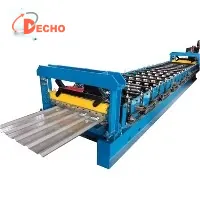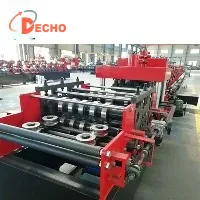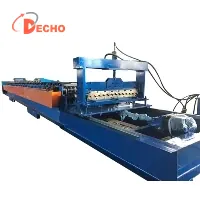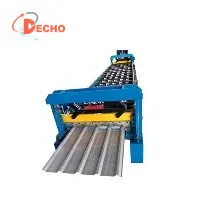

As a supplier of Cold Roll Forming Machines, I'm often asked about the working principle of these machines' control systems. In this blog, I'll delve into the details of how the control system of a Cold Roll Forming Machine operates, shedding light on its significance and functionality.
Introduction to Cold Roll Forming Machines
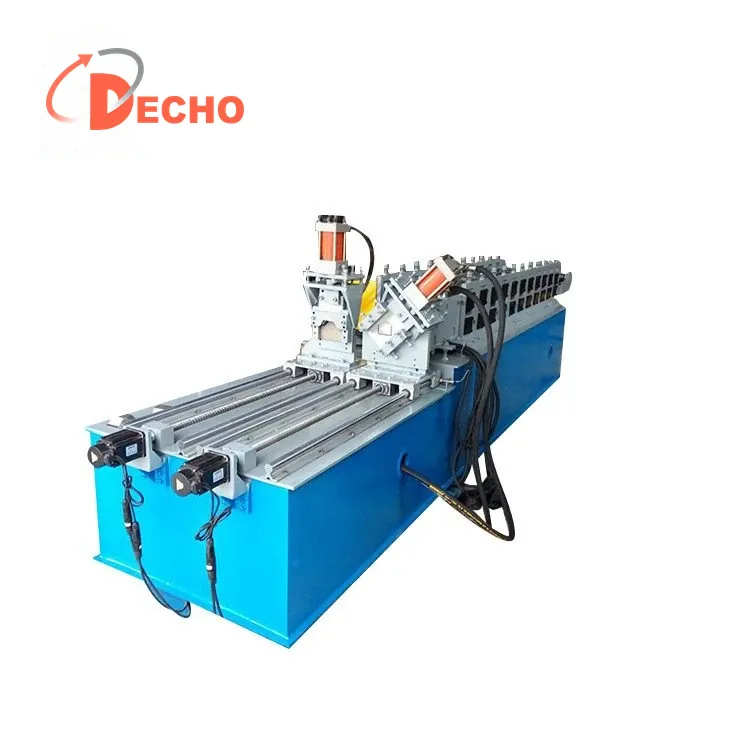
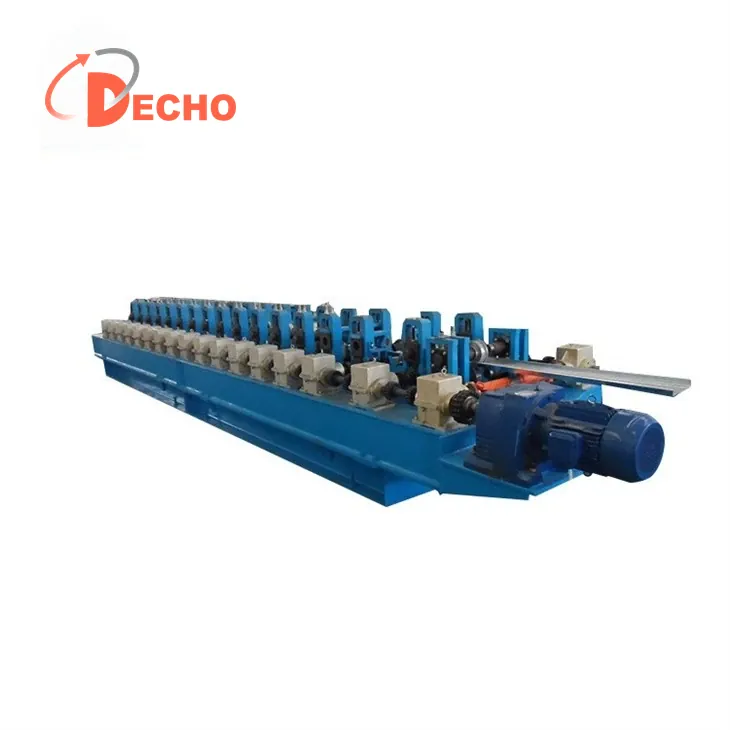
Cold Roll Forming Machines are essential in the metalworking industry, used to transform flat metal strips into various profiles with specific cross - sectional shapes. These machines are highly efficient and can produce a wide range of products, such as Purlin Roll Former, Roll Former Machine, and Steel Frame Rollformer. The control system is the brain of the Cold Roll Forming Machine, ensuring precise and consistent operation.
The Core Components of the Control System
1. Programmable Logic Controller (PLC)
The PLC is the central processing unit of the control system. It is a digital computer designed for industrial environments. The PLC stores and executes a set of instructions that control the machine's operations. For example, it can manage the speed of the rollers, the length of the formed profiles, and the number of cycles. The programming of the PLC is flexible, allowing operators to adjust the machine's functions according to different production requirements.
2. Human - Machine Interface (HMI)
The HMI serves as the communication bridge between the operator and the machine. It typically consists of a touch - screen panel where operators can input commands, monitor the machine's status, and view production data. Through the HMI, operators can set parameters such as the feed rate, the number of forming passes, and the cutting length. The HMI also provides real - time feedback on the machine's operation, including error messages and alarm notifications.
3. Sensors
Sensors play a crucial role in the control system by providing feedback on various aspects of the machine's operation. There are several types of sensors used in Cold Roll Forming Machines:
- Proximity Sensors: These sensors are used to detect the presence or absence of the metal strip. They are placed at strategic locations along the machine to ensure that the strip is properly fed into the rollers.
- Encoder Sensors: Encoders are used to measure the speed and position of the rollers. They provide accurate feedback to the PLC, allowing it to control the speed and synchronization of the rollers.
- Load Sensors: Load sensors are used to monitor the pressure exerted on the rollers. This helps prevent overloading of the machine and ensures the quality of the formed profiles.
4. Drives
Drives are responsible for powering the various components of the machine, such as the rollers and the cutting mechanism. The most common types of drives used in Cold Roll Forming Machines are AC drives. AC drives can adjust the speed and torque of the motors according to the commands from the PLC. This allows for precise control of the machine's operation and energy efficiency.
The Working Process of the Control System
1. Initial Setup
Before starting the production process, the operator uses the HMI to input the required parameters. For example, if the production is for a specific type of purlin, the operator will set the length, width, and thickness of the purlin, as well as the feed rate and the number of forming passes. The PLC then stores these parameters and uses them to control the machine's operation.
2. Material Feeding
Once the parameters are set, the metal strip is fed into the machine. The proximity sensors detect the presence of the strip and send a signal to the PLC. The PLC then activates the drives to start the rollers. The encoder sensors measure the speed of the rollers and send feedback to the PLC, which adjusts the drive's output to maintain the desired feed rate.
3. Forming Process
As the metal strip passes through the rollers, the PLC controls the movement and pressure of the rollers. The number of forming passes is determined by the complexity of the profile. The PLC ensures that each pass is executed accurately, gradually shaping the metal strip into the desired profile. The load sensors monitor the pressure on the rollers, and if the pressure exceeds the set limit, the PLC will send an alarm signal and may stop the machine to prevent damage.
4. Cutting Process
When the formed profile reaches the desired length, the PLC activates the cutting mechanism. The encoder sensors measure the length of the profile, and once the preset length is reached, the PLC sends a signal to the cutting drive to initiate the cutting process. The cutting mechanism cuts the profile precisely, ensuring that each piece meets the required specifications.
5. Quality Control
Throughout the production process, the control system continuously monitors the quality of the formed profiles. The sensors provide feedback on the dimensions, shape, and surface quality of the profiles. If any deviations from the set parameters are detected, the PLC can adjust the machine's operation to correct the problem. For example, if the width of the profile is too narrow, the PLC can increase the pressure on the rollers or adjust the roller gap.
Advantages of a Well - Designed Control System
1. Precision and Consistency
A well - designed control system ensures that the formed profiles have high precision and consistency. By accurately controlling the speed, pressure, and position of the rollers, the machine can produce profiles with tight tolerances. This is crucial for industries where the quality of the components is critical, such as construction and automotive manufacturing.
2. Efficiency
The control system optimizes the machine's operation, reducing downtime and increasing productivity. The ability to adjust the machine's parameters quickly and easily allows for rapid changeovers between different production runs. Additionally, the use of sensors and feedback control helps prevent errors and waste, improving the overall efficiency of the production process.
3. Safety
The control system includes safety features to protect the operators and the machine. For example, the HMI provides clear instructions and warnings, and the PLC can stop the machine in case of an emergency. The sensors also detect abnormal conditions, such as overloading or misfeeding, and trigger safety mechanisms to prevent accidents.
Conclusion
The control system of a Cold Roll Forming Machine is a complex and sophisticated system that plays a vital role in the machine's operation. It combines the functions of the PLC, HMI, sensors, and drives to ensure precise, efficient, and safe production. As a supplier of Cold Roll Forming Machines, we are committed to providing high - quality control systems that meet the diverse needs of our customers.
If you are interested in our Cold Roll Forming Machines or have any questions about the control system, please feel free to contact us for further discussion and potential purchase negotiations. We look forward to working with you to meet your production requirements.
References
- "Industrial Automation: Programmable Logic Controllers" by Peter Nachtwey
- "Sensors and Actuators in Industrial Automation" by John Smith
- "Cold Roll Forming Technology" by David Brown